Showing posts sorted by relevance for query stone. Sort by date Show all posts

10/11/2005

Stone Wall

[ . BACK to Worldkigo TOP . ]
::::::::::::::::::::::::::::::::::::::::::::::::::::::::::::::::::::::::::::::::::::::::::::::::::::: 


石垣に蜻蛉の蔭の踊りかな

ishigaki ni tonbo no kage no odori kana


old stone wall -
the dancing shadows of
dragonflies


alte Steinmauer -
die tanzenden Schatten
der Libellen


:::::::::::::::::::::::::::::::::::::::::::::::::::::::::::::::::::::::::::::::::::::::::::::::::::::

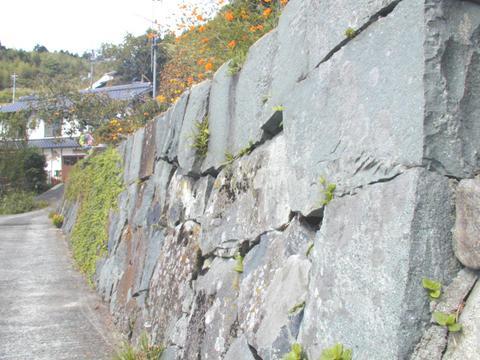
I could not catch the shadows, but I can show you our old stone wall.


Dragonfly (tombo, tonbo) Japan , Kigo in the Database


:::::::::::::::::::::::::::::::::::::::::::::::::::::::::::::::::::::::::::::::::::::::::::::::::::::
:::::::::::::::::::::::::::::::::::::::::::::::::::::::::::::::::::::::::::::::::::::::::::::::::::::


STONE WALL, ishigaki 石垣
a TOPIC for HAIKU


Look at some of my photos!


old stonewalls
flanked by cherry blossoms -
the universe changes


cherryyellowwall

Stone Castle Wall and Cherry BlossomsTsuyama Castle


Castle Wall of Fukuyama Castle

:::::::::::::::::::::::::::::::::::::::::::::::::::::::::::::::::::::::::::::::::::::::::::::::::::::

- quote -
ishigaki 石垣 A dry stone wall.
A retaining stone foundation wall built without binding materials over an inclined earthen embankment. Originally intended to hold a castle embankment in place, the embankment and stone wall together were expected to provide a solid foundation for timber superstructures. When gates, towers and walls came to be built on the embankment, the ishigaki took on a multitude of functions, forming the base and sides of the gates and towers themselves, as well as the foundations for the donjon and moat.

The most frequently used stone for castle walls was andesite anzangan 安山岩, granite kakougan 花崗岩, quartz porphyry sekieihangan 石英斑岩、and gneiss henmagan 片麻岩. Andesite and granite are easy stones to work, and were widely used in Edo period castles.

The best stones for castle walls are considered to be shaped like a short square pillar, roughly two to three times as high as their base length. This type of stone is known as hikae 控え.

The length of a stone is called ishi-no-hikae 石の控え, and the width of the rock face visible on the wall surface is called ishizura 石面 or tsura 面.
A distinction is made between corner stones sumi-ishi 隅石 and those not at corners hira-ishi 平石 or tsuki-ishi 築石. The stones are often named according to their shapes or the way they have been cut.

For example a stone narrowing at one end is called kenchi-ishi 間知石, a cobble stone *tama-ishi 玉石, a chestnut stone used to fill small gaps *kuri-ishi 栗石, hewn stone kiri-ishi 切石, and rough stone *no-ishi 野石. There are a variety of building styles depending on the degree to which the stones are cut and prepared. Some of these styles, in order from the least worked to the most worked stones, are random masonry *ransekizumi 乱石積、burdock masonry *gobouzumi 牛蒡積, natural face masonry *nozurazumi 野面積, pounded and inserted masonry *uchikomihagi 打込矧ぎ, cloth construction *nunozuki 布築, cut inserted masonry *kirikomihagi 切込矧ぎ and tortoise-shell masonry kikkouzumi 亀甲積. Another method of construction, sangizumi 算木積, uses wooden logs to stabilize the stones.

Generally the surface stones of the wall are laid over a base of progressively smaller stones, pebbles, sand and earth to provide greater stability. In wet areas, the foot of the wall rests on a base supported by wooden stanchions to prevent collapse. The angle of the wall's incline varies with the height of the wall: the greater the height, the less steep the incline. According to Ogyuu Sorai's 荻生徂徠 (1666-1728) KENROKU 鈐録 (1727), there are three main shapes of castle wall: 1 walls of 45 degree elevation, called narashi ならし, in which only the topmost stone is completely vertical; 2 walls with a 50 degree elevation and the top 20% vertical; and 3 walls with an incline of about 80 degrees. The wall slopes upwards in a concave curve, with the top 25% completely vertical. Type two are usually pounded and inserted walls uchikomihagi, while type three are cut and inserted masonry kirikomihagi.
The slope of a stone wall is called ishigaki-no-koubai 石垣の勾配 (kobai) or ishigaki koubai 石垣勾配、and the joints between the stones are called meji 目地.
- source: JAANUS : ishigaki 石垣

:::::::::::::::::::::::::::::::::::::::::::::::::::::::::::::::::::::::::::::::::::::::::::::::::::::

. Edo shokunin 江戸の職人 Edo craftsmen .

ishi ku, sekkoo 石工 stone mason


Special groups made the stone walls, others carved stone statues and many more did grave stones.
Stone monuments for temples and shrines were called
miyamono 宮物.

Working on a stone monument with hammer and chisle produced a lot of stone dust and many masons suffered from lung diseases. So the eldest son of a mason was offen assigned different work, and the second and third sons had to do the dusty parts.


source : p.twipple.jp

Cutting stone for a castle wall
and its transportation


:::::::::::::::::::::::::::::::::::::::::::::::::::::::::::::::::::::::::::::::::::::::::::::::::::::


Yellow maple leaves
Crunching and browning on road
Stone wall gently curves


Look also at the photo here
©2007 barbara

:::::::::::::::::::::::::::::::::::::::::::::::::::::::::::::::::::::::::::::::::::::::::::::::::::::


autumn afternoon
hole in the stone wall
a perfect frame


© Nathaniel B. Gach, 2000, USA


:::::::::::::::::::::::::::::::::::::::::::::::::::::::::::::::::::::::::::::::::::::::::::::::::::::


springtime
a couple of chipmunks
in the stone wall


© Kirsty Karkow
Shorelines: Haiku, Haibun and Tanka


:::::::::::::::::::::::::::::::::::::::::::::::::::::::::::::::::::::::::::::::::::::::::::::::::::::

ishikirizushi ishikiri sushi 石切ずし "stone cutters sushi"
stone masons sushi
From Shodoshima. The stones of this island were cut and transported to Osaka for the construction of Osaka Castle. Now this famous sushi is prepared for festivals or memorial services.
. . . CLICK here for Photos !


石工の鑿冷したる清水かな
sekkoo no nomi hiyashitaru shimizu kana

fresh spring water
cools the chisel
of the stone mason . . .


Written in 1768
. Yosa Buson 与謝蕪村 in Edo .

:::::::::::::::::::::::::::::::::::::::::::::::::::::::::::::::::::::::::::::::::::::::::::::::::::::


. Wall, walls (kabe) and haiku  


[ . BACK to WORLDKIGO  TOP . ]
[ . BACK to DARUMA MUSEUM TOP . ]

::::::::::::::::::::::::::::::::::::::::::::::::::::::::::::::::::::::::::::::::::::::::::::::::::::: 

1/15/2005

Stone Buddhas

[ . BACK to WORLDKIGO  TOP . ]
::::::::::::::::::::::::::::::::::::::::::::::::::::::::::::::::::::::::::::::::::::::::::::::::::::: 


I am living in sourrounding with many stone Buddhas of all kinds, from very simple and withered ones to elaborate huge ones.
On this page, I will introduce some of my friends.


stone Buddha -
a coat of moss
on eternity

.. .. .. .. ..


Inspired by this photo, Lary made the following winning haiku:


rain spattered Buddha
a jewel beetle scuttles
into a crevice


Laryalee Fraser
http://groups.yahoo.com/group/happyhaiku/message/1813

koganemushi, the jewel beetle


http://www.h2.dion.ne.jp/~usako/kouchurui-koganemusi.html


:::::::::::::::::::::::::::::::::::::::::::::::::::::::::::::::::::::::::::::::::::::::::::::::::::::


Here is a haiku by Issa about a Jizoo statue. I will try and find the appropirate photo.
koke no hana, blooming moss, is a kigo for summer.

O-Jizoo no hiza mo me hana mo koke no hana
お地蔵の膝も眼も鼻も苔の花

on the Stone Jizo's
knees, eyes, nose -
blooming moss


.. .. .. .. .. .. .. .. .. More about Jizoo Bosatsu
http://www.onmarkproductions.com/html/jizo1.shtml


:::::::::::::::::::::::::::::::::::::::::::::::::::::::::::::::::::::::::::::::::::::::::::::::::::::


a loving couple
during all seasons
spring in the air


Read my Daruma stories about loving couples:

. fuufu Daruma 夫婦だるま . . Loving Couples


Read more about these
wayside stone markers Doosojin 道祖神

http://www.onmarkproductions.com/html/dosojin-stone-markers.shtml


:::::::::::::::::::::::::::::::::::::::::::::::::::::::::::::::::::::::::::::::::::::::::::::::::::::


stonebuddhavoid

the great void
in perfect harmony
with itself


... ... ... lost time and time lost
... ... ... who can tell
... ... ... the stone Buddha


:::::::::::::::::::::::::::::::::::::::::::::::::::::::::::::::::::::::::::::::::::::::::::::::::::::


stone buddha 石仏 ishibotoke, sekibutsu

More of my haiku about Stone Buddhas

... Amida Buddha     
... Arhats in Stone 五百羅漢
... Buddha's Footprints (Bussokuseki)     
... Buddha's Voice (Shakyamuni)
... Azalea and Shaka (Shakyamuni)
... Horseheaded Kannon


:::::::::::::::::::::::::::::::::::::::::::::::::::::::::::::::::::::::::::::::::::::::::::::::::::::


CLICK for more photos


山桜花の主や石仏
yamazakura hana no aruji ya ishi-botoke

lord of the mountain's
cherry blossoms...
stone Buddha


Kobayashi Issa

The stone Buddha is the "master" or "lord" (aruji) of the mountain cherry blossoms. The juxtaposition of Buddhism and blossoms is interesting and one of Issa's favorites--evident in many other poems. If Buddhism requires one to see past the temporary pleasures of the earth, we may be surprised to find the Buddha in the role of "lord" of blossoms. But the blossoms only last for a short while, so they are, just by being what they are, excellent teachers of Buddhism. Their "lord," the Buddha, approves.
Translation and comment by David Lanoue


:::::::::::::::::::::::::::::::::::::::::::::::::::::::::::::::::::::::::::::::::::::::::::::::::::::


Wayside Gods in Stone
道祖神 Doosojin (Doososhin, Dosojin Dososhin)


Stone Carvings and Sculptures
Magaibutsu 磨崖仏 Cliff Buddhas


. Bunei Sekibutsu 文英様石仏 Stone Buddhas of the Bunei style
Kibi, Okayama 吉備の文英様石仏  .


.................................................................................


[ . BACK to WORLDKIGO  TOP . ]
[ . BACK to DARUMA MUSEUM TOP . ]

::::::::::::::::::::::::::::::::::::::::::::::::::::::::::::::::::::::::::::::::::::::::::::::::::::: 

12/27/2004

Jizoo  sai no kawara

[ . BACK to Daruma TOP . ]
:::::::::::::::::::::::::::::::::::::::::::::::::::::::::::::::::::::::::::::::::::::::::::::::::::::

Stone Jizoo 石地蔵 and Sai no Kawara

Jizoo Bosatsu (Kshitigarbha) 地蔵菩薩


jizoglasses


getting older -
even the gods
need glasses

年を取る 神様さえかける 眼鏡かな

aelter werden -
selbst die Goetter
tragen Brille

This little Jizoo is quite special with his glasses. I saw him at Oshima Island in the Seto Inland Sea at an amazing Stone Gallery, Sekiraku.

ストーンギャラリー  石楽
http://www.ehime-iinet.or.jp/miyakubo/main/shop/stone/syou.htm
http://www.ehime-iinet.or.jp/miyakubo/main/shop/stone/gaiyou.htm

http://www.ehime-iinet.or.jp/sren/08miyakubo/jpg/sekira5.jpg
http://www.ehime-iinet.or.jp/sren/08miyakubo/jpg/sekira1.jpg
http://www.ehime-iinet.or.jp/sren/08miyakubo/jpg/sekira2.jpg


................................... Issa has this to say:

地蔵さへとしよるやうに木の葉哉
jizô sae toshiyoru yô ni konoha kana

even holy Jizo
is looking older...
fallen leaves

Tr. David Lanoue

::::::::::::::::::::::::::::::::::::::::::::::::::::::::::::::::::::::::::::::::::::::


temple in autumn -
your smile helps me
on the way


This Jizoo has a smile like the little son of my best Japanese friend. Amazing!

ten takashi akaboo Jizoo no egao kana
天高し赤帽 地蔵の 笑顔かな

Bright Autum sky!
Jizoo with his red hood
Smiling peacefully.


:::::::::::::::::::::::::::::::::::::::::::::::::::::::::::::::::::::::::::::::::::::::::::::::::::::


pilgrim's path -
a stone to remember
but what ?


................................................


azaleas in full bloom
Jizoo's smile
unmoved


........................................................................


jizostonelantern

stone lantern with moss -
six Jizoo teaching

in great silence

.. .. .. .. .. a roof of stone
.. .. .. .. .. is all you need
.. .. .. .. .. is all I need


。。。。。。。。。。。。。。。。。。。。。。。。。。


Ishi-jizoo  Zukin no yabureshi  Kan modori

Little Stone Buddha -
Your hood all torn
And the cold coming back!


Fuyu no botchi. Booshi ni koke no Jizoosama!

Graveyard in winter.
For a hood you have moss,
Little Stone Buddha.


xxxxxxxxxxxxxxxxxxxxxxxxxxxxxxxxxx


cherry blossoms -
on the way to the temple
I think of you


More cherry pictures of 2005, Tanjo-Ji temple in Okayama.
http://www.flickr.com/photos/grevegabi4000/sets/72157603333069056/


:::::::::::::::::::::::::::::::::::::::::::::::::::::::::::::::::::::::::::::::::::::::::::::::::::::


The Jizoo Wheel, Jizooguruma 地蔵車

There is a Japanese Buddhist variant of the Hyakudo Mairi Shinto tradition that involves the beloved Jizo Bosatsu. It is called the 地蔵車. This translates as the Jizo Wheel (which includes the afterlife wheel, goshooguruma 後生車, ごしょうぐるま) and the Bosatsu wheel (bodaiguruma 菩提車, ぼだいぐるま).
Found in front of many temples. When you say your wish while turning the wheel downward, a wish for the afterlife will be granted. When you turn the wheel upward, a wish for your present life will be granted.


Eifuku-Ji, Nr. 54, Shikoku, May 2005

Jizoo Wheel -
a mother places flowers
on the grave


Read more about this Jizoo Wheel at Mark Schumacher's pages:
http://www.onmarkproductions.com/html/other-stones-jizo-hyakudo.html


:::::::::::::::::::::::::::::::::::::::::::::::::::::::::::::::::::::::::::::::::::::::::::::::::::::


Jizoo figures heavily in the Haiku of Issa.
David Lanoue has a profound essay on this subject.
Issa and Jizo Haiku

Safety copy is here:
groups.yahoo.com/group/Haiku-Essays/

Read this haiku of Issa

suzume no ko jizoo no sode ni kakure keri (1814)

baby sparrow
safe in Saint Jizoo's
sleeve

And now learn more about the Sleeve of Jizoo's robe

In Shinto mythology
the story goes that between life and death there flows a river.
This river is called Sai no Kawara 賽の河原  (translated it means Sai [Childrens Limbo; Limbo means a region on the border of hell or heaven, serving as the abode after death of unbaptized infants.] Kawara [riverside].
According to Shinto belief, children do not go to heaven or hell, but the souls of the dead babies play on the banks of this river, Sai no Kawara. And one of the things they have to do as their Duty (penance) there, is to stack up pebbles, and build little towers.

However, while doing so, a naughty, horrible devil usually appears who disturbs their playing, breaks their towers up, and scares them. And, it is here where the long sleeves of Jizos robe comes in handy.

Because Jizo is the god who protects children, and he does not fail to protect them there on the banks of the Sai no Kawara. So when scared by this devil, they all jump into the sleeve of Jizos robe, where they hide and feel safe and warm. It is said that in the old days, some of the Jizo statues were covered in pebbles from people
who stacked the pebbles in front of the Jizo, because it is believed, that for every tower of pebbles you build on earth, you help the souls of the dead children to perform their duty there on the Sai no Kawara.
http://www.aosara.com/articles/jizo.htm


Read my extensive articles about Sai no Kawara.

CLICK here for more photos !

. Sai no Kawara and Mount Osorezan .

- - - - - and

. Sanzu no Kawa 三途の川 River Sanzu, on the way to hell .


Read more about Jizoo Bosatsu Buddhastatues:
... www.onmarkproductions.com/html/jizo


Jizo Bosatsu - Daruma Museum - Introduction


- List of Sai-no-Kawara Sites in Japan
Mark Schumacher has all the details !

:::::::::::::::::::::::::::::::::::::::::::::::::::::::::::::::::::::::::::::::::::::::::::::::::::::

H A I K U


哭け哭けと賽の河原へ涅槃西風
kokekoke to sai no kawara e Nehan Nishi

koke koke kok
the Nirvana West Wind blows
toward the limbo for children


hira333
http://d.hatena.ne.jp/hira333/20090405/p21

WKD : Nirvana West wind (nehan nishi 涅槃西風)


CLICK for more photos

風車賽の河原のモーツァルト
kazaguruma sai no kawara no moozaruto

windwheels
and Mozart at the limbo
for children


anonymous
http://gendaihaiku.gr.jp/haikukai/result/37_touku.htm


::::::::::::::::::::::::::::::::::::::::::::::::::::::::::::::::::::::::::::::::::::::::::::::::::::: 

Jizo Bosatsu - Daruma Museum - Introduction


. Daruma Megane ダルマメガネ Daruma glasses .


[ . BACK to DARUMA MUSEUM TOP . ]
[ . BACK to WORLDKIGO . TOP . ]
:::::::::::::::::::::::::::::::::::::::::::::::::::::::::::::::::::::::::::::::::::::::::::::::::::::

5/25/2005

Buddha's Footprints (Bussokuseki)

[ . BACK to WORLDKIGO  TOP . ]
:::::::::::::::::::::::::::::::::::::::::::::::::::::::::::::::::::::::::::::::::::::::::::::::::::::::::::::::::::::::::::

Buddha's Footprints ー Bussokuseki 仏足石


Temple Daisan-Ji, Nr. 56, My Shikoku Pilgrimage in 2005


Buddha's Footprints -
a weary pilgrim
looking for hope


Lately with the population ageing rapidly, these stones are seen more often in Japanese temples. Some are arranged in the floor so you can stand on them whilst praying. Some are on pillars so you can touch the center wheel with your hands when you say your prayers for good health of your legs.

Walking in Shikoku for days on end as a pilgrim, the weary traveller is always refreshed after touching these symbols.


. Taisanji 太山寺 Taisan-Ji - Henro 52 .

. . . . .


the lizard
does push-ups on a rock
Buddha's Footprints

Buddha's Footprints
nowhere and everywhere
his presence


Don Baird, USA, February 2011


. . . . .


Buddha's palm -
my hands emptied
for zazen


Angelo Ancheta
Philippines


:::::::::::::::::::::::::::::::::::::::::::::::::::::::::::::::::::::::::::::::::::::::::::::::::::::::::::::::::::::::::::


CLICK for enlargement !
Koozanji 高山寺 Kozan-Ji

仏足石の文様 (「み佛の踏みし蹟どころ」
松久保 秀胤 著:薬師寺発行より)
- source : www.geocities.co.jp/SilkRoad


Lafcadio Hearn "In Ghostly Japan"

Footprints of the Buddha - Butsu-soku-seki

I was recently surprised to find, in Anderson's catalogue of Japanese and Chinese paintings in the British Museum, this remarkable statement:—"It is to be noted that in Japan the figure of the Buddha is never represented by the feet, or pedestal alone, as in the Amravati remains, and many other Indian art-relics." As a matter of fact the representation is not even rare in Japan. It is to be found not only upon stone monuments, but also in religious paintings,—especially certain kakemono suspended in temples. These kakemono usually display the footprints upon a very large scale, with a multitude of mystical symbols and characters. The sculptures may be less common; but in Tokyo alone there are a number of Butsu-soku-seki, or "Buddha- foot stones," which I have seen,—and probably several which I have not seen.

There is one at the temple of Eko-In, near Ryogoku-bashi; one at the temple of Denbo-In, in Koishikawa; one at the temple of Denbo-In, in Asakusa; and a beautiful example at Zojoji in Shiba. These are not cut out of a single block, but are composed of fragments cemented into the irregular traditional shape, and capped with a heavy slab of Nebukawa granite, on the polished surface of which the design is engraved in lines about one-tenth of an inch in depth. I should judge the average height of these pedestals to be about two feet four inches, and their greatest diameter about three feet. Around the footprints there are carved (in most of the examples) twelve little bunches of leaves and buds of the Bodai-ju ("Bodhidruma"), or Bodhi-tree of Buddhist legend. In all cases the footprint design is about the same; but the monuments are different in quality and finish. That of Zojoji,—with figures of divinities cut in low relief on its sides,—is the most ornate and costly of the four. The specimen at Eko-In is very poor and plain.

The first Butsu-soku-seki made in Japan was that erected at Todaiji, in Nara. It was designed after a similar monument in China, said to be the faithful copy of an Indian original. Concerning this Indian original, the following tradition is given in an old Buddhist book(1):— "In a temple of the province of Makada [Maghada] there is a great stone. The Buddha once trod upon this stone; and the prints of the soles of his feet remain upon its surface. The length of the impressions is one foot and eight inches,(2) and the width of them a little more than six inches. On the sole-part of each footprint there is the impression of a wheel; and upon each of the prints of the ten toes there is a flower-like design, which sometimes radiates light. When the Buddha felt that the time of his Nirvana was approaching, he went to Kushina [Kusinara], and there stood upon that stone. He stood with his face to the south. Then he said to his disciple Anan [Ananda]: 'In this place I leave the impression of my feet, to remain for a last token. Although a king of this country will try to destroy the impression, it can never be entirely destroyed.' And indeed it has not been destroyed unto this day. Once a king who hated Buddhism caused the top of the stone to be pared off, so as to remove the impression; but after the surface had been removed, the footprints reappeared upon the stone."

Concerning the virtue of the representation of the footprints of the Buddha, there is sometimes quoted a text from the Kwan-butsu- sanmai-kyo ["Buddha-dhyana-samadhi-sagara-sutra"], thus translated for me:—"In that time Shaka ["Sakyamuni"] lifted up his foot…. When the Buddha lifted up his foot all could perceive upon the sole of it the appearance of a wheel of a thousand spokes…. And Shaka said: 'Whosoever beholds the sign upon the sole of my foot shall be purified from all his faults. Even he who beholds the sign after my death shall be delivered from all the evil results of all his errors." Various other texts of Japanese Buddhism affirm that whoever looks upon the footprints of the Buddha "shall be freed from the bonds of error, and conducted upon the Way of Enlightenment."

An outline of the footprints as engraved on one of the Japanese pedestals(3) should have some interest even for persons familiar with Indian sculptures of the S'ripada. The double-page drawing, accompanying this paper [Fig.1], and showing both footprints, has been made after the tracing at Dentsu-In, where the footprints have the full legendary dimension, It will be observed that there are only seven emblems: these are called in Japan the Shichi-So, or "Seven Appearances."
I got some information about them from the Sho-Eko-Ho-Kwan,—a book used by the Jodo sect. This book also contains rough woodcuts of the footprints; and one of them I reproduce here for the purpose of calling attention to the curious form of the emblems upon the toes. They are said to be modifications of the manji, or svastika, but I doubt it. In the Butsu-soku-seki-tracings, the corresponding figures suggest the "flower-like design" mentioned in the tradition of the Maghada stone; while the symbols in the book-print suggest fire. Indeed their outline so much resembles the conventional flamelet-design of Buddhist decoration, that I cannot help thinking them originally intended to indicate the traditional luminosity of the footprints. Moreover, there is a text in the book called Ho-Kai- Shidai that lends support to this supposition:—"The sole of the foot of the Buddha is flat,—like the base of a toilet-stand…. Upon it are lines forming the appearance of a wheel of a thousand spokes…. The toes are slender, round, long, straight, graceful, and somewhat luminous." [Fig. 3]

The explanation of the Seven Appearances which is given by the Sho-Eko-Ho-Kwan cannot be called satisfactory; but it is not without interest in relation to Japanese popular Buddhism. The emblems are considered in the following order:—

I.—The Svastika. The figure upon each toe is said to be a modification of the manji (4); and although I doubt whether this is always the case, I have observed that on some of the large kakemono representing the footprints, the emblem really is the svastika,—not a flamelet nor a flower-shape.(5) The Japanese commentator explains the svastika as a symbol of "everlasting bliss."
II.—The Fish (Gyo). The fish signifies freedom from all restraints. As in the water a fish moves easily in any direction, so in the Buddha-state the fully-emancipated knows no restraints or obstructions.
III.—The Diamond-Mace (Jap. Kongo-sho;—Sansc. "Vadjra"). Explained as signifying the divine force that "strikes and breaks all the lusts (bonno) of the world."
IV.—The Conch-Shell (Jap. "Hora ") or Trumpet. Emblem of the preaching of the Law. The book Shin-zoku-butsu-ji-hen calls it the symbol of the voice of the Buddha. The Dai-hi-kyo calls it the token of the preaching and of the power of the Mahayana doctrine. The Dai-Nichi-Kyo says:—" At the sound of the blowing of the shell, all the heavenly deities are filled with delight, and come to hear the Law."
V.—The Flower-Vase (Jap. "Hanagame"). Emblem of muro,—a mystical word which might be literally rendered as "not- leaking,"—signifying that condition of supreme intelligence triumphant over birth and death.
VI.—The Wheel-of-a-Thousand-Spokes (Sansc. "Tchakra ").
This emblem, called in Japanese Senfuku-rin-so, is curiously explained by various quotations. The Hokke-Monku says:—"The effect of a wheel is to crush something; and the effect of the Buddha's preaching is to crush all delusions, errors, doubts, and superstitions. Therefore preaching the doctrine is called, 'turning the Wheel.'"… The Sei-Ri-Ron says: "Even as the common wheel has its spokes and its hub, so in Buddhism there are many branches of the Hasshi Shodo ('Eight-fold Path,' or eight rules of conduct)."
VII.—The Crown of Brahma. Under the heel of the Buddha is the Treasure-Crown (Ho-Kwan) of Brahma (Bon-Ten-O),—in symbol of the Buddha's supremacy above the gods.

But I think that the inscriptions upon any of these Butsu-soku- seki will be found of more significance than the above imperfect attempts at an explanation of the emblems. The inscriptions upon the monument at Dentsu-In are typical. On different sides of the structure,—near the top, and placed by rule so as to face certain points of the compass,—there are engraved five Sanscrit characters which are symbols of the Five Elemental Buddhas, together with scriptural and commemorative texts. These latter have been translated for me as follows:—

The HO-KO-HON-NYO-KYO says:—
"In that time, from beneath his feet, the Buddha radiated a light having the appearance of a wheel of a thousand spokes. And all who saw that radiance became strictly upright, and obtained the Supreme Enlightenment."

The KWAN-BUTSU-SANMAI-KYO says:—
"Whosoever looks upon the footprints of the Buddha shall be freed from the results even of innumerable thousands of imperfections."

The BUTSU-SETSU-MU-RYO-JU-KYO says:—
"In the land that the Buddha treads in journeying, there is not even one person in all the multitude of the villages who is not benefited. Then throughout the world there is peace and good will. The sun and the moon shine clear and bright. Wind and rain come only at a suitable time. Calamity and pestilence cease. The country prospers; the people are free from care. Weapons become useless. All men reverence religion, and regulate their conduct in all matters with earnestness and modesty."

[- Commemorative Text -]
—The Fifth Month of the Eighteenth Year of Meiji, all the priests of this temple made and set up this pedestal-stone, bearing the likeness of the footprints of the Buddha, and placed the same within the main court of Dentsu-In, in order that the seed of holy enlightenment might be sown for future time, and for the sake of the advancement of Buddhism.

TAIJO, priest,—being the sixty-sixth chief-priest by succession of this temple,—has respectfully composed.

JUNYU, the minor priest, has reverentially inscribed.

1 The Chinese title is pronounced by Japanese as Sei-iki-ki.
"Sei-iki"(the Country of the West) was the old Japanese name for
India; and thus the title might be rendered, "The Book about
India." I suppose this is the work known to Western scholars as
Si-yu-ki.

2 "One shaku and eight sun." But the Japanese foot and inch are considerably longer than the English.

3 A monument at Nara exhibits the S'ripada in a form differing considerably from the design upon the Tokyo pedestals.

4 Lit.: "The thousand-character" sign.

5 On some monuments and drawings there is a sort of disk made by a single line in spiral, on each toe,—together with the image of a small wheel.

- source : www.gutenberg.org/ebooks

:::::::::::::::::::::::::::::::::::::::::::::::::::::::::::::::::::::::::::::::::::::::::::::::::::::::::::::::::::::::::::


CLICK for more photos !


Read Mark Schumacher on the subject:

For four centuries after Gautama's death (approx. 483 BC), legends and facts about the Historical Buddha, his dialogues and his sayings, were preserved only in the memories of monks and followers. There were no written records or artistic representations. Like the Hindu Brahmins, the early Buddhists believed that religious knowledge was too sacred to be written down, too sacred to be etched in stone or wood.

In those early years, when overt representations of the Buddha image were taboo, the main artistic vehicle for symbolizing the Buddha's presence was to show the Buddha's "footprint." These footprints of early Buddhist artwork can be found throughout Asia, often in narrative reliefs depicting key episodes in the Buddha's life, and thereby indicating his personal presence.

Read all the details of these footprints:
http://www.onmarkproductions.com/html/footprints-bussokuseki.html

Also check his Pilgrimage Guide


:::::::::::::::::::::::::::::::::::::::::::::::::::::::::::::::::::::::::::::::::::::::::::::::::::::::::::::::::::::::::::


- quote
bussokuseki 仏足石
Lit. Buddha's foot(print) stone; also written 仏足跡, lit. footprints of the Buddha.

A stone allegedly bearing the impression of the footprints of the historical Buddha, Sakyamuni *Shaka 釈迦. In early examples of Indian Buddhist art, Sakyamuni is not depicted in human form; instead his presence is intimated by symbols such as the lotus, a parasol, his throne or his footprints. The center of the soles of Sakyamuni's feet are said to have been marked by a thousand-spoked wheel, senpukurin 千輻輪, representing one of the 32 distinguishing marks *sanjuunisou 三十二相, of a Buddha.

In footprint stones it is usually shown surrounded by various auspicious signs such as a vase, fish or conch shell, and the toes are also variously marked. The veneration of the footprints of religious figures in India is not peculiar to Buddhism, being found also in Jainism and Hinduism. In Buddhism, the footprints of the Buddha initially appeared only in relieves depicting the Buddha's life, but later stones bearing impressions of the Buddha's footprints became objects of worship in their own right, and their cult is found in all Buddhist lands.

The oldest extant bussokuseki in Japan is dated 753 and preserved at Yakushiji 薬師寺 in Nara, said to be a reproduction in stone of a tracing originating from China and which in turn reproduced a model that had been brought from India. Next to it stands a slab inscribed with a 21-verse "poem of the Buddha's footprint stone"Bussokuseki-no-uta 仏足石の歌. This footprint stone is one of the earliest examples of artistically worked stone surviving in Japan, while the poem-style represents one of the earliest records of the Japanese language. Footprint stones, often imitations of that at Yakushiji, either can be placed horizontally on the ground or erected vertically in the manner of a stele. These have been produced continuously in Japan until recent times and may be seen at temples throughout the country.


Zojoji 増上寺 (Tokyo)

Other early examples include the bussokuseki at Okadera 岡寺 in Nara, Shitennouji 四天王寺 in Osaka, Hounenin 法然院 in Kyoto, Zoujouji 増上寺 in Tokyo and Zenkouji 善光寺 in Nagano prefecture.
- source : JAANUS


:::::::::::::::::::::::::::::::::::::::::::::::::::::::::::::::::::::::::::::::::::::::::::::::::::::::::::::::::::::::::::


Look at more of my photos from the short pilgrimage to 
. Shikoku in May 2005 .
.


:::::::::::::::::::::::::::::::::::::::::::::::::::::::::::::::::::::::::::::::::::::::::::::::::::::::::::::::::::::::::::


. hadashi 跣足 (はだし) barefeet, barefoot


:::::::::::::::::::::::::::::::::::::::::::::::::::::::::::::::::::::::::::::::::::::::::::::::::::::::::::::::::::::::::::


Bussokusekika, bussokuseki ka (仏足石歌)
also known as Bussokuseki no Uta, are poems inscribed beside the stone Buddha Foot monument 仏足跡歌碑 at Yakushi Temple in Nara 。奈良薬師寺.

Numbering twenty one poems in total, they are divided into two sections:

Seventeen poems praising the virtue of Buddha.
Four poems warn against the impermanence of life and preach the Buddhist path.

Part of the stone monument has worn away making the eleventh poem of the first section and the fourth poem of the second section partially unreadable.

The Buddha Foot monument at Yakushi Temple was constructed in 753 and the poems are viewed as being composed around that time. The author is unknown.

The poems are written in Man'yōgana, a precursor to kana where Chinese characters are used for their phonetic value, and in Bussokuseki-style. Named after the poems, Bussokuseki-style is an archaic poetic device in which lines are written in a 5-7-5-7-7-7 mora pattern. It is seen during the Nara period but greatly diminishes by the Heian period. It is an early form of waka.
© More in the WIKIPEDIA !

bussoku sekika
Buddha's foot-stone related poems, Buddha's footprint poems
poesia della pietra dei piedi del budda


. Waka poetry and Buddhism  和歌と仏教 .
shakkyooka 釈教歌 poems of Buddha's teachings

.................................................................................


於保美阿止乎 美爾久留比止乃 伊爾志加多
知與乃都美佐閇 保呂歩止會伊布 乃會久止敍伎久 

modern translation

大御足跡を 見に来る人の 去にし方 
千代の罪さへ 滅ぶとぞ言ふ 除くとぞ聞く


仏足石を拝みに来る人は過去の長い間の罪までも消滅する.
People who come to pray at the Buddha's footprint stone
will be forgiven all their sins in the long past.
source : www.ishicoro.com


.................................................................................


仏足跡歌碑は、仏足に対する礼讃[らいさん]と生と死の歌が刻まれています。歌の調べは「五七五七七七」で、一首が三十八文字の仏足跡歌体です。一字一音の万葉仮名を使って二十一首の歌が刻まれ、仏足石に対する天平人の感動が素朴に詠まれています。


source : www.nara-yakushiji.com


.................................................................................


. Temple Yakushi-Ji Nara 法相宗大本山 薬師寺  


. Stamp with Buddha's Footprint  


. Ashikoshi, ashi koshi 足腰お守り
amulets for strong feet and legs .


Bussokuseki O-Mamori Amulet
仏足跡 錫杖御守 足腰健康
. Mitoku San, Temple Sanbutsu-Ji 三徳山三仏寺 .


::::::::::::::::::::::::::::::::::::::::::::::::::::::::::::::::::::::::::::::::::::::::::::::::::::: 

[ . BACK to WORLDKIGO . TOP . ]
[ . BACK to DARUMA MUSEUM TOP . ]

:::::::::::::::::::::::::::::::::::::::::::::::::::::::::::::::::::::::::::::::::::::::::::::::::::::

4/26/2006

Stone Lanterns


stone lantern -
the time it takes
to grow old


ooo ooo ooo ooo ooo ooo ooo ooo


ooo ooo ooo ooo ooo ooo ooo ooo


stone lantern -
the gracious shades of
PINK


ooo ooo ooo ooo ooo ooo ooo ooo


below cherry blossoms -
the stone lantern too
smells nice


Look at more photos from this tour to Yonago Flower Park


Stone Lantern (ishi dooroo) in the World Kigo Database


IZUMO KAIDO, the Road to Izumo
. . . YONAGO 米子


Mark Schumacher has more details:

Stone Lanterns

:::::::::::::::::::::::::::::::::::::::::::::::::::::::::::::::::::::::::::::::::::::::::::::::::::


To the Daruma Museum Index

To the Worldkigo Database

2/06/2006

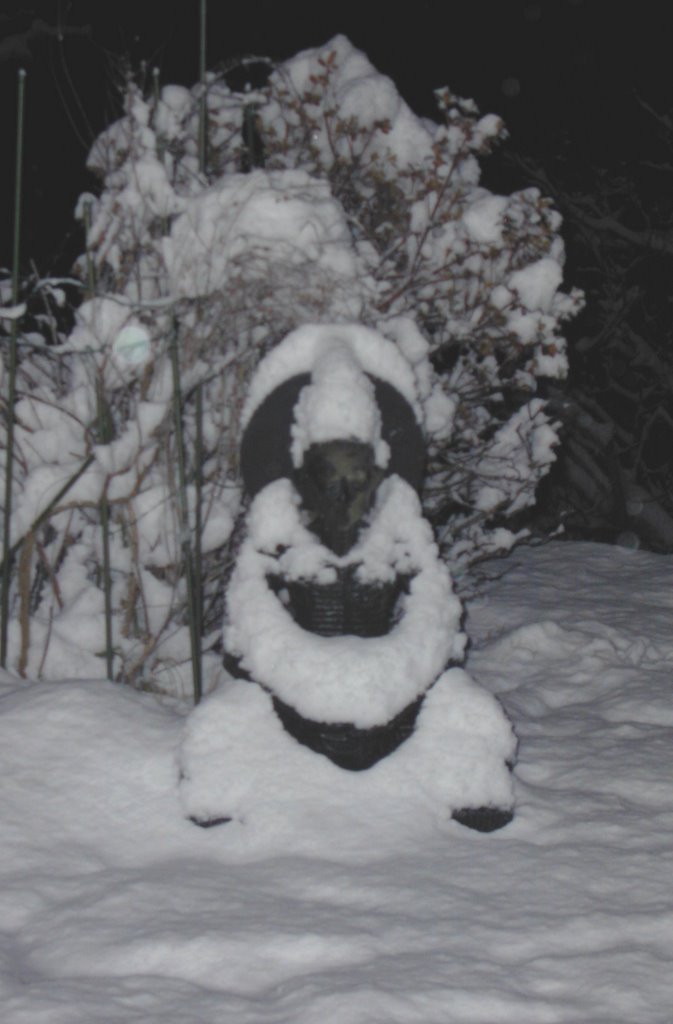
snow circle


late night snow -
the circle of life
in black and white


ooooooooooooooooooooooooooooooooooooo


雪の夜も 座り続くや 石仏


my stone Buddha
sits in the dark -
snow, snow, snow

ooo ooo ooo

in the snowy night
just sitting -
Stone Buddha

in der Schneenacht
einfach nur sitzen -
Steinbuddha


More Haiku from February 2006

:::::::::::::::::::::::::::::::::::::::::::::::::::::::::::::::::::::::::::::::::::::::::::::::::::::

A present from © Geert Verbeke


WEBSITE: http://users.skynet.be/geert.verbeke.bowls
BLOG: http://haikugeert.skynetblogs.be/


:::::::::::::::::::::::::::::::::::::::::::::::::::::::::::::::::::::::::::::::::::::::::::::::::::::

雪の夜に 座り続くや 石仏

Tensaku from Susumu Takiguchi

Samui desune. Your new haiku has made me shiver!

Your new haiku is excellent as a poem and in my opinion will compare well with fine haiku written by Japanese masters. Everything about it is pure (WHChaikuneoclassical) haiku.

My TENSAKU, therefore, will be merely cosmetic. Firstly, let us give it an English version for those who don't speak Japanese:

snowy night...
just carries on sitting,
the stone Buddha


Generally, I do not value so high all those haiku written by Western poets which mobilise certain obvious Japanese objects rather like stage props in the presumed belief that anything exotic and Japanese-sounding might make the haiku read more genuine: e.g. kimono, origami, toro, and most frequently Buddha. Other things such as wind chime (though there are Western wind chimes as well) can also be a bit irksome.

It is greatly due to perception gaps and to my intense dislike of stereo-typed and too easy way to which certain people are prone. It is probably Western taste for exoticism only to be enjoyed among Western poets alone. It is high time, however, some Western poets left the 19th century exotic views of Japan behind and started to acquire genuine knowledge and experience of things Japanese.

Your case, however, is totally different and that is why it moves me. For you, it is not something exotic in a far-away foreign country as you live in Japan. As it is written in Japanese it is also most obviously not for foreign consumption. However, more fundamentally and profoundly you live among Buddha statutes, Buddhist temples and Buddhist monks. Moreover, you are an expert of Buddhism. Your perception about them is the same as that of the Japanese, and, most probably stronger.

The first point of my TENSAKU is about the joshi (particle) 'ni' in jogo (the first five beats). Opinion will differ on this point and I welcome comments from other Japanese members here. 'Mo' (meaning 'too') might be better here than 'ni', as it helps express what you want to say more naturally. Thus:

yuki no yo mo
suwari tsuzuku ya
ishibotoke

Some Japanese haijin are bound to disagree with me here, saying that 'mo' could be laying it too thick and 'ni' makes it more sukkiri.

The next point of my TENSAKU is the verb 'tsuzuku' (continue) in chu-shichi (the middle seven beats). You are using the verb as yon-dan and it is here used as rentai-kei (tsuzuku). You are using 'ya' as a kireji which represents eitan and kando. It may be better to use the verb in shimo-nidan, in which case the rentai-kei would be 'tsuzukuru'. This is an equivalent of kogo (modern Japanese) 'tsuzukeru' and 'suwari tsuzukeru' is the usual kogo expression, which I presume comes from the shimo-nidan 'tsuzukuru'. Thus:

yuki no yo mo
suwari tsuzukuru ya
ishibotoke


This is obviously 'ji-amari' (excessive beats) in chu-schichi, counting 8 beats rather than 7. However, it is a Basho-like ji-amari and intensifies the feeling of the act of the stone Buddha's sitting going on and on and on.

The other point about it is that your 'tsuzuku ya' could be interpreted as what is called han-go (i.e. irony), which would mean, 'Would the stone Buddha continue to sit in the night snow? No, it wouldn't.' So, the meaning would be very different.

However, these are very much of finer points and the argument of advanced stage of haiku-writing. You might ask your Japanese haiku masters for their opinion. I know at least they will praise this haiku very highly, at least as highly as I do.

Yoku dekimashita!

With very best wishes and kengin,

Susumu

ooo ooo ooo

Dear Susumu

Thank you so much for your tensaku. I will rewirte it using the MO, I like that idea.
By the way
the one sitting in the cold snowy night on the veranda watching the Buddha, who might that be? I go for the irony with the YA.

yuki no yo mo
suwari tsuzuku ya
ishibotoke

Let us hope for better weather!

Buddha is indeed a part of my daily reality and not anything exotic.
This particular stone statue is from Gandhara, India, so he is a real gaijin like myself. I have written more about him HERE.

GABI

ooo ooo ooo

Quote from another friend:

Dear Gabi,
Mister Susumu wrote he does not value so high all those haiku written by Western poets which mobilise certain obvious Japanese objects: e.g. most frequently the Buddha.
Correction:
the Buddha is nowedays a part of the Western culture too. This spritual master has nothing to do with a 19th century taste for exoticism of Japan.
He is part of our everyday reality.

G.

***************************

Please send me your contributions

To the Daruma Museum Index

To the WHC Worldkigo Database

10/26/2006

Stone Buddha Momiji

:::::::::::::::::::::::::::::::::::::::::::::::::::::::::::::::::::::::::::::::::::::::::::::::::::::


野仏に 紅葉の降るる 山暮らし


red maple leaves
falling on the stone Buddha -
my mountain life


:::::::::::::::::::::::::::::::::::::::::::::::::::::::::::::::::::::::::::::::::::::::::::::::::::::


Nobotoke, Stone Buddha Statues in the fields, imbued with prayers for a good harvest, to pacify the Gods of the Elements.
A lot of them represent Jizo Bosatsu.

We find modern versions also at a roadside place where a deadly accident has taken place, to pray for the rest of the souls lost here.

Along the old pilgrims paths of Japan, many of the stone Buddhas mark the graves of unknown pilgrims (muenbotoke 無縁仏) .


World Kigo Database: Autumn leaves (momiji)


More of my haiku about Stone Buddhas

Doosojin, the Wayside Gods


Read my Haiku Archives from October 2006

***************************

Please send me your contributions

To the Daruma Museum Index

To the World Kigo Database

7/01/2024

Welcome to my Haiku Gallery 01!

[ . BACK to DARUMA MUSEUM TOP . ]
::::::::::::::::::::::::::::::::::::::::::::::::::::::::::::::::::::::::::::::::::::::::::::::::::::: 


! WELCOME - WELLCOME - WILLKOMMEN !

I will try to show you my home in Japan
and other interesting things Japanese,
sorted into some common topics.


Entries from 2007 - 2011

. 02 - HAIKU and HAPPINESS - 02 .


. 03 - Gallery Happy Haiku - Photos .


Haiku, senryu, zappai and other forms of free verse.

:::::::::::::::::::::::::::::::::::::::::::::::::::::::::::::::::::::::::::::::::::::::::::::::::::::

SEARCH all my articles


:::::::::::::::::::::::::::::::::::::::::::::::::::::::::::::::::::::::::::::::::::::::::::::::::::::
:::::::::::::::::::::::::::::::::::::::::::::::::::::::::::::::::::::::::::::::::::::::::::::::::::::


... ... ... ... ... ... ... ... ... ... ... Contents


Amida Buddha 阿弥陀如来

Anemones ... アネモーネの朝露

ANIMALS in my Haiku life COLLECTION

April 2007 ... Archives

..... Asian Haiku Trevelogue
China, Taiwan, Thailand and more .....

August 2007 ... Archives

Autumn Days 。。。秋の天高し

Autumn Festival 2005 秋祭り、境神社

Autumn, my autumn, ora ga aki 2012

Autumn Flowers 2002 秋の花
..... Autumn Flowers 2005  雨粒と花 Raindrops
..... Autumn 2005

Autumn Leaves 2005 紅葉

Azalea and Shaka つつじとお釈迦様


Badgers / Tanuki in my Garden 2005 狸
..... Tanuki and my cat, Haiku kun

Bamboo - 竹の物語
. . . . - My Bamboo in Snow -

Begging Monk ... Takuhatsu 托鉢

Birds, our Birds 鳥 の話. Our Roof.
. . . O-Tsu the Cat on a hot tin roof

Black Sheep 黒き羊 and black swan

Bonsai 盆栽

Bridges .. 橋

. Buddha Shaka in my Garden .  
- - - - - Buddha's Voice Frog 仏の声の蛙

Buddha's Footprints (Bussokuseki)   仏足石

Buddha in the winter light / February 2009 Tibetan wooden statue

Buds in Winter 冬の命
..... Dry Flowers 冬の命


Camellia / Tsubaki 椿

Carpet Meditations 2007

Cats in Paradise .. O-Tsu and Haiku-Kun お津と俳句くん

Cat and the Mouse .. Fun with my Computer

CHINA 中国の旅
..... My Asian Haiku Travelogue: China
..... Autumn Memories Keilin, Guilin 桂林

Cicada Birthday 050725  蝉の誕生 semi セミ

Cold Morning  寒い朝、2006

Cooking a Cat ! 猫と一杯, 2005 夏

Cherry Blossoms <> Sakura .. 桜 桜 桜 2005

Cherry Blossom Lake Saigyo and our Lake 西行法師 2005

Cherry Blossom Road 桜道 2005

Chrysanthemums, Fireworks 花火菊 2005

Clouds in my Valley 谷に雲

Clouds after the Rain Chinese Ink Painting, July 2005 中国の墨絵

Clouds at Lake Tomada 雲と池の早春 2005
.... Small Lake in Autumn colors, Namu Amida Butsu !

Cold coming back 寒戻り 2005年3月

Cold Samui 寒い朝 First time below zero, 2005

Cosmos Flowers  コスモス、秋桜


Mt. Daisen 2005 , Beachflowers and WIND

Death and Last Haiku

Decoration Flowers Takahashi Temples, 0507

Dew Tsuyu 朝露

Dimensions ヂメンシオン

Dragon Branches ... Gnarled trees of Japan

Eclipse, solar eclipse May 21, 2012 金環日食

Fallen Leaves - Ochiba 落ち葉

Fear . . . and quotes to cope

February 2007 ... Archives

First Snow .. 初雪 2005年

First Shrine Visit 2006 Hatsu Mode

First Sunrise 2005 .. 初日の出

FLOWERS in my haiku life !Collection

. Formal Haiku - Five Seven Five .
my own and on facebook - 2016

Frankenfood, frankengrass, franken rice genetically modified problems


. Gallery Happy Haiku - Photos .

GARDEN, my garden in my Haiku life COLLECTION

Ghost Stories お化けの話 :o)

Goldenrod (seitaka awadachisoo)   背高泡立草

Google, googling, googeling ... and the memory

Grains of Sand and a bit on the philosophy of the ordinary !

Grasshopper's Wedding Party .... with visitors

Graves in the Mist 霞に墓

Haiku kun, 俳句くん, cats in paradise !

Halloween - ハロウィン

Hayama 葉山 the beach close to Kamakura

Harvest Time

Healing Power 癒しと俳句と祈り

Henro Pilgrims in Shikoku 遍路と無縁仏

HOME, my home in my Haiku life COLLECTION


Illusions with Fish 空想と魚

..... My Asian Haiku Travelogue: INDIA

Izumo Kaidoo, the old road to Izumo Katsuyama, Tsuboi, In no sho and many more ...

January 2007 ... Archives

JAPAN, my home in my Haiku life COLLECTION

..... My Asian Haiku Travelogue: JAPAN 1977

Jizoo 地蔵 .. a smiling Stone friend

June 2007 ... Archives
July 2007 ... Archives

... Kamakura, a Haiku Town in Japan 鎌倉と俳句

Kannon, the Bosatsu of Mercy  観音菩薩
.. .. .. Horseheaded Kannon
.. .. .. Kannon in the winter sun, 2006

Karl the Froggie with his family   .. 蛙 ... and his wife Karlina (Hyla japonica)
..... Frog in Buddha's Eye 仏の目にカール君

Karma, the Net of Indra ... grashopper in my teacup

KOAN and Haiku (01) .. 公案と俳句
KOAN and Haiku (02) .. Dreams 夢
KOAN and Haiku (03) .. Original face and Immortality

Koya-san in Wakayama .. Ginko .. Haiku-walk

Lake and Clouds  池と雲

Last Fudo Ceremony 2005 Osame-Fudo  収め不動

Lavender

Leaf, leaves in all seasons

LIFE,
my daily Haiku life
COLLECTION

Lily, My Kannon-Lily 観音ユリ
..... July 2006 : Lily in the Rain 2006年の観音百合
Lily in white - seven days of life

Love . . and mimosa  ミモサと愛情 

LOTUS 蓮、蓮華の花


Magnolia 木蓮 Mokuren

MANDALA .. Just the Beginning 。。曼荼羅

March 2007 ... Archives
May 2007 ... Archives

Medicine Buddha : Yakushi Nyorai 薬師如来

.. .. .. .. Mimasaka Haiku
.. .. .. .. From the Province where I live in Japan.
.....  Mimasaka, Postal Town of Doi: My Haiku Walk December 2006
美作市土居宿 , 出雲街道


Moss 石に苔
... Moss at Mt. Mitoku, October 2006

Mother, for my mother

Mountain Gods Yama no kami  山の神

Mountains smiling Yama Warau 山笑う

November 2006


October 2007 ... Archives

Onsen 温泉 Hot SpringHot springs of Japan

Outhouse Joy ..便所の話


Peace, August 6, 2006 Introducing Okamoto Taro 岡本太郎と平和

Philosophy and Haiku

Pine <> Matsu 松の木

Plum Blossoms ... ume ... the Park in Kume

Pottery and Haiku 焼物と俳句

Quietude and the Galactic Ant  静けさと蟻のクシャミ
..... The Sound of Wind, Sound of Clouds (essay) 風の音、雲の音、お茶の音

- - - QUOTES to enjoy with your haiku life !

Rain dripping ..雨もまだ

Rain, Prayer of Rain on my roof 屋根に雨の祈り, September 2006

Rainy Season Tsuyu  梅雨さなかに 満福
..... Rainy Season, Whow ! July 2006 2006年のすごい梅雨

Reflections .. Graves in a mirror 。。田舎の墓

Roses and Rosebuds during all seasons

Sea of Clouds 秋の雲海、2005 Autumn

September 2007 ... Archives

Shelter 仏様にまかせる。。。

Shadows in my haiku
More Shadows in my haiku since 2007

Shintoo Shrine 神道と宮

Shiraishi Island, a Pilgrim's Path 。。。白石島の遍路道、June 2006

Silence 静けさ ... Silence 2005

Simple Daily Happiness 簡単な毎日の幸せ

SKY,
the sky in my Haiku life
COLLECTION

SNOW
..... snowed in December 2005
Snowman Daruma, Yukidaruma .. .. 雪だるま
First Snow 2006
Snow Circle and water basin Feb. 2006
Snow down the Road March 2012
Snowflakes Haiku Collection


Spring 2006 2006年の春

Soaring Mind 鳶の話 Tobi

Spiders in Paradise 。。極楽の蜘蛛

Spotlight, the heavenly spotlight

Spring Weeds 2006, a HAIKU WALK 雑草の春の色
..... Spring, Early in 2007 早春 2007年

Stone Meditation .. Hogen, a Chinese Zen Master
Stone Buddhas .. 石仏
... Amida Buddha
... Arhats in Stone 五百羅漢
... Buddha's Footprints (Bussokuseki) 仏足石
... Buddha's Voice (Shakyamuni)
... Azalea and Shaka (Shakyamuni)
... Lavender leans on Buddha
... Horseheaded Kannon 馬頭観音
... Snow Night Meditation (Shakyamuni)
... Walking with the Gods 神様の散歩道
... STONES,
the stones in my Haiku life
COLLECTION
... STONES and ZEN,
the zen stones in my Haiku life
COLLECTION

Stone Garden 石庭、小堀作

Stone Wall 我が家の石垣

............ SUMMER

Summer Flowers 夏の花々

Summer Iris 杜若

Summer Metamorphosis 夏の変化

Summer Morning 夏の朝、酔仙翁・スイセンノウ

Summer Sky 夏の空

Sunbeam for us all ! 皆のための太陽
..... Sunset in Pink, August 2006


..... My Asian Haiku Travelogue: TAIWAN

Tanada .. Terraced Rice Fields in my Area 大垪和の棚田

.. .. .. .. .. .. .. Tao, Dao and Haiku 道教と俳句
.. .. .. .. .. .. .. Tao of a useless tree  

..... My Asian Haiku Travelogue: THAILAND

Tokei-Ji in Kamakura, January 2006

NEW in 2007: Travelogue through Asia
..... Photos and Haiku from my various trips. China, Taiwan, Thailand

Trees, my best friends .. 巨木
................................ Camphor Tree Kusunoki 楠木 くすのき
................................ Tao of a useless tree  

Trumpet Creeper   凌霄花 のうぜんかずら

Tulips   チューリップの嵐

Typhoon Tokage in Japan October 23, 2004  台風トカゲ

Typhoon Nabi 14 September 2005  台風14号
............................... Green Apples fallen by the typhoon 青林檎
............................... Humans Powerless Katrina 2005
Typhoon 12 - TALAS - September 2011

Universe sparkles .. 宇宙の物語
Unkai 雲海 the sea of clouds in my valley

VALLEY,
my valley in my Haiku life
COLLECTION

Visitors, Guests, Party . . .

Voice of Buddha .. .. Frogs Farting :o) 。。蛙の屁


Water kettles from Nambu ... 南部鉄瓶

Weeds, my Wonderful Weeds

Wild Boars Inoshishi 猪の訪問

Windows Temple Window Shapes お寺の窓の形

Winter 200/06, from December 2005 2005/6年の冬

Winter Wonders ..冬物語

Wisdom 知恵と無知恵

Woodpecker きつつき

Yin and Yang Cats ..陰と陽と猫

Zen Riddles with BEE ..ミツバチと禅
.. .. .. .. .. .. Haiku and Moments
ZEN,
the daily zen in my Haiku life
COLLECTION

............................................................


. QUOTES . .. .. .. .. .. to enjoy haiku even more


Hundred Years with Haiku
Translation from Japanese Haikupoets older than 90 years

Introducing Japanese Haiku Poets 

Saijiki for Buddhist Events and other Rituals .. 『俳句仏教歳時記』

Shikoku Summer 2005 Our own Haiku Pilgrimage 四国遍路

:::::::::::::::::::::::::::::::::::::::::::::::::::::::::::::::::::::::::::::::::::::::::::::::::::::

......................... Some of my Haiku Theory


Contents of the Archives

English Spelling and Punctuation

One Haiku, two Ideas The Basics

Teaching Haiku to Children / also usuful for adults

My Lessons about Haiku

:::::::::::::::::::::::::::::::::::::::::::::::::::::::::::::::::::::::::::::::::::::::::::::::::::::

.. .. .. Health and Happiness

Mead and your Health, Kneipp and Dioskurides
..... ミードと健康の話、デイオスクリデスの有名な薬学集

ooooooooooooooooooooooooooooooooooooooooo


。。。。。。。。 Enjoy My Japan and My Haiku !

:::::::::::::::::::::::::::::::::::::::::::::::::::::::::::::::::::::::::::::::::::::::::::::::::::::
.. .. .. To the World Kigo Database

.. .. .. To the Daruma Museum Index

... 大垪和 ー 道の駅 - My Valley .. Ohaga Chronicles


:::::::::::::::::::::::::::::::::::::::::::::::::::::::::::::::::::::::::::::::::::::::::::::::::::::

Back to the TOP

- the latest news
. groups.io/g/darumapediamemo .

Haiku and Happiness ...
Archives 2007 - 2011


:::::::::::::::::::::::::::::::::::::::::::::::::::::::::::::::::::::::::::::::::::::::::::::::::::::