Showing posts with label INFO. Show all posts

8/04/2004

LABYRINTH

[ . BACK to DARUMA MUSEUM TOP . ]
:::::::::::::::::::::::::::::::::::::::::::::::::::::::::::::::::::::::::::::::::::::::::::::::::::::::::::::::::::::::::::

The Labyrinth and the Honey Pot

As you know, one of my professions is a specialist in Apitherapy, using the BEE products to help keep human beings healthy and heal diseases.

Checking many things about the bees, I found some information about the honeypot in connection with the labyrinth. Well, my separate interest in Mandala and Bees had finally merged !

.. .. .. .. .. The Honeypot and the Labyrinth


going in circles -
a honeypot at the end
of the quest


Mandalas and labyrinths have been known for more than 4000 years. Some have been used as tools for meditation. Labyrinths come in many ways, usually the ones where you get lost and have to find your way out. The Walking Mandala in the picture above is of a different kind, there is only one path and you can not get lost, but you have to keep going.

This one has its original in the Grand Cathedral in Chartres, France, where it was built in the 13th century. Pilgrims used to walk the labyrinth in the middle of the church to find their final place with God.


It has been so successfull that Church authorities later forbade to use it. Nowadays it is open again and many copies of it are made all over the world to have this experience.

Read a lot more details about the labyrinth later here:
http://www.veriditas.net/about/labyrinths.html

For now, let us get to the honeypot part of the story.

This story takes us back to ancient Greece and the island of Knossos. There was an inaccessible palace called "Labytinth". More than 2000 years ago, the culture of Minos flourished on this island.

According to ancient greek myths, the great greek King Aegeus was forced to pay tribute to King Minos of the Minoans, whose kingdom was on the island we now call Crete. Every year the tribute included seven young men and seven young maidens. Underground far below King Minos' palace at the city of Knossos lay a huge maze built for him by the inventor and master architect Daedalus. Inside the maze Minos kept a monster called the Minotaur. The Minotaur was a hideous creature that was half man and half bull.
. . . CLICK here for Photos !

The fourteen young people from Greece would be let loose into the maze, the labyrinth, where they would become hopelessly lost and eventually be eaten by the Minotaur.

According to the legend, King Aegeus' son, Thesesus, decided to volunteer as one of the sacrificial victims, so that he could attempt to kill the Minotaur. Thesesus was successful. He slew the Minotaur, then used a trail of twine he'd started laying down at the entrance of the labyrinth to find his way out of the maze.

The name "Labyrinth" comes from the word "labrys" meaning "double-ax", and the dynasty of King Minos was referred to as the "House of the Double-Ax". Clearly there is history behind the myth here, for many images of double-axes have been found by archaeologists on Crete from a time even earlier than that of the mythological heroes.

Let us go back to Theseus and Ariadne.
One year the Athenian king sent his own son Theseus as part of the sacrifice. Theseus was determined finally to stop the slaughter, and to this end he was aided by Ariadne, daughter of the Minoan king, half-sister to Asterion and Mistress (or High Priestess) of the Labyrinth. Ariadne shared with Theseus the secrets and mysteries of the Labyrinth, and taught him the means by which Asterion might be killed. This she did because she loved Theseus.


Theseus entered the Labyrinth, and, aided by Ariadne’s secret magic, bested the tricks of the Labyrinth and killed Asterion in combat. Then, accompanied by Ariadne and her younger sister Phaedre, Theseus departed Crete and its shattered Labyrinth for his home city of Athens.


This labyrinth was constructed by Daedalus. Here is a bit about his legend:

He fled to the island of Crete, where he began to work at the court of King Minos and Queen Pasiphae, in the magnificent palace of Knossos. There he constructed a wooden cow for the queen to hide in to satisfy her amorous longings for a white bull sent by Poseidon, and by which she became pregnant with the Minotaur.
When the Minotaur was born, Daedalus built the Labyrinth to contain the monstrous half-man, half-bull. For years Minos demanded a tribute of youths from Athens to feed the creature.

We know that Theseus solved the problem, but that spelled trouble for Daedalus.
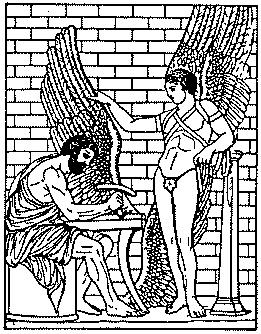
Daedalus decided that he and his son Icarus had to leave Crete and get away from Minos, before he brought them harm. However, Minos controlled the sea around Crete and there was no route of escape there. Daedalus realized that the only way out was by air.


http://thanasis.com/daedal2.gif

And as you see in the above picture, off he went with his son Ikarus.

To escape, Daedalus built wings for himself and Icarus, fashioned with feathers held together with wax. Daedalus warned his son not to fly too close to the sun, as it would melt his wings, and not too close to the sea, as it would dampen them and make it hard to fly.
They successfully flew from Crete, but Icarus grew exhilarated by the thrill of flying and began getting careless. Flying too close to the sun god Helios, the wax holding together his wings melted from the heat and he fell to his death, drowning in the sea.

These wings, held together with WAX, another product of the bees.

Let us look at an ancient tablet of the time, with the following inscription

pa-si-te-o-i me-ri
da-pu-ri-to-jo po-ti-ni-ja me-ri

To all the gods, one honey amphor,
To the Mistress of the Labyrinth, one honey amphor

http://www.escaped.it/doublevision/texts.htm


.........................................Another text reads

Be sure to take this Honey as a gift
to give the Lady of the Labyrinth.

http://www.cs.utk.edu/~mclennan/BA/HL/ritual.html

The Mistress of the Labyrinth is of course Ariadne, who helped Theseus escape. In ancient times, the honeybee was the symbol of death and rebirth.


When offering honey to the Gods, a dance was performed, known as Geranos.

We learned of Theseus who killed the Minotaur at the labyrinth of Knossos. On his way back to Athens, Theseus stopped at Delos where he offered sacrifice to the gods for having saved him. During the sacrifice, he danced a dance with serpentine movements which represented his tortuous path through the maze and the tight ring in which the fight with the Minotaur took place. This is the dance of the labyrinth or Geranos ( Geranos ) as it is known in the ancient texts. Historians put this myth at the time of the power of the Minoan civilization, that is more than 3000 years ago.

Some 3400 years ago, an unknown scribe employed at Knossos, site of the fabled labyrinth and prison for the unfortunate Minotaur, recorded on a clay tablet the offering of a pitcher of honey to
"Potnia of the Labyrinth."


This is the first evidence for the use of Labyrinthos - the original Greek word we now know as Labyrinth.

http://www.labyrinthos.net/


The name "Potnia" or "po-ti-ni-ja," "The Lady," has survived inscribed on tablets at Knossos.
"Potnia of the Labyrinth," or "da-pu-ri-to-jo po-ti-ni-ja."
A Knossos tablet describes an offering of honey to her, assuring us that she had a sanctuary dedicated to her in some part of the Labyrinth at Knossos. Only this particular temple was referred to in antiquity as the Labyrinth.
http://www.widdershins.org/vol8iss6/07.htm


With the above the connection between the Labyrinth, Ariadne and Honey is firmly established, I believe.

:::::::::::::::::::::::::::::::::::::::::::::::::::::::::::::::::::::::::::::::::::::::::::::::::::::


Links used for this story, where you find more details:
http://www.unmuseum.org/minot.htm
http://www.tqnyc.org/NYC030435/Theseus_Minotaur_Analysis.htm
http://www.pccc.cc.nj.us/asrc/readwrit/theseus.html
http://homepage.mac.com/cparada/GML/Ariadne.html
http://www.mythweb.com/encyc/entries/labyrinth.html
http://www.saradouglass.com/theseus.html
http://thanasis.com/icarus.htm
http://www.cs.utk.edu/~mclennan/BA/HL/ritual.html

:::::::::::::::::::::::::::::::::::::::::::::::::::::::::::::::::::::::::::::::::::::::::::::::::::::


From this link, you can launch the ONLINE labyrinth walker.


Grace Cathedral has two labyrinths. The outdoor labyrinth is made of terrazzo stone and is located to the right of the cathedral doors. This labyrinth is open 24 hours daily for walking.

source www.gracecathedral.org/labyrinth/


Here is the worldwide Labyrinth Locator.

The World-Wide Labyrinth Locator has been designed to be an easy-to-use database of labyrinths around the world. Information about labyrinths you can visit, including their locations, pictures, and contact details, are accessible here, along with information about the many types of labyrinths found worldwide. Labyrinths occur in many forms, shapes, and sizes, and the Locator contains both historic and modern examples.

If you input JAPAN you will find the one in my garden and the one we made in the city of Tsuyama.
http://wwll.veriditas.labyrinthsociety.org/


Pictures of our Labyrinth in Tsuyama Japan and more worldwide labyrinth types are here:


. Tsuyama 2004 - Labyrinth Photos .

. 津山のまちなか・元気ラビリント  .


Read more about my Mandala and Haiku here
MANDALA

Read more about my Mandala Therapy
Mandala Therapy .. coloring mandala patterns

:::::::::::::::::::::::::::::::::::::::::::::::::::::::::::::::::::::::::::::::::::::::::::::::::::::


Lavender Labyrinth
Kastellaun, Germany.

- Shared by GreenBuildTV - facebook -

:::::::::::::::::::::::::::::::::::::::::::::::::::::::::::::::::::::::::::::::::::::::::::::::::::::

[ . BACK to WORLDKIGO  TOP . ]


[ . BACK to DARUMA MUSEUM TOP . ]
::::::::::::::::::::::::::::::::::::::::::::::::::::::::::::::::::::::::::::::::::::::::::::::::::::: 


:::::::::::::::::::::::::::::::::::::::::::::::::::::::::::::::::::::::::::::::::::::::::::::::::::::

。。 。。 。。 迷路の中の蜂蜜ポット

曼陀羅や迷路は4000年も前から瞑想の道具として使われたそうです。でもこちらのパターンは迷路ではなく、曼陀羅です。実物はフランスの有名なチャルトレス市の大聖堂の床にあります。13世紀で作ったものです。古典的な遍路道で、11回のサークリングができます。中央に本当の自分と出会うことが出来ます。

曼陀羅のサークルを歩きながら心が晴れてきて、今まで見えないものが見えてくる。生きる力が湧いてくる。 この曼陀羅の道は一本道です。どこかの分かれ道で物事を決定することが必要ありません。身を任せるだけです。人生にもそう言う捕らえ方があるといいですね。歩きながらものを考えるのではなくて、自分の真の感情に直面することが出来る。

オンラインでも迷路を行く曼陀羅を見つけた。ぜひやってみてください。
http://www.gracecathedral.org/labyrinth/interactions/index.shtml#


迷路の真中に蜂蜜のポットが待っています。

話は古代クレタ島のクノッソス市にもどります。
盛時にはラビリンス(迷宮)と呼ばれていた宮殿は、今でも迷宮だ。そのクノッソス宮殿。紀元前2000年頃にミノア文明時代のクレタの王ミノスがデダロス名大工に築らせたと言われている。ところで現在では迷宮と訳されているラビリンス Labyrinth という言葉だけど、本来の意味は違っていただそうです。クノッソス宮殿の玉座の間には、双頭の斧が置かれていた。その双頭の斧のことをラブリュス Labrys と呼んだらしい。これがミノアの宗教において重要な意味を持っていた。宗教と政治を司る王の宮殿には、聖なる双頭の斧が置かれる。つまり 「双頭の斧の家」。それがラビリンスの本来の意味だと言う話。
これから有名なテセウス神話の世界になりますが、英雄テセウスと王妃アリアドネの話はこちらで読んでください。
http://forum.nifty.com/fworld/pictures/greek0205/04.htm
http://www.infoaomori.ne.jp/~yappi/w.history/100kodai/111chichukai1.html
このテセウス神話は実に有名です。羽や蜜蝋で翼を作り、迷路から逃げるデダロス、イカロス親子の話も、半分雄牛のミノタウロスなどヨーロッパで親しまれた英雄やアイヂアがたくさん登場します。


考古学の発掘でわかったのですが、あるクノッソスの紀元前1400年のタブレットから次の文書が現れた:
Linear B tablet KN Gg702

pa-si-te-o-i me-ri da-pu2-ri-to-jo po-ti-ni-ja me-ri

To all the gods, one honey amphor,
To the Mistress of the Labyrinth, one honey amphor
http://www.escaped.it/doublevision/texts.htm

神々に蜂蜜のアンフォーラを
迷路の女神に蜂蜜のアンフォーラを

迷路の女神はやはりテセウス神話にでるアリアドネのことです。
me-riはmel, mielつまり蜂蜜のことです。
当時では蜂蜜は死や再生のシンボルでもありました。蜂蜜を神様にささげる踊りの時にもつかいました。女神にささげる特別なダンス、Geranosゲラノス踊りはテセウス神話に登場する迷路を再現するダンスです。その話はまだ長いのですから省略。


古いクノッソスのタブレットはこちらです。
Some 3400 years ago, an unknown scribe employed at Knossos, site of the fabled labyrinth and prison for the unfortunate Minotaur, recorded on a clay tablet the offering of a pitcher of honey to "Potnia of the Labyrinth."
http://www.labyrinthos.net/

::::::::::::::::::::::::::::::::::::::::::::::::::::::::::::::::::::::::::::::::::::::::::::::::::::: 

. Parikrama - circumambulation .
of a holy place, in Hinduism, Buddhism etc.

:::::::::::::::::::::::::::::::::::::::::::::::::::::::::::::::::::::::::::::::::::::::::::::::::::::::::::::::::::::::::::


Finally a Japanese version of the book

聖なる道を歩く
黙想と祈りのラビリンス・ウォーク


source : www.amazon.co.jp

ISBN-10: 4324098549

:::::::::::::::::::::::::::::::::::::::::::::::::::::::::::::::::::::::::::::::::::::::::::::::::::::::::::::::::::::::::::

[ . BACK to DARUMA MUSEUM TOP . ]
[ . BACK to WORLDKIGO . TOP . ]

:::::::::::::::::::::::::::::::::::::::::::::::::::::::::::::::::::::::::::::::::::::::::::::::::::::::::::::::::::::::::::

Mandala Therapy

[ . BACK to Daruma Museum TOP . ]
:::::::::::::::::::::::::::::::::::::::::::::::::::::::::::::::::::::::::::::::::::::::::::::::::::::::::::::::::::::::::::::::::::

Mandala Therapy

I use a kind of therapy forwarded by the German Doctor Ruediger Dahlke.

What you do is very simple:
Just color a given pattern as you like.

The result is usually stunning, it looks pretty whatever you do and the teacher or parent can praise you with full intention (not just pretending...). So children feel encouraged to do more. Older people feel the long-lost artist awakening. Everyone feels his power of concentration getting better and better, school results are improving, elderly people become more active.

Books with Mandala patterns now range in the hundreds in Germany. From simple ones for kindergarden level through all kinds of school ages. From various cultures to various patterns in nature. From geometrical patterns to the most complicated ones used in Buddhist mandalas. See the links below.

You can choose a pattern that you like and try your hand. Doing it before going to bed will bring you a solid sleep. All anger and anxiety is gone by the time your mandala is finished.

It is a pretty cheap way to reach a transformation, so not very much appreciated by the medical profession (nobody can get rich, nobody studies it).


To color the given patterns is more creative than you might think in the beginning. You really get in the creator mood, start seeing patterns and feel your own life is your own creation within the limits of the patterns of human beings. Thus a feeling of freedom arises you might not have experienced before. From this feeling, healing results in the long run.


Here are some of Dahlke's books in English.

Mandalas for Meditation by Ruediger Dahlke

Intrinsically beautiful, the intricate round patterns of mandalas are wonderful tools for self-reflection, meditation, and self-therapy. In this unique workbook, you will encounter basic principle mandalas that you can color and use in various rituals and exercises. Despite the associations of coloring with childhood, coloring mandalas has remarkable therapeutic effects--and it's fun too.

Use mandalas to treat depression, midlife crises, and even physical complaints. Harmonize your flow of energy, improve your concentration and relaxation, and gain strength from your own center. By coloring, a person accepts the orderliness of the mandala, which seems to help the soul to create order as well and to place everything where it belongs. It teaches a degree of patience and helps make difficult issues seem simpler. Through mandala therapy you can intuitively regain perspective on what really matters in life, and focus on what is essential to you.
http://www.bighappybuddha.com/maforme.html


Mandalas of the World: A Meditating and Painting Guide,
by Rudiger Dahlke,
Sterling Publishing, 1992.

A wonderful source book of mandala designs from around the world. Line drawings cover both Eastern and Western circular patterns of many kinds.

Check it out in more detail on this page:
http://www.amazon.com/gp/reader/0806985267/ref=sib_dp_pt/103-2113014-6890240#reader-link


On this link you can find more books with Mandala patterns for coloring.
http://www.amazon.com/exec/obidos/ASIN/0806985267/claregoodwinsman/103-2113014-6890240?creative=327641&camp=14573&link_code=as1

:::::::::::::::::::::::::::::::::::::::::::::::::::::::::::::::::::::::::::::::::::::::::::::::::::::


Here is a page (or rather eight) with online mandala patterns for you to print and fill in with colors.
........... ............. .............. Look at some:
http://www.nicoles-funworld.de/windowcolor/Malvorlagen/mandala/mandala005.gif

http://www.nicoles-funworld.de/windowcolor/Malvorlagen/mandala/mandala099.gif
http://www.nicoles-funworld.de/windowcolor/Malvorlagen/mandala/mandala087.gif

Here is the rest where you can copy your favorite.
http://www.nicoles-funworld.de/windowcolor/malvorlagen-mandala.php


Another link with many of the German Books about
Malvorlagen
http://www.om-esoterik.at/thema.mandala.html

For example the Celtic Mandalas, one of my favorites

http://tinyurl.com/8rq6f
http://www.om-esoterik.at/

:::::::::::::::::::::::::::::::::::::::::::::::::::::::::::::::::::::::::::::::::::::::::::::::::::::


A German Link with many buttons to click.
http://www.adhikara.com/mandala_zum_ausmalen/mandala_malbuch_und_zeichnungen.htm

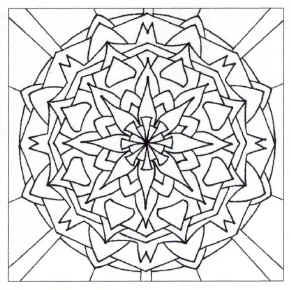
Here is one sample to print and start coloring


:::::::::::::::::::::::::::::::::::::::::::::::::::::::::::::::::::::::::::::::::::::::::::::::::::::


There are other forms of Mandala Therapy.
Here are some links.

MANDALA - ANCIENT HEALING TOOL WORKS WITH TRAUMA THERAPY

The word "mandala" comes from Sanskrit meaning squared circle, circle and the center. Most of the known mandalas are from Tibet and India, but the idea and the use of mandalas can be found in every culture: Stonehenge in England, the old calendar stone of the Aztecs in Mexico, the bronze marriage mirror of the Tang dynasty in China. In the northern Finland shamans have drawn mandala-type drawings and symbols on their drums. North American Indians have used mandalas as an important part in their healing traditions as well as Australian Aborigines in their ground-paintings. Whirling dervishes (the Near East) have created mandalas by dancing. An astrological chart is a mandala, and so are I Ching charts in China.

In a mandala there is a center, cardinal points and a symmetry, and sometimes a circle. In a cathedral or you'll see a mandala in stained-glass windows, in the architecture etc. It can be found in "normal" art and psychedelic art, in wall paintings, in the designs of bowls, in ceremonial cloths and in byzantic textiles.

"Mandala means a circle, more especially a magic circle, and this form of symbol is not only to be found all through the East, but also among us; mandalas are amply represented in the Middle Ages. The specifically Christian ones come from the earlier Middle Ages. Most of them show Christ in the center, with the four evangelists, or their symbols, at the cardinal points. This conception must be a very ancient one because Horus was represented with his four sons in the same way by the Egyptians ... For the most part, the mandala form is that of a flower, cross, or wheel, with a distinct tendency toward four as the basis of the structure."- C. G. Jung (Commentary to Secret of the Golden Flower)

This is an interesting approach. Check it out here:
http://www.scorpitos.com/articles/mandala.htm

Instructions for your own Mandala
http://www.scorpitos.com/mandalas/maninst.htm

:::::::::::::::::::::::::::::::::::::::::::::::::::::::::::::::::::::::::::::::::::::::::::::::::::::


Hawaii

The Peace that passes understanding is the quiet mind, the mind in which all inner dialogue is suspended. Mandala therapy is one way in which your mind can rest, going inward toward the center of your loving Heart. Your Heart is the source of your power and your wisdom. Your intuition arises from your Heart. When your mind is quiet you can hear your intuition which is your most powerful source of guidance.
http://www.innerjourneyshawaii.com/MandalaTherapy.htm

Some Modern Fun Mandala
A mandala is a circular image which is created as a healing or spiritual symbol for meditation or reflection. It has become popular as a form of art therapy because the ritual aspect of its creation seems to induce a sense of calm so it appears a safe way of journeying within - the circle gives boundaries to the work of art.
http://www.art-asylum.co.uk/mandalatherapy.htm
http://www.art-asylum.co.uk/mandalamobile.htm
Moving around
http://www.art-asylum.co.uk/mandalatrip.htm

:::::::::::::::::::::::::::::::::::::::::::::::::::::::::::::::::::::::::::::::::::::::::::::::::::::

India

"Mandala is about working out your problems."
It's a way of expressing and solving problems through colour and line.
It's not an art and the whole point is to understand your own language, which is not very difficult. You have to create your own Mandala and not look at some one else's.

In a Mandala, the picture and the colours matter altogether. It's not about personalities; it's about working out your (own) problems. With its help you can tell stress levels, suppressed anger and what you should do about it.

© Rohini Gupta
October 9, 2003

:::::::::::::::::::::::::::::::::::::::::::::::::::::::::::::::::::::::::::::::::::::::::::::::::::::

More Links about Mandala

CLICK for more photos and LINKS


Mandala: The Art of Power...The Power of Art, Ray Whiting
Carl Jung and the Mandala.
Yantra: Hindu Tantric Diagrams
Early Tibetan Mandalas: The Rossi Collection.
Mandala-Universe.Com, by Judith Cornell.
Mandala 101, by Betty Jiron.
Sand Mandala by the Venerable Losang Samten
http://www.infography.com/content/202843838465.html


Books about Mandala
http://www.abgoodwin.com/mandala/ccprint.shtml


Some links about Mandala making from a friend

http://raysweb.net/making_mandalas/

http://georgep.stanford.edu/~paplinda/mrspcorner/digitalart/oldmastermandalas/mandalas.htm
http://community.webshots.com/user/karina3884
http://community.webshots.com/user/cox_g


http://www.princetonol.com/groups/iad/lessons/elem/linda-mandala.htm
http://www.princetonol.com/groups/iad/lessons/middle/Cynthia-mandala.htm
http://www.princetonol.com/groups/iad/lessons/middle/geomath.htm

Linda

***************************

Do not miss my Mandala Haiku Gallery
MANDALA .. Just the Beginning


And then proceed to Walking the Labyrinth
Labyrinth .. Ariadne and the Honey Pot


::::::::::::::::::::::::::::::::::::::::::::::::::::::::::::::::::::::::::::::::::::::::::::::::::::: 

[ . BACK to DARUMA MUSEUM TOP . ]
[ . BACK to WORLDKIGO . TOP . ]

:::::::::::::::::::::::::::::::::::::::::::::::::::::::::::::::::::::::::::::::::::::::::::::::::::::

8/03/2004

MANDALA (01)

[ . BACK to DARUMA MUSEUM TOP . ]
::::::::::::::::::::::::::::::::::::::::::::::::::::::::::::::::::::::::::::::::::::::::::::::::::::: 

.. .. .. .. .. .. Mandala of all kinds

I do a lot of MANDALA THERAPY according to Dr. Ruediger Dahlke, a German doctor. The effects are really surprising, our local schoolchildren are usually so quiet and concentrated when they paint their patterns, it is a joy to watch them. And the smiles of old people after they painted a nice mandala is always so refreshing. Read more about it on the following link.


.. .. .. .. .. .. .. .. .. .. MANDALA THERAPY

.. .. .. .. .. .. .. .. .. .. .. Mandala as a Haiku Topic
...............................................................................................

In the following, I will show you some Mandala in nature.

................................................................................................


............................... autumn mandala -
............................... in my garden
............................... with pure joy

...................................................................................................


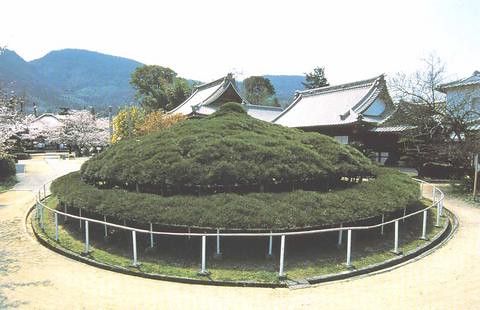
treemandala


enduring time
without a complaint -
teach me, round tree


Read more about the Mandala Temple here:
http://darumapilgrim.blogspot.com/2004/12/konpira-san-in-shikoku.html
By the way, a few years later,
this tree died and is no more!


Trees, my best friends


...................................................................................................


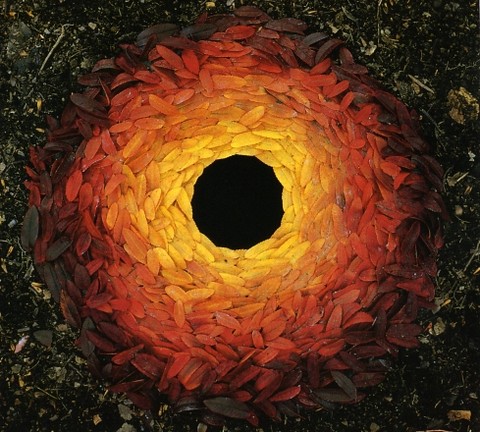
The following photo is by Andy Goldsworthy.

Look at his pages here:
http://cgee.hamline.edu/see/goldsworthy/see_an_andy.html

And read my introduction about him here:
http://groups.yahoo.com/group/happyhaiku/message/1159

.. .. .. .. Thank you, Andy !

mandalagoldsworthy01

each petal
finds its place -
autumn memories


Look at his ... Stone Mandala

Look at his ... Dandelion Mandala

......................................................................


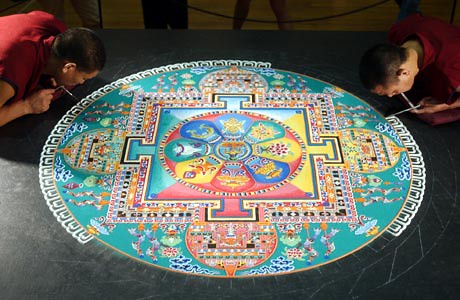
。。。。。。。。。。 Tibetan Sand Mandala


.............................. bowing deep
.............................. to the flow of energy
.............................. unmoved

http://www.savannahnow.com/features/slideshows/mandala/index.shtml


xxxxxxxxxxxxxxxxxxxxxxxxxxxxxxxxxxxxxxxxx


M.C. Escher was another great artist who produced many mandala-like patterns.


http://www.mathacademy.com/pr/minitext/escher/index.asp

................................................


............................. autum dew -
............................. before daybreak
............................. miracles unfold


ftp://ftp.sunet.se/pub/pictures/art/M.C.Escher/Dewdrop_in_a_Leaf.gif

.............................................


. . . gravity <>
holding on to
what you have


http://www.trippystore.com/shop/images/items/po-10.jpg


Here are some more haiku about Escher pictures.

. M.C. Escher and our haiku


.............................................

Examples from The oldest Escher Collection on the Web
http://home.comcast.net/~eschermc/

M.C.Escher Gallery
http://users.erols.com/ziring/escher_gal.htm

Look at a Big Knot of Escher
http://www.pims.math.ca/knotplot/various/EscherKnot.jpg


Metamorphosis - Escher patterns moving on
- source : facebook -

xxxxxxxxxxxxxxxxxxxxxxxxxxxxxxxxxxxxxxxxxxxxxxxxxxxx


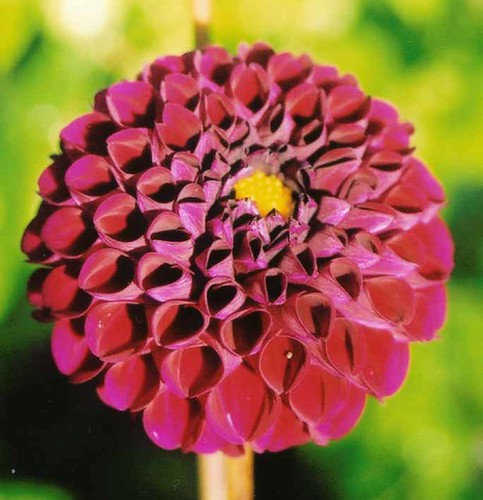
.. .. .. .. .. .. .. Mandalas in nature / Essay


God must have loved that circular pattern too because He put it into so many of His creations.
These pictures remind me that life is fragile and must be handled with care like the petals of flowers...


:::::::::::::::::::::::::::::::::::::::::::::::::::::::::::::::::::::::::::::::::::::::::::::::::::::


Time and space collide
Silence ... who's singing that hymn?
some lonely cricket

Photographs by Yao Xiang, with accompanying haiku and poetry by Issa, and others

From a great series of photos and haiku.
http://hsuyun.org/Dharma/zbohy/VisualArts/IandR/set3/photos-3.html

:::::::::::::::::::::::::::::::::::::::::::::::::::::::::::::::::::::::::::::::::::::::::::::::


eating a mandala -
some poison added
for special flavor


Fugu Fush Sashimi, a speciality of Japan
http://www.japantimes.co.jp/cgi-bin/getarticle.pl5?fv20050225a1.htm


xxxxxxxxxxxxxxxxxxxxxxxxxxxxxxxxxxxxxxxxxxxxxxxxxxxxx


Celtic Knots <> Another Way of the Mandala


no beginning
no end
the four seasons


This example is from Jos Leys.
http://www.josleys.com/Cel033.htm


http://www.geocities.com/SoHo


:::::::::::::::::::::::::::::::::::::::::::::::::::::::::::::::::::::::::::::::::::::::::::::::::::::


The Labyrinth, a special form of the Mandala


jinsei no
meiro o yuku ya
fuyu no hi ni

.. .. walking the
.. .. labyrinth of destiny
.. .. this winter day


.............................. Gehen
im Labyrinth des Lebens
an diesem Wintertag


We have one walk-in labyrinth in our garden, sometimes guests come. Here you see the local school kids, I am standing in the background.

http://groups.yahoo.com/group/happyhaiku/message/17

http://groups.yahoo.com/group/happyhaiku/message/385


This album shows us painting a walk-in labyrinth for the children the nearby town of Tsuyama. There are also many examples of worldwide labyrinths.
http://www.flickr.com/photos/gabigreve2000/sets/72157600520918424/detail/&.


If you got interested, read my Labyrinth .. Story.

:::::::::::::::::::::::::::::::::::::::::::::::::::::::::::::::::::::::::::::::::::::::::::::::::::::


The ultimate mandala is probably
the circle, ensoo 円相。


............................... o .. just one stroke
............................... o .. just three lines
............................... o .. just one life


.. .. .. .. .. Read my story about this circle here:
http://darumasan.blogspot.com/2004/10/ippitsu-and-ensoo-one-stroke-one.html


:::::::::::::::::::::::::::::::::::::::::::::::::::::::::::::::::::::::::::::::::::::::::::::::::::::


作者:ダルマ・ラマ Made by Daruma Lama
source : www.hotoke.net

Daruma Mandala だるままんだら 
Darumandala だるまんだら

:::::::::::::::::::::::::::::::::::::::::::::::::::::::::::::::::::::::::::::::::::::::::::::::::::::


this summer surprize -
a colorful mandala
of small paper dolls


- Gabi, Summer 2016 -

:::::::::::::::::::::::::::::::::::::::::::::::::::::::::::::::::::::::::::::::::::::::::::::::::::::

Here is my photo album about Mandala
http://www.flickr.com/photos/gabigreve2000/sets/72157600520233883/


Some of my Mandala and Health Links http://groups.yahoo.com/group/happyhaiku/links/Happiness_and_more_001087609608/


My approach to Mandala Therapy
http://happyhaiku.blogspot.com/2004/08/mandala-therapy.html


And then proceed to Walking the Labyrinth
Labyrinth .. Ariadne and the Honey Pot

::::::::::::::::::::::::::::::::::::::::::::::::::::::::::::::::::::::::::::::::::


Mandala and Haiku, Part 02
Mandala 02


:::::::::::::::::::::::::::::::::::::::::::::::::::::::::::::::::::::::::::::::::::::::::::::::::::::

[ . BACK to WORLDKIGO  TOP . ]
[ . BACK to DARUMA MUSEUM TOP . ]

:::::::::::::::::::::::::::::::::::::::::::::::::::::::::::::::::::::::::::::::::::::::::::::::::::::

8/02/2004

Haiku with Hundred

nnnnnnnnnnnnn TOP nnnnnnnnnnnnn

Haiku with 100 Years 百年の俳句
Haiku mit Hundert


Dear Haiku Friends,

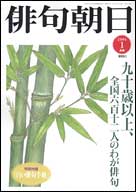
In the January Edition 2004 of the Asahi Haiku Magazine, there was a special about Haiku from persons older than 90, collecting 612 from all over Japan! This was the second time the magazine had called on the elderly to submit their haiku. The oldest person to submit his haiku was Mr. Nakamura, age 106!


I have randomly selected 20 of the poems and translated them rather literally into English and German. Members of WHCgerman then helped with the improvement of the translations, which will be introduced below.
I thank all the members of WHCgerman who helped with the translation.

The haiku are all very impressive and inspiring, introduced with a motto of the person who wrote it. Most are long-term haijin with a group or magazine of their own, some have started at old age in an old-peoples home or group for the elderly, coming to great perfection in a short period of time. All seem to enjoy the small things in life filtered through haiku shared with people of the same interest.

If a haiku a day keeps us healthy until 90 and well over, then we are all sharing a very good hobby, I think. I hope to be back here in 50 years!

Enjoy some impressions of our SENSEI (the ones born before we were) from Japan.

The oldest person to submit his haiku was Mr. Nakamura, age 106! His slogan in life is threefold: to love, to start something new, to endure.

waga iki no
kagayaki noboru
shabondama

my breath
shimmering, ascending -
soap bubbles

mein Atem
schimmernd, aufschwebend -
Seifenblasen

*
Zawai san is 97 years old. His motto is still: To meet my real self! But in the following haiku another motto seems to show too:


http://happyhaiku.blogspot.com/2005/04/anemones.htm


tsuyu no tama
korogaru toki wa
tamerawazu

a drop of dew -
when it rolls around
it does not hesitate

ein Tautropfen -
wenn er so rollt
zoegert er nicht

tsuyu no tama : could be singular or plural, but I felt it is Zawai san himself, rolling in the ups and downs of fate, never hesitating, accepting where it rolls.

*

The next one shows an old lady, Isoki san, copying sutras, one of the pastimes to prepare for the next life. She is 93 years and her motto is still: Optimism in all things.

shakyo no te
yasumete kikinu
semi no koe

resting the hand
from copying sutras -
cicada’s song

Die Hand haelt inne
beim Sutrenkopieren –
Zikadenzirpen

*

Nagatomo san writes about his haiku life together with his wife. Now he is 91 years old and all alone, but he still remembers his wife fondly. His motto is: To be grateful, to be kind and gentle.

futari shite
ayumishi michi
kiri no hana

the two of us
walked this road –
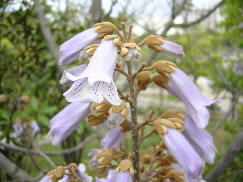
blue paulownia


Wir beide
gingen diesen Weg –
blaue Paulownia


http://www.hana300.com/kiri00.html

*
Kondo san is 92 and a mother of many children. Her best times are spent with all of them together.

haha no hi ya
kuukobin nite
ran no hana

Mothers day -
arriving with airmail
the orchids

Muttertag -
mit Luftpost kommen
die Orchideen

*

Sugiura san is 97, but his heart is always that of a youngster, even if the ears will not hear well, the eyes will not see well any more and the skin is full of wrinkles. The haiku of his wife is introduced next.

ikaserete
kyuujuunana sai
aki higan

given to life
for 97 years -
autumn equinox


durchs Leben gefuehrt
seit 97 Jahren -
Herbstsonnwende

ikasarete could be translated as „living in Gods hands“, it evokes a strong feeling of being at the mercy of higher powers, but in a positive, grateful sense. Issa in his haiku often uses the phrase “anata-makase”.

Autumn Equinox

*

Sugiura Natsu, wife of the above poet, is 94, and her motto is “Caring for others”, like a gentle mother.

kuruma-isu
osu ase otto ni
misemajiku

pushing the wheelchair
but never dare to show my sweat
to my husband


den Rollstuhl schieben
traue mich nicht, den Schweiss
meinem Mann zu zeigen

*

Asano san is 90 years and likes to live a normal, undisturbed life. His hobby is fishing, as you can see.

fune ukabe
himemasu tsuri ya
fuji biyori

floating in a boat
fishing for trout -
Mount Fuji in sunshine


im Boot schaukeln
nach Forellen fischen -
der Fuji im Sonnenschein

himemasu is a sort of salmon-trout, the direct rendering would be : princess trout, which evokes nice memories in Japanese. Mount Fuji is sourrounded by five big lakes, where you can rent a boat and spend a sunny afternoon just watching this splendid mountain while catching a morsel for dinner.

*

Watanabe san is a healthy 97 and sings his haiku in a traditional style. He likes to visit temples and spend a quiet time there.

zoo-in ni
koohaku no bara
kiyoi saku

at the monastery
white and red roses
blooming in competition


im Kloster
weisse und rote Rosen
bluehen um die Wette

*

Murai san is 94 and lives in Kyoto, where he enjoys the delicacy and refinement of the old town life.

choochin ni
ayu no hitomoji
kyoo no yoi

on the lantern
the character “sweetfish” -
evening in Kyoto


auf der Laterne
das Schriftzeichen “Bachforelle“ -
Abend in Kyoto

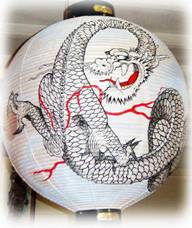
Here is a paper lantern with a dragon.


http://www.netwave.or.jp/~cyouchin/image91.jpg

*

Ono san is 91 and takes life easy and happy. And he still has a sweet tooth.

uraraka ya
ningyoo-yaki o
kau retsu ni

fine spring day -
standing in line to buy
sweet delicacies


strahlender Fruehlingstag -
Anstehen in der Schlange
fuer Suessigkeiten

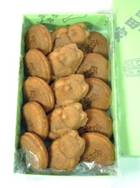
ningyoo-yaki is a sort of buns in the form of human figures or animals, filled with sweet been paste and a favorite with children. When fried at a stall during a festival, all are waiting in line in the sweet smell until a fresh bunch is ready.


http://rnet-jp.com/shopping/goods_img/1100_ph.jpg

AME, DAGASHI Sweets

*

Fukoku san is 90 and likes to live in peace with her big family. She also still counts her beads of the abacus.

itsutsu-tama
no soroban futoshi
shin-cha susuru

five beads
of the abacus so big -
slurping new tea


fuenf Kugeln
des Abakus so gross -
neuen Tee schluerfen

shin-cha is the first tea of a new harvest in spring and quite a delicacy, to be slurped in peace and appreciation.

Soroban, Abacus

*

Yoshida san is 90 and likes to meet people, taking each meeting as a special, unique event to cherish (ichi-go, ichi-e: one encounter, one chance).

sangurasu
kakete kishi ko o
michigaeri

wearing sunglasses
the child is coming -
I can not recognize who

mit Sonnenbrille
kommt das Kind herbei -
nicht zu erkennen

mi-chigaeru can also mean to mistake someone for someone else. So Grandmother is probably mistaking one of her grandchildren.

*

Ueda san is 99 and still makes efforts and exerts herself. Then at night it is time for a relaxing bath.

tsutsuganaku
yuzu-yu ni tsukaru
hyakuju ware

in good health
lying in the hot citron bath
me one hundred years


in guter Gesundheit
im heissen Zitronenbad
mit meinen Hundert

Yuzu yu is a bathtub filled with a special Japanese yellow citron fruit (yuzu) with a strong, envigorating smell to help ward off cold in winter. The dried peel of yuzu is also used as a food addition to enhance the taste of soup and other dishes. (It is one of my favorite Japanese flavors.)

*

Suzuki san is 91 and likes a serious, straighforward mind not to be disturbed by the vicissitudes of life. At his age, he has learned to enjoy the small things, one at a time.

posuto made
arukete ureshii
kiku biyori

to the mailbox
I could walk, I am so happy -
sunshine on the chrysanthemums


bis zum Briefkasten
konnte ich laufen, ich bin so froh -
Sonnenschein auf den Chrysanthemen


http://www.hana300.com/kiku00.html

Chrysanthemum


Published in the WHR Winter 2004 Edition
http://www.worldhaikureview.org/4-1/whcgerman-p2.htm

************************
Please send your contributions to Gabi Greve
Happy Haiku Discussion Group


To the Daruma Museum Index
http://darumasan.blogspot.com/


To the Worldkigo Database
http://worldkigodatabase.blogspot.com/