Showing posts with label Philosophy. Show all posts

5/15/2014

anger

:::::::::::::::::::::::::::::::::::::::::::::::::::::::::::::::::::::::::::::::::::::::::::::::::::::


"Whenever the energy of anger comes up,
we often want to express it to punish the person whom we believe to be the source of our suffering.
This is the habit energy in us.
When we suffer, we always blame the other person for having made us suffer.
We do not realize that anger is, first of all, our business.

We are primarily responsible for our anger, but we believe very naively that if we can say something or do something to punish the other person, we will suffer less.
This kind of belief should be uprooted.
Because whatever you do or say in a state of anger will only cause more damage in the relationship.
Instead, we should try not to do anything or say anything when we are angry."


Thích Nhat Hạnh


:::::::::::::::::::::::::::::::::::::::::::::::::::::::::::::::::::::::::::::::::::::::::::::::::::::::


:::::::::::::::::::::::::::::::::::::::::::::::::::::::::::::::::::::::::::::::::::::::::::::::::::::::

. My QUOTES with haiku .


. . . Read my Haiku Archives . . .

:::::::::::::::::::::::::::::::::::::::::::::::::::::::::::::::::::::::::::::::::::::::::::::::::::::::

12/24/2013

forget it all

:::::::::::::::::::::::::::::::::::::::::::::::::::::::::::::::::::::::::::::::::::::::::::::::::::::


Christmas time !


source : facebook


:::::::::::::::::::::::::::::::::::::::::::::::::::::::::::::::::::::::::::::::::::::::::::::::::::::

. . . Read my Haiku Archives . . .

:::::::::::::::::::::::::::::::::::::::::::::::::::::::::::::::::::::::::::::::::::::::::::::::::::

6/02/2013

quest for beauty


summer sunshine -
the quest for beauty
continues


photo credit to Creo Mandala, facebok


:::::::::::::::::::::::::::::::::::::::::::::::::::::::::::::::::::::::::::::::::::::::::::::::::::::

. . . Read my Haiku Archives . . .

:::::::::::::::::::::::::::::::::::::::::::::::::::::::::::::::::::::::::::::::::::::::::::::::::::

3/03/2013

ex ku

:::::::::::::::::::::::::::::::::::::::::::::::::::::::::::::::::::::::::::::::::::::::::::::::::::::


winter's end -
his ex-wife writes
an ex-ku


ex-ku = experimental haiku


. WKD : Haiku Definitions .


:::::::::::::::::::::::::::::::::::::::::::::::::::::::::::::::::::::::::::::::::::::::::::::::::::::

. . . Read my Haiku Archives . . .

:::::::::::::::::::::::::::::::::::::::::::::::::::::::::::::::::::::::::::::::::::::::::::::::::::

10/25/2012

autumn deepens

:::::::::::::::::::::::::::::::::::::::::::::::::::::::::::::::::::::::::::::::::::::::::::::::::::::


autumn deepens -
a black butterfly visits
the old pine


am I the butterfly
or the pine ?


The Old Pine in my village
. 両山寺 Temple Ryosan-Ji .


:::::::::::::::::::::::::::::::::::::::::::::::::::::::::::::::::::::::::::::::::::::::::::::::::::::

. . . Read my Haiku Archives . . .

:::::::::::::::::::::::::::::::::::::::::::::::::::::::::::::::::::::::::::::::::::::::::::::::::::

8/20/2012

mindfull fb


mindful
or mind full -
try a haiku


photo source : OMazingKids facebook


alone in twilight
does it matter
what's on my mind?

the moonlit night
you asked me to speak my mind...
alone with my dog


Chen-ou Liu


mind matters
over small talk ...
deepening night


Angelo Ancheta

:::::::::::::::::::::::::::::::::::::::::::::::::::::::::::::::::::::::::::::::::::::::::::::::::::::

. . . Read my Haiku Archives . . .

:::::::::::::::::::::::::::::::::::::::::::::::::::::::::::::::::::::::::::::::::::::::::::::::::::

8/14/2012

generalizations

:::::::::::::::::::::::::::::::::::::::::::::::::::::::::::::::::::::::::::::::::::::::::::::::::::::


"the normal German"-
not many of them live
in the woods of Japan


Generalizations about cultural traits are very dangerous, I found.
Whatever we do here, the Japanese keep asking

"Is that the way it is done normally in Germany?"
and my standard answer is

"No.
The normal German
does not live in the remote mountains of Japan."


This is easy to understand.


And after observing the people in Kanto (Eastern Japan, metropolitan area) for about 15 years it was quite a culture shock to come to our village in Western Japan.
There is no one way "the Japanese" do this or that.
There are only generalizations that do not help in individual situations.


The "Western" mind versus the "Eastern" mind ...
these are all traps when it comes to individuals living in one or the other culture.


Take each person as an individual, not a representative of his passport nationality.
Take each haiku poet as he writes his poems.

:::::::::::::::::::::::::::::::::::::::::::::::::::::::::::::::::::::::::::::::::::::::::::::::::::::

. . . Read my Haiku Archives . . .

:::::::::::::::::::::::::::::::::::::::::::::::::::::::::::::::::::::::::::::::::::::::::::::::::::

5/03/2012

WKD - bamboo shoots


bamboo shoots -
the more I look
the more I find


today we harvested
the first eight huge ones


:::::::::::::::::::::::::::::::::::::::::::::::::::::::::::::::::::::::::::::::::::::::::::::::::::::


bamboo groves
in backyards past...
shadows of time


Two resources for bamboo shoot info:
http://agsyst.wsu.edu/bambroc.pdf
http://www.bamboo.org/FAQ.html#CanIEatTheShoots


Tom Conally, USA
Happy Haiku Forum


:::::::::::::::::::::::::::::::::::::::::::::::::::::::::::::::::::::::::::::::::::::::::::::::::::::


market day
two baskets of bamboo shoots
sold in bulk


- Shared by Bos Tsip, Philippines -
Joys of Japan, 2012


:::::::::::::::::::::::::::::::::::::::::::::::::::::::::::::::::::::::::::::::::::::::::::::::::::::


May 15 :

to study in silence -
I wish I could grow
like a bamboo shoot


:::::::::::::::::::::::::::::::::::::::::::::::::::::::::::::::::::::::::::::::::::::::::::::::::::::


Bamboo shoots or bamboo sprouts
are the edible shoots (new bamboo culms that come out of the ground) of many bamboo species including Bambusa vulgaris and Phyllostachys edulis. They are used in numerous Asian dishes and broths. They are sold in various processed shapes, and are available in fresh, dried, and canned versions.
Shoots of several species of bamboo are harvested for consumption:
© More in the WIKIPEDIA !


.............................................................................


閑居して筍番をしたりけり
kankyo shite takenoko ban o shitari keri

now retired,
I stand guard over
bamboo shoots


Kobayashi Issa


Comment by Chris Drake :

This is an important hokku written three months after Issa received half of his father's land in his hometown that seems to show Issa's attitude toward his new lifestyle. The tone is humorous and directed at himself. He uses a deliberately grandiose phrase for his new life as half-owner of his father's house and land, a phrase that in Issa's time was commonly used by wealthy merchants who retired early, turned over their business to a son or head clerk, and concentrated on one of the traditional arts, such as tea ceremony.

In the 19th century kankyo shite commonly means "having separated/secluded myself from the noisy commercial world," and in Issa's case it means above all that he's left behind his life of wandering around the greater-Edo haikai world and has settled down in the country -- though he'll make many trips to greater Edo in the future. Any respectable retired Edo merchant or literati has an equally respectable avocation to fill his spare time, a custom parodied by Issa when he says he now works as the self-appointed official guard of the bamboo shoots on his father's property.

There may be some utilitarian value to Issa's new guard duties, since bamboo shoots are harvested for their food value, and monkeys, deer, wild boars, and bears also enjoy eating them, but bamboo shoots grow quickly, often in great profusion, so Issa may be deliberately be presenting himself as a guard of a natural process that happens even without guarding. Two hokku before this hokku in Issa's diary (for the 4th month [May] of 1813) he writes:

tsuyu chiru ya waka-takenoko no zokuzoku to

dripping dew,
young bamboo shoots
rise endlessly


(I follow Maruyama Kazuhiko's reading.) So it seems Issa is parodying himself as he goes around looking at vigorous bamboo shoots rising upward in May. The shoots may also be an image for Issa's view of hokku (and renku) as creations rooted in the earth that appear of their own accord and mostly just need a little looking after.

Chris Drake


BACK TO
. WKD : take no ko, takenoko 竹の子 bamboo shoots 筍  .


:::::::::::::::::::::::::::::::::::::::::::::::::::::::::::::::::::::::::::::::::::::::::::::::::::::

. Food with bamboo shoots .


. Bamboo shoots in 2010 .


. . . Read my Haiku Archives . . .

:::::::::::::::::::::::::::::::::::::::::::::::::::::::::::::::::::::::::::::::::::::::::::::::::::

3/01/2012

first crocus


first crocus -
this shape and color
of hope


. Crocus, a kigo for early spring  


I had just been out looking at the woodcutters killing the cherry trees and big pine trees, when I found this crocus in the garden.


listening
to the sound of chainsaws -
neighbours felling trees


:::::::::::::::::::::::::::::::::::::::::::::::::::::::::::::::::::::::::::::::::::::::::::::::::::::

. . . Read my Haiku Archives . . .

:::::::::::::::::::::::::::::::::::::::::::::::::::::::::::::::::::::::::::::::::::::::::::::::::::

2/09/2012

Koan cup of tea

:::::::::::::::::::::::::::::::::::::::::::::::::::::::::::::::::::::::::::::::::::::::::::::::::::::


a cup of tea
and a koan to go -
my cold morning


Nan-in, a Japanese master during the Meiji era (1868-1912), received a university professor who came to inquire about Zen.

Nan-in served tea.
He poured his visitor's cup full, and then kept on pouring.

The professor watched the overflow until he no longer could restrain himself.
"It is overfull. No more will go in!"

"Like this cup," Nan-in said,
"you are full of your own opinions and speculations.

How can I show you Zen
unless you first empty your cup?"

source : Zen Koans Database

.................................................................................


Once two traveling monks visited Joshu, a 19th century Zen master. He asked both of them,
“Have you ever been here before?”
One monk said yes. Joshu said, “Have some tea.”
The other monk answered no. Joshu said, “Have some tea.”

Joshu’s attendant monk wondered about his master’s answer and asked him,
“Why do you say, ‘Have some tea’ to a spiritually advanced monk and then say, ‘Have some tea’, to a monk who has still not seen the truth?”
to which Joshu replies,
“Have some tea!”


. KOAN and Haiku (01) .


:::::::::::::::::::::::::::::::::::::::::::::::::::::::::::::::::::::::::::::::::::::::::::::::::::::

. . . Read my Haiku Archives . . .

:::::::::::::::::::::::::::::::::::::::::::::::::::::::::::::::::::::::::::::::::::::::::::::::::::

1/16/2007

Carpet Meditation


winter morning meditation -
the mind crawls along
carpet patterns



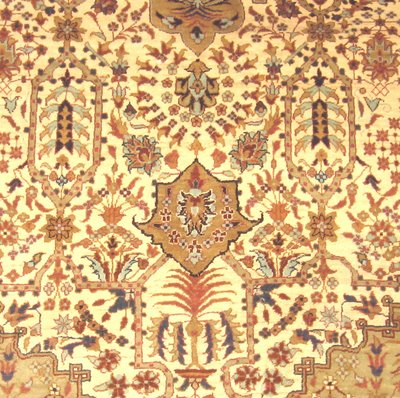
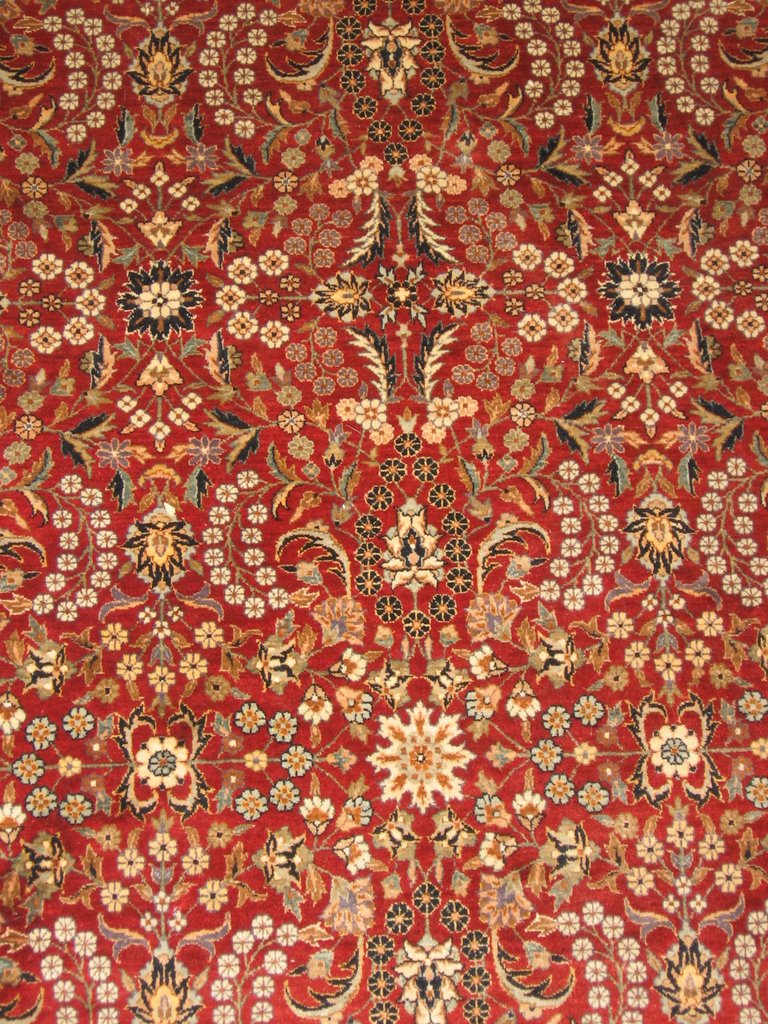
Sitting on my Chinese silk carpet in winter,
keeps the bottom warm but ...


.................... alternative haiku versions


meditating in winter -
the mind crawls along
carpet patterns


morning meditation -
the meditating mind crawls
along carpet patterns


After toying a bit with my photoshop, I came up with another version.... :o)

..... LOOK HERE ! Carpet Meditation 02 .....


::::::::::::::::::::::::::::::::::::::::::::::::::::::::::::::::::::::::::::::::::::::::::::::::::::


... My Asian Haiku Travelogue ...


... Meditation (dhyana) and haiku


:::::::::::::::::::::::::::::::::::::::::::::::::::::::::::::::::::::::::::::::::::::::::::::::::::::


Carpet, Rug .. juutan dantsuu
KIGO FOR ALL WINTER


How many details in a haiku?
(June 2009)
In Japanese, I learned to pack in as much as possible into the 5 7 5 pattern. It should paint a clear picture for the reader to enable him/her to be there with me and enjoy the situation with me. So I do not want to produce a riddle which gets the logical mind of the reader trying to figure out the basics and thus loose me in my moment of the image.

In the above haiku, winter morning meditation ... truely a bit long
BUT
meditation ... this word alone would get the reader into a general mood, philosophizing about meditation in general.

morning meditation ... now the reader can be with me, still half asleep, hungry before breakfast, but at least listening the the birdsong in the morning.

winter morning ... now the reader can be with me sitting in a cold atmosphere, being mostly miserably shivering with bare feet ... have you ever been to a Japanese temple on a cold winter morning, sitting with bare feet ?

Basho tells us about an old pond and a frog, all very clear and simple.
Or about a crow on a branch in autumn, nothing spectacular, but very clear.


morning meditation ...
the mind crawls along
carpet patterns


In English language haiku, things are different ... from minimalist to one line to five lines, the form is not a guideline any more ...
without kigo, so we do not know wheather to feel hot or cold within the given situation ...
and many riddles and ambiguities are presented to jumpstart the logic and take us away from a clear picture ...

So I am back to my problem,
how many details should we pack into an English language haiku so that the reader is able to share our situation at the first reading?
and maybe add a short footnote to take care of cultural differences that are indeed particular to our area?

:::::::::::::::::::::::::::::::::::::::::::::::::::::::::::::::::::::::::::::::::::::::::::::::::::::

Read a discussion of this problem


Hi Gabi!

>> winter morning meditation ...
>> the mind crawls along
>> carpet patterns
>>
>> When I wrote this, it had not occured to me to check for a better
>> kigo, only later did I find that CARPET was a winter kigo.

I think it's okay to have two kigo because this is an English-language haiku, and many of us would not think of carpet as a purely winter image and indicator of a season.


>> How many details should we put in a haiku?
Put as many as you can and then start eliminating them and only stop when it either doesn't make sense or it's a 'so what haiku'.


>> Haiku is not for you only, but to share with others. So your haiku
>> must be understandable at first reading ... that is what my Japanese
>> teacher told me many times.

There's the nub of it, what your teacher said stands not only for haiku but for poetry as a whole. It's a good template to start with.


>> In the above haiku, winter morning meditation ... truely a bit long

>> morning meditation ...
>> the mind crawls along
>> carpet patterns

For me this loses the power of your original haiku. If the poem was put into Japanese it might work with carpet as a winter kigo, but in English, this isn't the ooomph of your original poem.


>> In English language haiku, things are different ... from minimalist
>> to one line to five lines, the form is not a guideline any more ...
>> without kigo, so we do not know whether to feel hot or cold within
>> the given situation ...

Good points, which is why I feel the word 'winter' needs to stay. In the west 'winter' has so many connotations, from Wenceslas and Viking songs, to the Green Man, Santa, Christmas presents, even Coca Cola (as they invented the current Santa) to Victorian times and Charles Dickens to cold brutal times of war and starvation.

Without the word 'winter' I just feel a lot of readers might feel it's just someone doing meditation and being distracted by a bit of carpet pattern.


>> So I am back to my problem,
>> how many details should we pack into an English language haiku
>> so that the reader is able to share our situation
>> at the first reading?

I think you cracked it with the version you posted first of all.


>> and maybe add a short footnote to take care of cultural differences
>> that are indeed particular to our area?

I think a footnote would be overkill, but it might be interesting for some readers, especially if you brought out a book.
This could be an intriguing haiku to use for one of the problems of using
kigo. It sounds like a good chapter for that book Gabi! ;-)


Thank you so much, my friend!
But NO, no book in the near future!


:::::::::::::::::::::::::::::::::::::::::::::::::::::::::::::::::::::::::::::::::::::::::::::::::::::


Some more friends shared their views.

"Details that inform, rather than imply and evoke, should generally be excluded or excised."
B.

"but the whole point of choosing cues is to choose cues that both inform and invoke, like space and negative space
frogs in a pond denote and connote and suggest
and they are transformed in their absence into sounds
all suggestive, all implying levels of evocation that move out like the rings in the pond when you skip a smooth stone across it
details both palpable and evocative, both definitive and metaphorical
storms below, the milky way and galaxies above and beyond"
I.


:::::::::::::::::::::::::::::::::::::::::::::::::::::::::::::::::::::::::::::::::::::::::::::::::::::

Read my Haiku Archives


[ . BACK to DARUMA MUSEUM TOP . ]
[ . BACK to WORLDKIGO . TOP . ]

:::::::::::::::::::::::::::::::::::::::::::::::::::::::::::::::::::::::::::::::::::::::::::::::::::::

Carpet meditation (2)

:::::::::::::::::::::::::::::::::::::::::::::::::::::::::::::::::::::::::::::::::::::::::::::::::::::


meditating in winter -
carpet patterns distort
the mind


meditating in winter -
the mind distorts
carpet patterns


:::::::::::::::::::::::::::::::::::::::::::::::::::::::::::::::::::::::::::::::::::::::::::::::::::::


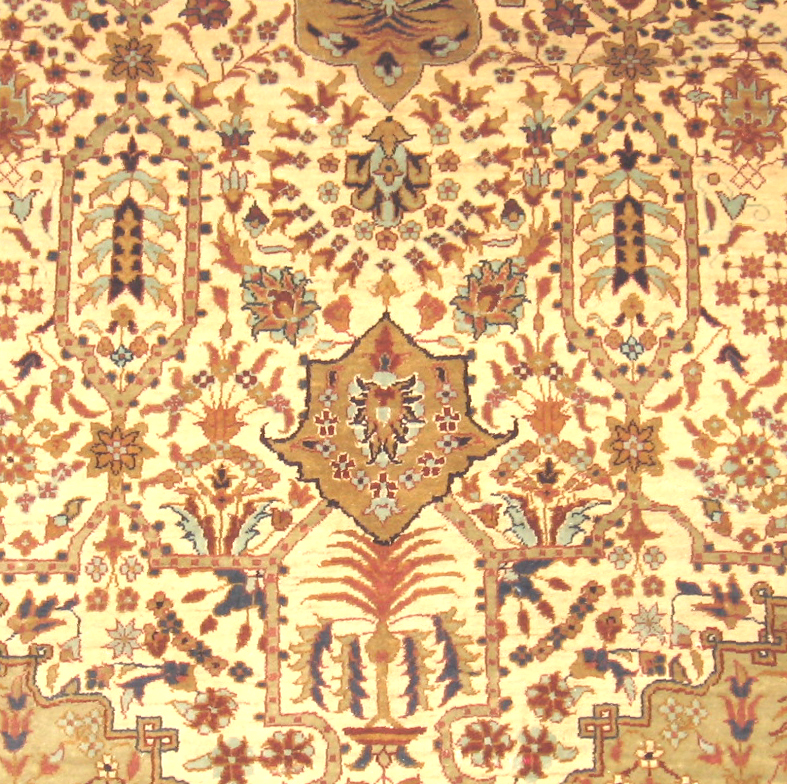
Carpet Meditation, the real one !


Thanks to Adobe Photo Shop, Uzumaki, Whirls,
and a long rainy afternoon !


. Carpet Meditation (1)  


.................. :o)

***************************


Carpet, Rug .. juutan dantsuu
KIGO FOR ALL WINTER


BACK

To the Daruma Museum Index

To the World Kigo Database

:::::::::::::::::::::::::::::::::::::::::::::::::::::::::::::::::::::::::::::::::::::::::::::::::::::
1/07/2007

Blizzard

:::::::::::::::::::::::::::::::::::::::::::::::::::::::::::::::::::::::::::::::::::::::::::::::::::::


blizzard <>
one million snow flakes and then
one more


:::::::::::::::::::::::::::::::::::::::::::::::::::::::::::::::::::::::::::::::::::::::::::::::::::::


One of my teachings in Japanese Archery was to practise :

yuki no metsuke 雪の目つけ

watching the snow fall,
then watching just one flake fall,
all the way from high up
to its very end on the ground.

Try it, it is quite a feat !
Sit outside on your veranda in the cold and just watch
one flake, one flake one more flake !


:::::::::::::::::::::::::::::::::::::::::::::::::::::::::::::::::::::::::::::::::::::::::::::::::::::


Zen Priest Takuan teaches:

"When facing a single tree, if you look at a single one of its red leaves, you will not see all the others.
When the eye is not set on any one leaf, and you face the tree with nothing at all in mind, any number of leaves are visible to the eye...

The mind that stops or is moved by something-
this is the affliction of the abiding place."


:::::::::::::::::::::::::::::::::::::::::::::::::::::::::::::::::::::::::::::::::::::::::::::::::::::


..................................................................................... A little later in the day


a yellow puddle
in the white snow <>
Haiku took courage


our cats loath the snow, they can not go around their business as usual ...
finally, Boss Haiku just did it !


Thus endeth a blizzard and dissolves in sunshine


snow melting <>
one million drips and
drops


:::::::::::::::::::::::::::::::::::::::::::::::::::::::::::::::::::::::::::::::::::::::::::::::::::::


Fast Forward to March 9, 2012


Leaves look damp and cold,
Listening to the frost grow -
Soon branches will crack...


Gabi San-
This is actually a famous saying in kyudo.
A student ask his sensei when to release the arrow and he received
Listening to the frost grow
to ponder.


kanya choosoo 寒夜聴霜

- Shared by Steve Weiss
Joys of Japan, March 2012


.................................................................................


Advise for Kyudo

期待 - 師範 魚住文衞


一、紀昌貫蝨の伝
 大意=小を視ること大の如く、微を視ること著の如し。

二、一分三界の目付け
大意=的を狙うのに一分(〇.三糎)の小さい的を三千世界(宇宙)のように大きく見開くこと

三、雪の目付け
大意=動く標的を狙う場合に、空から降る無数の雪の一片が地に落ちるまで見失わないように精神を集中せよ。

四、寒夜聴霜

大意=寒中の真夜中に結霜する音(無音の音)を聴きとるように澄み切った心境で行射せよ。

五、七情を除去せよ
 大意=人間の七情(喜、怒、憂、思、悲、恐、驚)を去って精神を一射に集中せよ

六、無念無想
 大意=概ね同前

source : kyudo/kantougensyuu


:::::::::::::::::::::::::::::::::::::::::::::::::::::::::::::::::::::::::::::::::::::::::::::::::::::


Read my Haiku Archives


[ . BACK to DARUMA MUSEUM TOP . ]
[ . BACK to WORLDKIGO . TOP . ]
:::::::::::::::::::::::::::::::::::::::::::::::::::::::::::::::::::::::::::::::::::::::::::::::::::::

12/31/2006

Tibetan Buddha


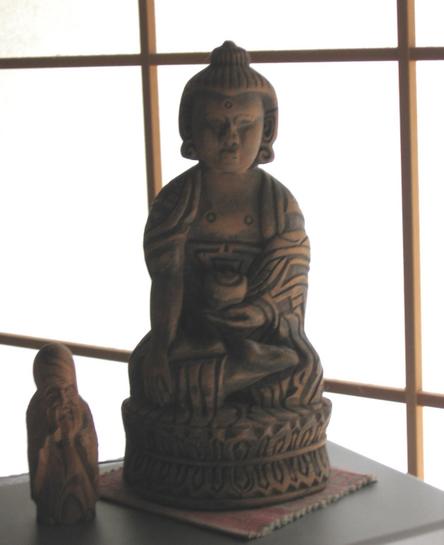
mild winter sun -
the Medicine Buddha
watches over me


when I caress you
I feel the hands of
your creator


We bought him more than 30 years ago in the Himalayas. He is rather roughly carved. He sits on our TV and takes care of the welfare of our home ! In his hands he holds the never-empty medicine bottle.


Read my Entry about the Tibetan Buddha of Healing

Read my Entry about Yakushi Nyorai, the Buddha of Healing 薬師如来


Read my Haiku Archives from December 2006

***************************

Please send me your contributions

To the Daruma Museum Index

To the World Kigo Database

6/17/2006

Dragonfly - teach me


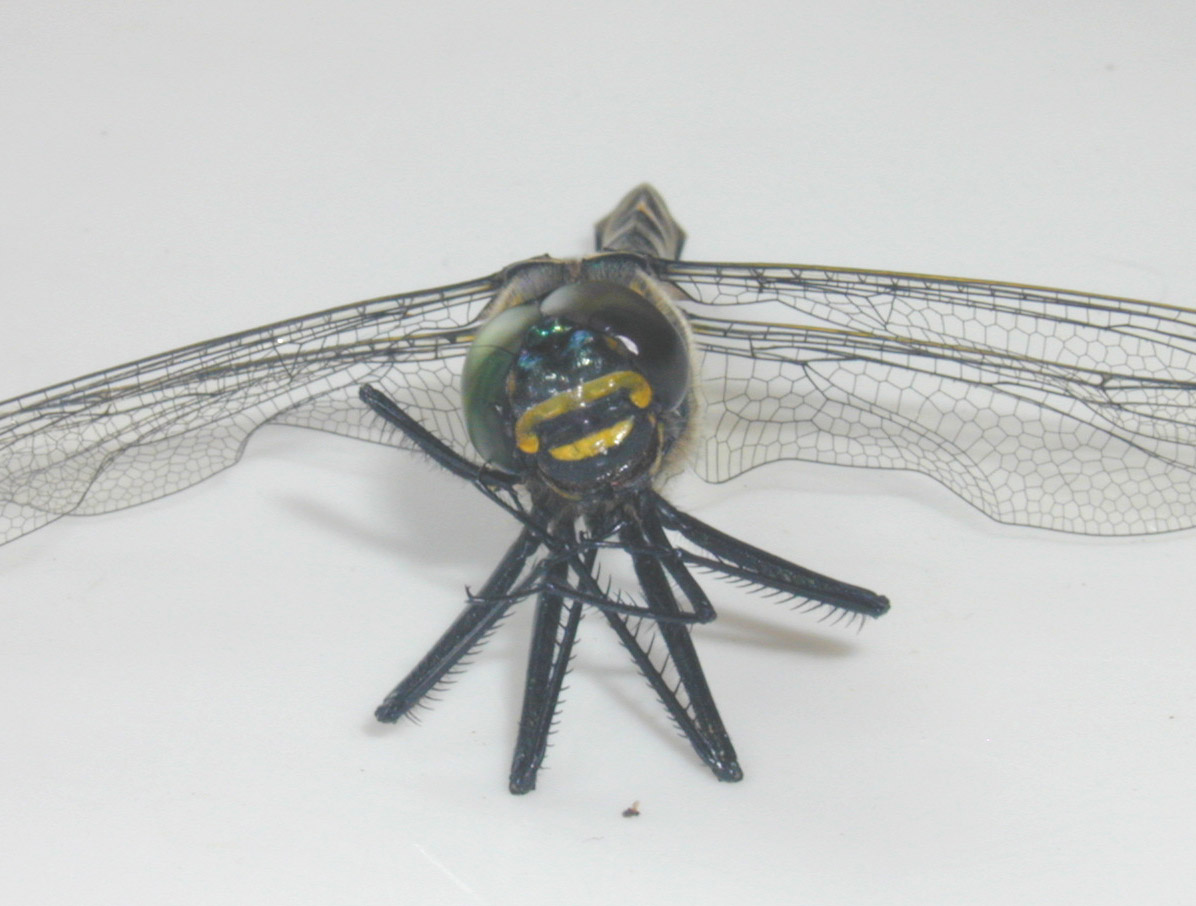
dragonfly -
what do you want to
teach me today ?


dragonfly -
your eyes still
talk to me


ooo ooo ooo ooo ooo ooo ooo ooo ooo ooo ooo


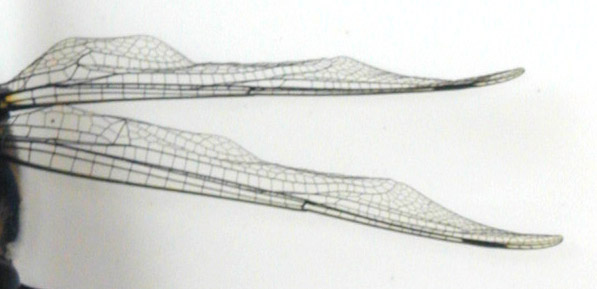
dragonfly -
patterns of life
patterns of death


:::::::::::::::::::::::::::::::::::::::::::::::::::::::::::::::::::::::::::::::::::::::::::::::::::::
. World Kigo Database : Dragonfly .


Read my Haiku Archives !


::::::::::::::::::::::::::::::::::::::::::::::::::::::::::::::::::::::::::::::::::::::::::::::::::::: 

[ . BACK to DARUMA MUSEUM TOP . ]
[ . BACK to WORLDKIGO . TOP . ]

:::::::::::::::::::::::::::::::::::::::::::::::::::::::::::::::::::::::::::::::::::::::::::::::::::::
6/11/2005

Taking Shelter


taking shelter
in the Buddha's light -
a dove in the morning


Zuflucht suchen
in Buddha's Licht -
eine Taube am Morgen


灯篭の灯りに隠れし鳩一羽


My SHIKOKU HENRO pilgrimage ARCHIVES


:::::::::::::::::::::::::::::::::::::::::::::::::::::::::::::::::::::::::::::::::::::::::::::::::::::

typhoon -
in the folds of my robe
a bee hiding


Typhoon is a kigo for mid-autumn.

:::::::::::::::::::::::::::::::::::::::::::::::::::::::::::::::::::::::::::::::::::::::::::::::::::::

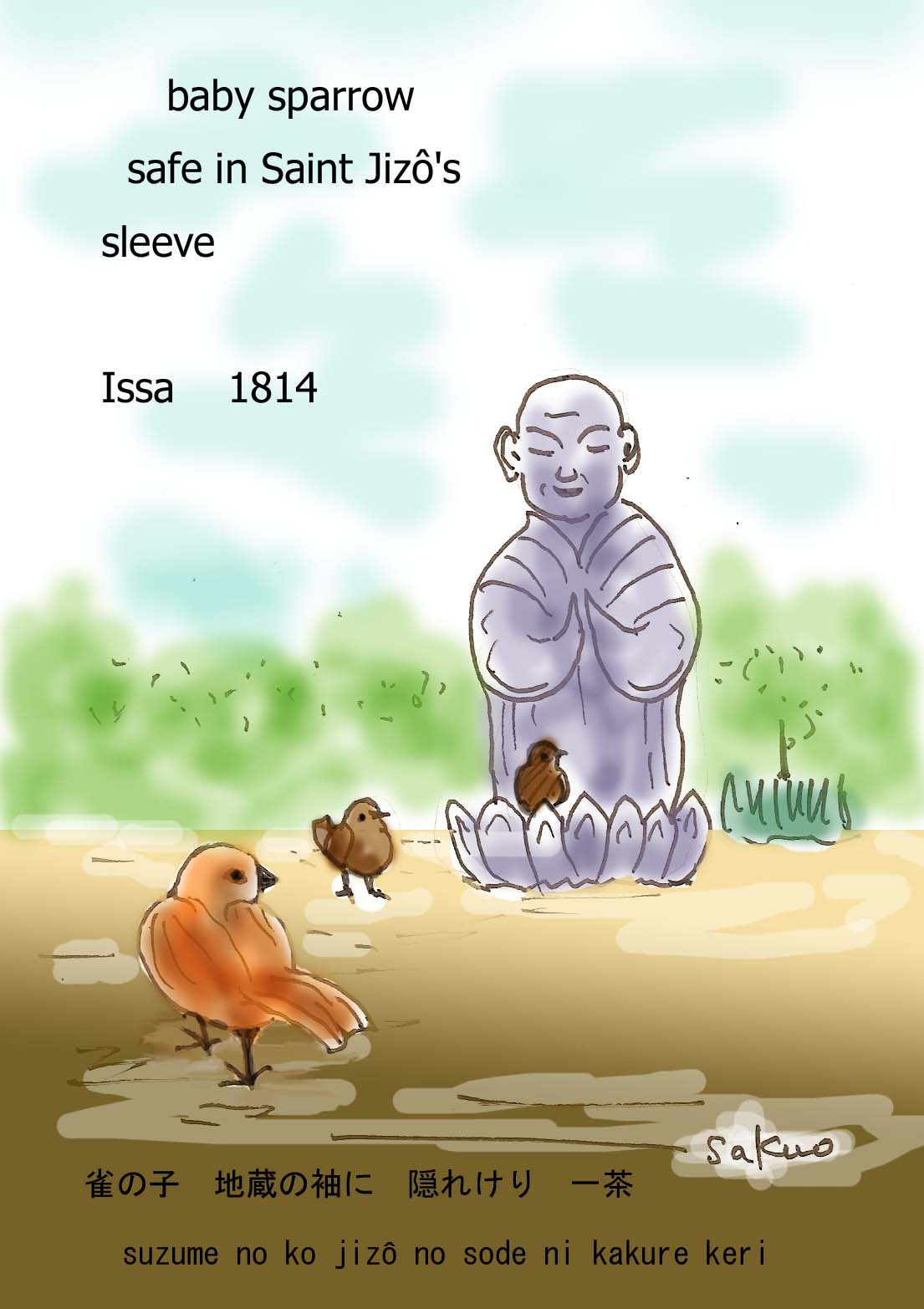
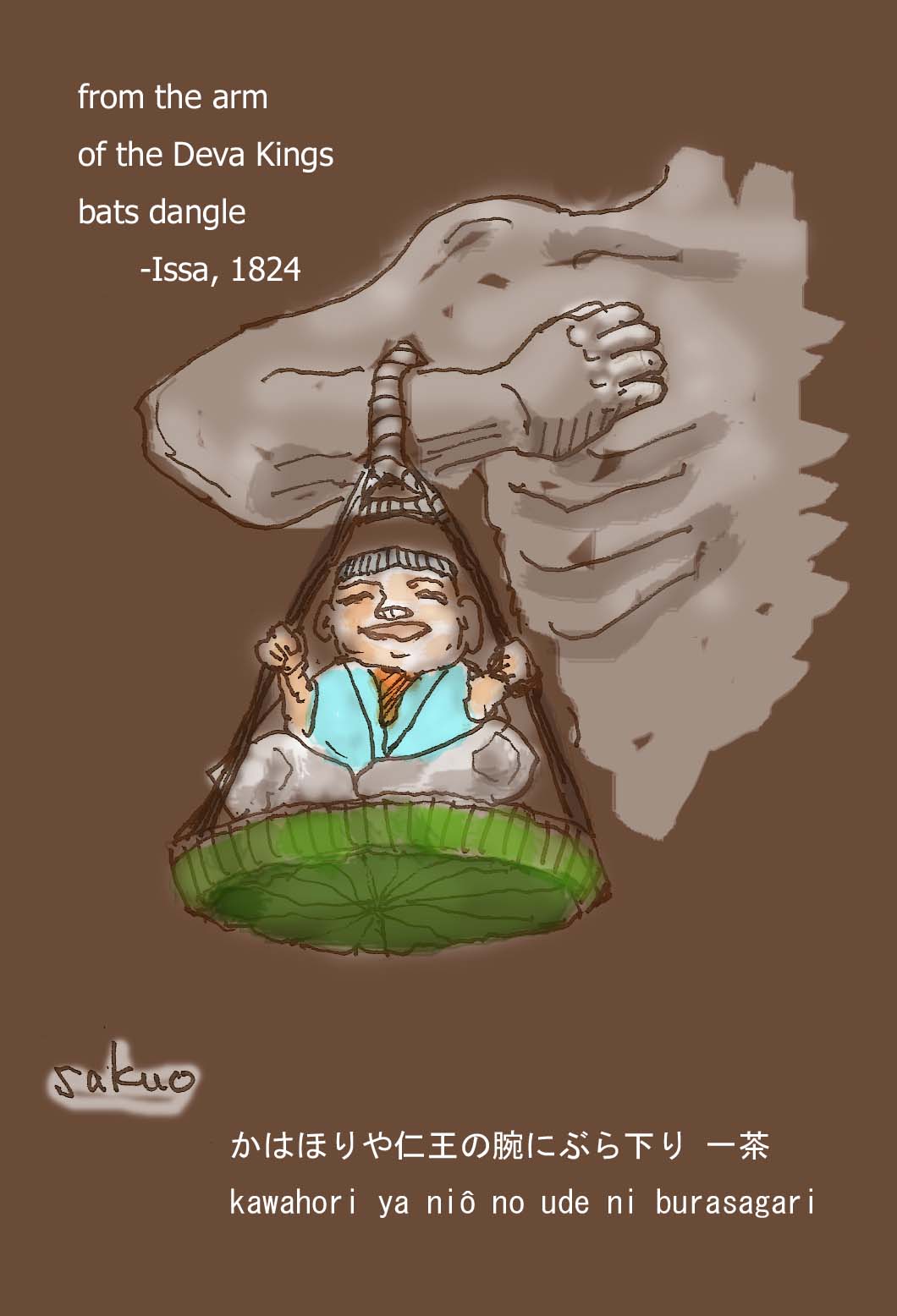
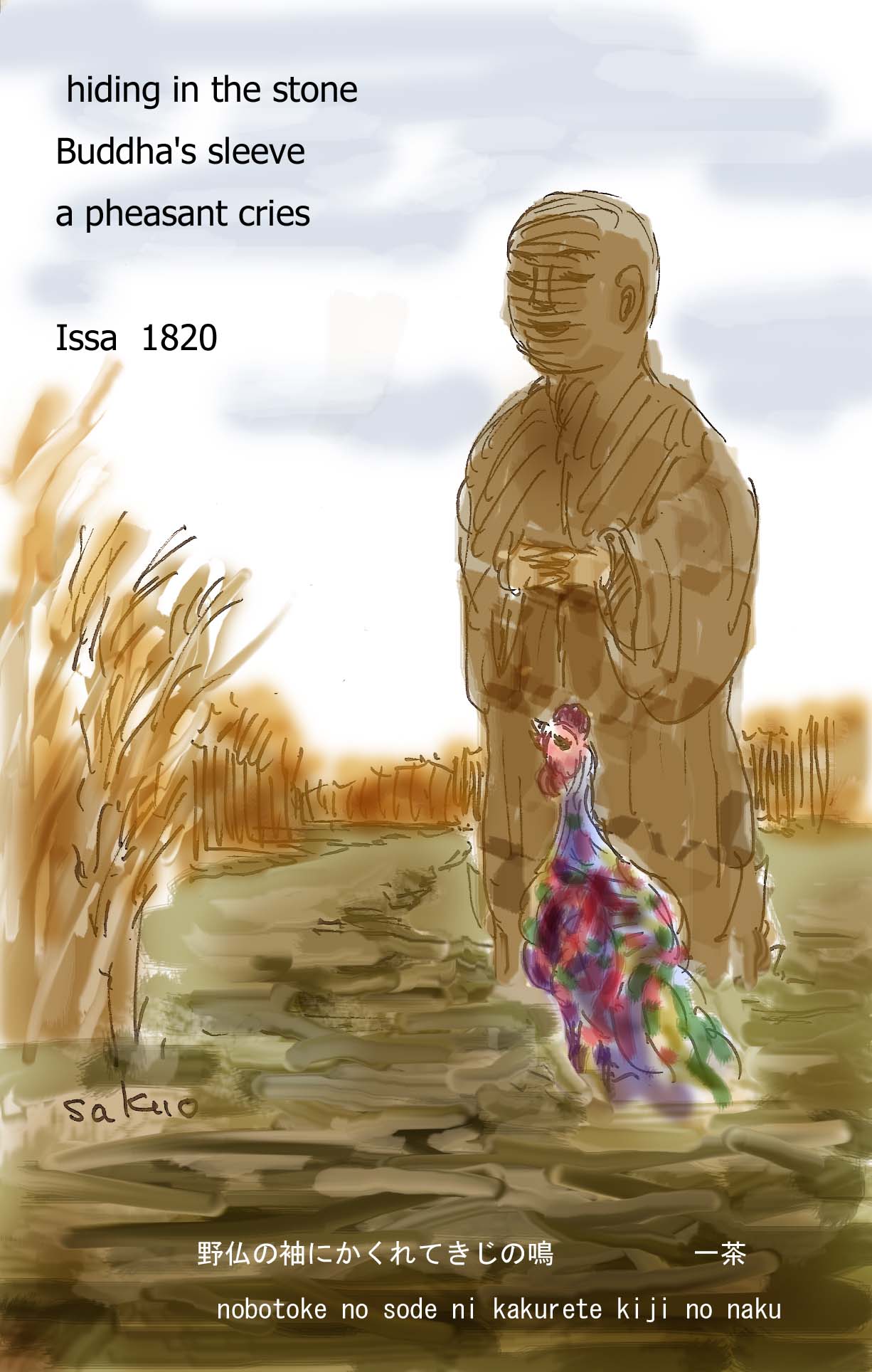
.. .. .. Issa writes about this subject of taking refuge in the Buddha too.


baby sparrow
safe in Saint Jizo's
sleeve


I wrote an explanation about the sheltering sleeve of Jizoo Bosatsu .


..........................................

kawahori ya Nioo no ude ni burasagari


from the arm
of the Deva King
bats dangle


.........................................


no-botoke no sode ni kakurete kiji no naku


hiding in the stone
Buddha's sleeve
a pheasant cries


Haiga by Sakuo Nakamura

Translations by David Lanoue

:::::::::::::::::::::::::::::::::::::::::::::::::::::::::::::::::::::::::::::::::::::::::::::::::::::


The picture of the dove is from our own haiku pilgrimage to
Shikoku Summer 2005 .

My Stone Buddhas and Haiku

.......................................................

Read about the Buddhas mentioned, by Mark Schuhmacher:

Jizo Bosatsu

Nio Protectors

Stone Lanterns

::::::::::::::::::::::::::::::::::::::::::::::::::::::::::::::::::::::::::::::::::::::::::::::::::::: 

[ . BACK to DARUMA MUSEUM TOP . ]
[ . BACK to WORLDKIGO . TOP . ]

:::::::::::::::::::::::::::::::::::::::::::::::::::::::::::::::::::::::::::::::::::::::::::::::::::::
5/11/2005

Azalea and Shaka


do not worry
about the fires of hell -
Azalea, Azalea


sorge Dich nicht
um das Höllenfeuer -
Azaleen, Azaleen


:::::::::::::::::::::::::::::::::::::::::::::::::::::::::::::::::::::::::::::::::::::::::::
Very interesting, Gabi.
Forget the azaleas. Tell us about that sculpture. With all its skin flayed off (the fires of Hell?) it looks like an illustration out of Gray's Anatomy.
L.

Here is a little about the background of this statue.

It shows the human Gautama Siddharta, the future Buddha, during a period of intense asceticism in the mountains near Bodhgaya (India). It usually shows him in sitting position, with no more flesh on the ribs after intense fasting. The blood vessels show on the arms and neck, he has a long beard and is dressed in the ascetics robe of not very much. His eyes are hollow from lack of sleep and food.
This type of statue is also called the "Fasting Buddha" or the "Starving Buddha".

This type of statue, called "Kugyoo Zoo" (苦行像 ) in Japanese is rather common in India, especially Gandhara, whereas here in Japan it is not very common. This particular one is a replica from the famous statue in the Lahore Museum, made of a special stone which gives a lovely ring-ring sound when you knock on the halo behind the head. He sits in my garden now, positioned so I can see him from my favorite seat inside. At all seasons, he is a treat to look at, but with the flaming azalea in May it is just fascinating.

He arrived here in my valley with a normal transportation service, just wrapped in a blanket, and it took three to carry him to his present position. He seems happy to be here, just as I am happy to have him here.

By the way, the real Gautama soon gave up his asceticism, realizing it does not lead to enlightenment. He walked down the mountain, bathed in a river, ate some curd which the maiden Sucharta offered him and then sat down under the Bodhi Tree in Bodhgaya.


Here is the famous statue from the
Lahore Museum.


From an Article in 2004

Fasting Buddha at Lahore Museum attracts Japanese aid
Nobuaki Tanaka, the Japanese ambassador to Pakistan has agreed during a visit to the Lahore Museum in October, to provide technical know-how to the museum, museum sources told the Daily Times on Thursday.

Lahore Museum, situated near Tollinton Market, is the oldest museum in the country and was established in 1864 under the name ‘Industrial Art Museum of the Punjab’. The Gandhara gallery showcases Mahayana Buddhist religious sculptures. Mahayana Buddhism originated and flourished during the first five centuries of the Christian era.

The showcases present the life story of Buddha in frieze panels and statues from his pervious incarnations, his birth, youth, enlightenment preaching of the law and death. Gandhara art is important for introducing the image of Buddha and the iconography developed has influenced Buddhist religious art everywhere.
- source ;: buddhistchannel.tv/index.php...
But later on May 2005 we can read this one:

Lahore Museum refuses to exhibit ‘Fasting Buddha’ in Japan
By Shoaib Ahmed

The Lahore Museum has rejected an offer to exhibit several items from the museum, including the priceless ‘Fasting Buddha’ and the ‘Miracle of Saraswatti’, in an exhibition on Gandhara art in Japan.

Sources told Daily Times that a Japanese cultural delegation, including the Japanese director of press, information and culture, recently met with Lahore Museum Director Dr Liaquat Niazi at the museum.

They said the meeting had been arranged by the Federal Ministry of Culture to discuss the possibilities of exhibiting items from the Lahore Museum in the Japanese exhibition.

According to sources, Dr Niazi asked the delegation what ‘benefits’ he would receive for sending the items to the exhibition. They quoted him as saying the objects would be sent only if they were accompanied with two personnel from the Lahore Museum, and if the delegation got several books from the museum translated into Japanese.

Sources said the delegation was ‘discouraged’ by this response and quoted the delegation as saying they were not a donor agency and were not interested in spending money on the Lahore Museum.

According to sources, by rejecting the Japanese delegation’s offer, the Lahore Museum has cost the country billions of rupees in foreign exchange.
They said that during the nine-month long travelling exhibition, many Japanese would get the opportunity to see the famous ‘Fasting Buddha’.
They said this would give the Japanese incentive to visit Pakistan to view other similar artefacts, thus earning the country significant foreign exchange through tourism.

Sources added that the exhibition would also give Pakistan an opportunity to prove false Indian claims that the Gandhara civilisation hailed from India. In the past, such exhibitions would have one stall for South Asia, which would contain both Indian and Pakistani exhibits. Sources said that according to the Pakistani ambassador to Japan, this time Pakistan would have its own stall.
When Daily Times attempted to contact Dr Niazi, he said he was driving and could not speak; he then switched off his cellular phone. When contacted at home, Dr Niazi again refused to comment.

Speaking to Daily Times, Secretary Information and Culture Kamran Lashari said the ‘safety conditions’ for the objects to be sent to the Japanese exhibition were not adequate. He added that the board of governors of the Lahore Museum also did not feel comfortable with the security being provided for the objects.

Mr Lashari said it had earlier been agreed in principal that given certain safety requirements, the objects would be sent to Japan. He added that he did not yet know whether or not the objects would be sent to the Japanese exhibition.

Daily Times May 2002 - All Rights Reserved


:::::::::::::::::::::::::::::::::::::::::::::::::::::::::::::::::::::::::::::::::::::::::::::::::::::::::::::::::::::::::::
Within the study of Buddhist art, the pieces of Gandhara are of special value. Here is a short abstract.

Gandhara Civilization

Pakistan is the land which attracted Alexander the great from Macedonia in 326 B.C., with whom the influence of Greek culture came to this part of the world. During the 2nd century B.C., it was here that Buddhism was adopted as the state religion which flourished and prevailed here for over 1000 years, starting from 2nd century B.C., until 10th century A.D. During this time Taxila, Swat and Charsaddah (old Pushkalavati) became three important centres for culture, trade and learning. Hundreds of monasteries and stupas were built together with Greek and Kushan towns such as Sirkap and Sirsukh both in Taxila.

It was from these centres that a unique art of sculpture originated which is known as Gandhara Art all over the world. Today the Gandhara Sculptures occupy a prominent place in the museums of England, France, Germany, USA, Japan, Korea, China, India and Afghanistan together with many private collections world over, as well as in the museums of Pakistan. Nevertheless, the zenith of this Gandhara Art is one and only "Fasting Buddha" now on display in Lahore Museum, Lahore.

Finally, the light of Islam penetrated in this part of the world as early as 7th century AD. from the west with the Arabs and during the 10th century AD from the north with the Turks. Islam replaced the early way of life of worshipping idols and introduced new philosophy of faith in one God. With Islam in came a new culture in this land from Arabia and Central Asia. Hence, a new type of architecture, hitherto unknown in this area, was introduced.


Tens of thousands of Mosques, Madrassahs, tombs and gardens were created by the Muslim rulers all over the Sub-Continent. The new style of Islamic architecture prevailed and matured in this land for over a thousand years. The most important contribution of the Muslim rulers to this land, however, is a new language ‘Urdu’ which became the national language of Pakistan since its independence in 1947.

The legacy of our predecessors at the time of our independence, on August 14, 1947, came to us as a treasure which may be called as Pakistan’s national heritage. So rich and diversified is this heritage that Pakistani nation can be proud of its glorious past, be Islamic, Post Islamic or pre-Islamic period as far back as pre-historic times. It is hard to find another country which can produce the treasure of by gone days as can be found in Pakistan. It is now incumbent upon us to treasure our national heritage and save it from further deterioration and theft.
http://www.heritage.gov.pk/html_Pages/gandhara.html

::::::::::::::::::::::::::::::::::::::::::::::::::::::::::::::::::::::::::::::


Scale replica of the famous original in the Lahore Museum. Gandhara Buddhist period in the Northwset Frontier Province, 2nd to 3rd century A.D.Stucco, 6 x 4 inches.

Although also from Pakistan, this is not an ancient Indus replica.
http://shop.store.yahoo.com/harappa/fastingbuddha.html

::::::::::::::::::::::::::::::::::::::::::::::::::::::::::::::::::::::::::::::

This Replica is from the temple Seikoo-In in Kawaguchi.


http://www.ukima.info/meisho/kawaguti/seikouin/kugyo.htm


仏像は西洋と東洋が出会い生まれた美術品です。苦行釈迦像はそんな出会いの代表的な産物です。
西洋的な品だけに囲まれた生活は心をささくれ立たせます。でも、完全に伝統的な品物にも違和感を感じます。私たちの心のオアシスになるような造形物は滅多にありません。

Here is a replica detail where you can see all the blood vessels


More details are here and the statue is for sale too.
http://www.rakuten.co.jp/naka/528489/563193/568950/

If you look carefully, you will observe his hands are in a sort of outstreched position, palms open and thumbs stretched near the forefinger.
Later statues showing Amida Buddha (a Deity after Enlightenment), the thumb and forefinger usually form a ring, symbolizing the hidden teachings of Gautama after his asceticism.

Look at the nine possible versions of the mudra positions of Amida.
Some of them have been shown throughout this article. They all have a different teaching about the ways a human being finds enlightenment.
http://www.infobears.ne.jp/athome/fukusuke291/ho-in-amida.htm


:::::::::::::::::::::::::::::::::::::::::::::::::::::::::::::::::::::::::::::::::::::::::::::::::::::


CLICK for more thumbnails Marc Quinn's sculpture of Kate Moss
"Road to Enlightenment" (2006)
The bronze sculptural surface, says the artist, is a site for the projection of spectator desire.

"Skin of/in Contemporary Art"
National Museum of Art, Osaka
2007


:::::::::::::::::::::::::::::::::::::::::::::::::::::::::::::::::::::::::::::::::::::::::::::::::::::


Here is a great article about the development of Buddhist Art.
http://www.exoticindiaart.com/article/lordbuddha


:::::::::::::::::::::::::::::::::::::::::::::::::::::::::::::::::::::::::::::::::::::::::::::::::::

Buddha's Birthday Celebratinos
and related KIGO for haiku


Here he is in 2008 !
Buddha and Azaleas 2008
With more photos of Azaleas in my Garden 2008.


More of my ... Stone Buddhas .. 石仏


Shaka and Frog Adventures
With more LINKs to my Stone Buddhas !


My Shaka and Lavender, July 2009

Buddha's hollow eyes, March 2013


::::::::::::::::::::::::::::::::::::::::::::::::::::::::::::::::::::::::::::::::::::::::::::::::::::: 


Image Problems:
The Origin and Development of the Buddha's Image
in Early South Asia

Decaroli, Robert Daniel


This deft and lively study by Robert DeCaroli explores the questions of how and why the earliest verifiable images of the historical Buddha were created. In so doing, DeCaroli steps away from old questions of where and when to present the history of Buddhism's relationship with figural art as an ongoing set of negotiations within the Buddhist community and in society at large. By comparing innovations in Brahmanical, Jain, and royal artistic practice, DeCaroli examines why no image of the Buddha was made until approximately five hundred years after his death and what changed in the centuries surrounding the start of the Common Era to suddenly make those images desirable and acceptable.

The textual and archaeological sources reveal that figural likenesses held special importance in South Asia and were seen as having a significant amount of agency and power. Anxiety over image use extended well beyond the Buddhists, helping to explain why images of Vedic gods, Jain teachers, and political elites also are absent from the material record of the centuries BCE. DeCaroli shows how the emergence of powerful dynasties and rulers, who benefited from novel modes of visual authority, was at the root of the changes in attitude toward figural images. However, as DeCaroli demonstrates, a strain of unease with figural art persisted, even after a tradition of images of the Buddha had become established.

ROBERT DECAROLI
is associate professor of art history at George Mason University.
source : networks.h-net.org


::::::::::::::::::::::::::::::::::::::::::::::::::::::::::::::::::::::::::::::::::::::::::::::::::::: 


. Shaka Sanzon 釈迦三尊 The Shaka Triad
at temple Horyu-Ji 


. Gautama Buddha
INDIA SAIJIKI


[ . BACK to WORLDKIGO . TOP . ]
[ . BACK to DARUMA MUSEUM TOP . ]
- #buddha #gautama #statue #azalea #shaka -

::::::::::::::::::::::::::::::::::::::::::::::::::::::::::::::::::::::::::::::::::::::::::::::::::::: 

3/29/2005

Bridges

[ . BACK to DARUMA MUSEUM TOP . ]

::::::::::::::::::::::::::::::::::::::::::::::::::::::::::::::::::::::::::::::::::::::::::::::::::::: 


.. .. .. .. .. Bridges  橋


.. .. .. colors moving
.. .. .. in clear waters <>
.. .. .. a bridge to you


This was our New Year Greeting Card in Heisei 12.

The bridge is in Ritsurin Kooen, a most famous park in Takamatsu, Shikoku.

In the Japanese garden the shapes of natural mountains, rivers and lakes and the wildernesses of forests are simulated and expressed in a heightened poetic way. It is this refined poetic character that impinges itself on the sensibility of the visitor to the garden. The Japanese garden is a tangible realization of the aesthetics of Shinto nature worship and the ideals of Buddhist philosophy, the twin spiritual foundations of Japanese culture.

http://www.holymtn.com/garden/RitsurinKoen1.htm

A great Photo Tour through the Park
http://www.reggie.net/album.php?albid=826

http://www.city.takamatsu.kagawa.jp/ENGLISH/kankou/seto/ritsurin/


:::::::::::::::::::::::::::::::::::::::::::::::::::::::::::::::::::::::::::::::::::::::::::::::::::::

. WKD : Bridges as Haiku Topics .


[ . BACK to WORLDKIGO  TOP . ]
[ . BACK to DARUMA MUSEUM TOP . ]

:::::::::::::::::::::::::::::::::::::::::::::::::::::::::::::::::::::::::::::::::::::::::::::::::::::

10/10/2004

Zen Riddles with BEE

================================


cogito, ergo sum
cogito, ergo non sum
non cogito, ergo sum
non cogito, ergo non sum


SUMM SUMM SUMM
the busy bee
working


See some more Bee and Lotus here:

http://www3.kcn.ne.jp/~mamama/nara/floral/kikouji-temple-03.htm

========================================

Check out these ones:

Haiku and Moments


More Koan Haiku

:::::::::::::::::::::::::::::::::::::::::::::::::::::::::::::::::::::::::::::::::::::::::::::::::::::

Yin and Yang Cats

xxxxxxxxxxxxxxxxxxxxxxxxxxxxxxx
Yin and Yang

陰陽


................................................................................................


yin and yang
sleeping in one bed
my two cats


:::::::::::::::::::::::::::::::::::::::::::::::::::::::::::::::::::::::::::::::::::::::::::::::::::::

Gabi Greve © 0409
xxxxxxxxxxxxxxxxxxxxxxxxxxxxxxxxxxxxxxxxxxxxxxxxxxx

http://daolao.narod.ru/Images/tai1.gif
xxxxxxxxxxxxxxxxxxxxxxxxxxxxxxxxxxxxxxxxxxxxxxxxxxx


:::::::::::::::::::::::::::::::::::::::::::::::::::::::::::::::::::::::::::::::::::::::::::::::::::::


Robin D. Gill was kind enough to share some of his yinyang cats with me.


Check out his online book

The Cat Who Thought Too Much -
An Essay Into Felinity


source : google books


. Abe no Seimei 阿倍晴明 .
a most famous On-Myoo-Ji


quote
In Chinese philosophy,
the concept of yin-yang (simplified Chinese: 阴阳; traditional Chinese: 陰陽; pinyin: yīnyáng), which is often called "yin and yang", is used to describe how seemingly opposite or contrary forces are interconnected and interdependent in the natural world; and, how they give rise to each other as they interrelate to one another. Many natural dualities (such as male and female, light and dark, high and low, hot and cold, water and fire, life and death, and so on) are thought of as physical manifestations of the yin-yang concept. The concept lies at the origins of many branches of classical Chinese science and philosophy, as well as being a primary guideline of traditional Chinese medicine, and a central principle of different forms of Chinese martial arts and exercise, such as baguazhang, taijiquan (t'ai chi), and qigong (Chi Kung) and of I Ching.
© More in the WIKIPEDIA !


Reference : "yin and yang"


:::::::::::::::::::::::::::::::::::::::::::::::::::::::::::::::::::::::::::::::::::::::::::::::::::::


My two 'ways' are drawing and kung fu and I have always kept notes over many years of Wing Chun kung fu training.
I always draw the concepts my teachers pass on as well as my own ideas. I went to draw a Tao symbol in ink with a Japanese Aquash brush ( Pentel) and suddenly I saw that I was drawing Daruma San as well.
As founder of Shaolin Kung Fu it just seemed perfect and was certainly drawn in a 'no minded' state.

source : David Lovegrove‎ - Joys of Japan

:::::::::::::::::::::::::::::::::::::::::::::::::::::::::::::::::::::::::::::::::::::::::::::::::::::


source : facebook

nyin-nyan


:::::::::::::::::::::::::::::::::::::::::::::::::::::::::::::::::::::::::::::::::::::::::::::::::::::


. The Four Heavenly Directions  
Feng Shui 風水 Chinese Geomancy


[ . BACK to WORLDKIGO  TOP . ]
[ . BACK to DARUMA MUSEUM TOP . ]

:::::::::::::::::::::::::::::::::::::::::::::::::::::::::::::::::::::::::::::::::::::::::::::::::::::