Showing posts with label tree. Show all posts

3/25/2012

twigs and branches in snow


branches in snow -
patterns in snow -
life in snow


.................................................................................


a cicada shell
beside the graves -
green leaves and snow


.................................................................................


paulownia branches


cherry buds


.................................................................................


.................................................................................


:::::::::::::::::::::::::::::::::::::::::::::::::::::::::::::::::::::::::::::::::::::::::::::::::::::

. . . Read my Haiku Archives . . .

:::::::::::::::::::::::::::::::::::::::::::::::::::::::::::::::::::::::::::::::::::::::::::::::::::

9/11/2011

teacher in the woods

:::::::::::::::::::::::::::::::::::::::::::::::::::::::::::::::::::::::::::::::::::::::::::::::::::::


Listen to all the teachers in the woods.
Watch the trees, the animals, and all living things -
you'll learn more from them than from books.


Joe Coyhis, STOCKBRIDGE-MUNSEE


autumn in the woods -
all teachers are there to help you
find a haiku


:::::::::::::::::::::::::::::::::::::::::::::::::::::::::::::::::::::::::::::::::::::::::::::::::::::


. MORE
Quotes with Haiku


. . . Read my Haiku Archives . . .

:::::::::::::::::::::::::::::::::::::::::::::::::::::::::::::::::::::::::::::::::::::::::::::::::::

8/21/2011

cool at last

:::::::::::::::::::::::::::::::::::::::::::::::::::::::::::::::::::::::::::::::::::::::::::::::::::::


voices of autumn -
the patter of raindrops
on my rooftiles


The third cool morning in a row -
quite unusual in August.


I have a huge tin roof above me and rooftiles on the tile roof below my window.
The sound on each one is quite intriquing.
This morning, when I opened the window
... you guess which one won the battle.


. aki no koe 秋の声 "the voice of autumn" . 


"sound of autumn" (aki no oto 秋の音)
particularly at night:
wind in trees, plants; patter of leaves, rain; insect cries; and so on
"feeling autumn" (shuuki (秋気).

:::::::::::::::::::::::::::::::::::::::::::::::::::::::::::::::::::::::::::::::::::::::::::::::::::::

. . . Read my Haiku Archives . . .

:::::::::::::::::::::::::::::::::::::::::::::::::::::::::::::::::::::::::::::::::::::::::::::::::::

9/22/2010

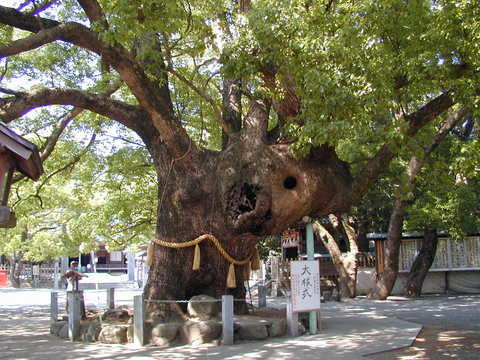
WKD - Camphor Tree Kusunoki


rough times
leaving their scars -
old camphor tree


schwere Zeiten
hinterlassen Spuren -
alter Kampferbaum


oooooooooooooooooooooooooooooooooooooo


a holy rope
marks the deity -
a thousand living years


ein heiliges Seil
schmueckt die Gottheit -
tausend Jahre Leben


oooooooooooooooooooooooooooooooooooooo


楠木や 千年万年の 傷の跡


大麻比古神社,大楠木
Oasahiko Shrine, Kusunoki


:::::::::::::::::::::::::::::::::::::::::::::::::::::::::::::::::::::::::::::::::::::::::::::::::::::


My full story of this shirne is here:
Daruma Doll Museum : Ooasahiko Shrine Naruto


More about the sacred rope to God's ear,
the Shimenawa 注連縄


Shikoku Summer 2005 Our own Haiku Pilgrimage May 2005


:::::::::::::::::::::::::::::::::::::::::::::::::::::::::::::::::::::::::::::::::::::::::::::::::::::


Kusunoki Masatsura 楠木正行
(1326 – February 4, 1348),

along with his father Masashige and brother Masanori, was a supporter of the Southern Imperial Court during Japan's Nanbokucho Wars.

Masatsura was one of the primary military leaders who revived the Southern Court in the 1340s. The Court had had little to no resources for three years; the strategy was too focused on defending their base at Yoshino, and not on gaining allies, land, or income. The Kusunoki family, and Masatsura in particular, fought to gain power and support for the Emperor.
In 1347, Masatsura led an attack on bakufu (shogunate) sympathizers in Kii Province and ended up attracting supporters from Kii, as well as Izumi and Settsu Provinces. When the Shogun's Northern Court sent Hosokawa Akiuji to stop him, Masatsura met Hosokawa and defeated him in the battle of Sakainoura.

After several more campaigns against the bakufu, Masatsura was killed in the Battle of Shijō Nawate, in February 1348 at the age of 22.
Before he died, he composed a death poem:

帰へらじと 兼ねて思へば 梓弓
亡き数に入る 名をぞとどむる

kaeraji to kanete omoeba azusayumi
nakikazu ni iru na o zotodomuru

I have a feeling
I will not be returning,
so among the names
of those who died by the bow
I inscribe my own.

© More in the WIKIPEDIA !


I could not return, I presume,
So I will keep my name
Among those who are dead with bows.

source : Mitch Campbell 2009


.................................................................................


The warrior Kusunoki Masashige 楠木正成 (died 1337)
had a small statue of Marishiten in the decoration of his helmet. Others say so did Yamamoto Kansuke 山本勘助, Maeda Toshiie 前田利家and other samurai of old. Others used the small figure of a wild boar and the swastika.

. MARISHITEN 摩利支天


. Kanshinji 観心寺 Kanshin-Ji .
This temple was a place of study for the young Kusunoki Masashige ...


. Aichi, 旭土人形 clay dolls from Asahi .


made by 美濃部泰作 Minobu Daisaku

..........................................................................................


撫子にかかる涙や楠の露
nadeshiko ni kakaru namida ya kusu no tsuyu

tears are falling
on this little pink -
dew from the camphor tree

Tr. Gabi Greve

Written about 貞亨元年, Matsuo Basho age 41 or later.

The pinks are below the camphor tree.
KUSU refers to the warrior Kusunoki Masashige 楠正成 (1294 - 1336).


The scene is "Separation in Sakurai"
(Sakurai no wakare 桜井の別れ), when Masashige has to send his son and heir Kusunoki Masatsura 楠木正行 (1326 - 1348) back to his headquarters in Kawachi Province. His tears fall on his sleeve, since this is a final farewell.
Basho represents the father as the tree,
the boy as the nadeshiko below the big tree.


MORE - Hokku about tears by
. Matsuo Basho 松尾芭蕉 - Archives of the WKD .


:::::::::::::::::::::::::::::::::::::::::::::::::::::::::::::::::::::::::::::::::::::::::::::::::::::::


observance kigo for early summer

Nankoosai 楠公祭 (なんこうさい) Nanko Festival
Festival for Lord Kusunoki
Nankoo matsuri (なんこうまつり)

May 25
(from May 24 to May 26)


Main shrine festival in honor of Kusunoki Masashige,
at Minatogawa Jinja in Kobe. 湊川神社 神戸
Masahige is believed to have died here.


More than 1000 people take part in the parade. Their costumes and equipment is all re-made like in the Kamakura period.
16 samurai as members of the Kusunoki clan take part riding on horseback.

. . . . .

CLICK for more photos

Homepage of Minatogawa Shrine
with a video of the festival
http://www.minatogawajinja.or.jp/festival/
http://www.minatogawajinja.or.jp/


. Saijiki for Japanese Festivals


:::::::::::::::::::::::::::::::::::::::::::::::::::::::::::::::::::::::::::::::::::::::::::::::::::::


. Kusunoki Jinja 楠木神社 .
andl the tanuki badger legend


Oldest camphor tree at
. Daizenji Tamadare no Miya 大善寺玉垂宮, .
Kurume city, Kyushu

:::::::::::::::::::::::::::::::::::::::::::::::::::::::::::::::::::::::::::::::::::::::::::::::::::::

. Azuma no Mori renri no azusa 吾嬬の森連理の梓
The Conjoined Camphor Trees by the Azuma-no mori Shrine .

Hiroshige print

Today there is the Shrine 吾嬬神社 Azuma Jinja where 日本武尊 Yamato Takeru and his wife, 弟橘姫 Princess Ototachibana Hime, are venerated.
Former 吾嬬権現社 Azuma Gongen no Yashiro
In the compound is a huge kusunoki 樟 camphor tree with bifurcated stem.

Yamato Takeru went to the the North of Japan. He lost his wife Oto Tachibana-Hime during a storm when she sacrificed herself to soothe the anger of the sea god.
The shrine was built there and two 供養箸 ritual chopsticks placed in the ground.
Legend knows that these two chopsticks grew into the camphor tree.


:::::::::::::::::::::::::::::::::::::::::::::::::::::::::::::::::::::::::::::::::::::::::::::::::::::


........................... plant KIGO


fallen leaves of the camphor tree,
kusu ochiba 楠落葉


this is a kigo for early summer, belonging to the group of
tokiwa ki no ochiba (tokiwagi ochiba)
ときはぎのおちば 常磐木落葉.


[ . BACK to DARUMA MUSEUM TOP . ]
[ . BACK to WORLDKIGO . TOP . ]
- #kusunoki #masashige -
::::::::::::::::::::::::::::::::::::::::::::::::::::::::::::::::::::::::::::::::::::::::::::::::::::: 

1/27/2007

Last Apple Tree

:::::::::::::::::::::::::::::::::::::::::::::::::::::::::::::::::::::::::::::::::::::::::::::::::::::


He had been tending his many orchards for many years. Getting older, things got more difficult and one by one, he had to cut down the many trees in his orchards.
Today I observed the old farmer below in my valley :


winter cold -
he felled his last
apple tree


Winterkälte -
er fällt den letzten
Apfelbaum


:::::::::::::::::::::::::::::::::::::::::::::::::::::::::::::::::::::::::::::::::::::::::::::::::::::


The sad reality of rural Japan 2007, where the old get older rapidly and there are no young ones to take over. So the weeds, badgers and wild boars thrive ...


Read my Haiku Archives from January 2007


***************************

BACK

To the Daruma Museum Index

To the World Kigo Database

11/04/2006

Dance with a Tree


R E I G E N


dancing in the twighlight -
the tree
and I


Autumn girls dance through forest
singing the song of yellow heart mark


Renku by Nakamura Sakuo


Please add your haiku to the comments !


Read my Haiku Archives from November 2006

***************************

Please send me your contributions

To the Daruma Museum Index

To the World Kigo Database

9/17/2006

Typhoon break

:::::::::::::::::::::::::::::::::::::::::::::::::::::::::::::::::::::::::::::::::::::::::::::::::::::


typhoon break -
the long whipping tail
of an unknown bird


:::::::::::::::::::::::::::::::::::::::::::::::::::::::::::::::::::::::::::::::::::::::::::::::::::::


after number thirteen -
the tiny frog back
on his watch


:::::::::::::::::::::::::::::::::::::::::::::::::::::::::::::::::::::::::::::::::::::::::::::::::::::


We have been waiting for this typhoon Nr. 13 for a few days now, it moved soooo slow, hovering about Kyushu, but finally, it is here close to our area and will help us spend a sleepless night ...

Sitting on my veranda, I try to enjoy the racing clouds and some crows venturing in the orchard of my neighbour for dinner
... and then this little fellow on the old dry tree branch sticking out in the sky ... the highest place during a rain-less moment ...


Wish me good luck until tomorrow !


Typhoon Nr. 13 SHANSHAN(サンサン)


And as you can see from the haiku above, next morning, our frog KARL was back ... not too much damage and Number 14 well on its way !


. World Kigo Database .

***************************

Please send me your contributions

To the Daruma Museum Index

To the World Kigo Database

9/15/2006

Tao of a useless tree

:::::::::::::::::::::::::::::::::::::::::::::::::::::::::::::::::::::::::::::::::::::::::::::::::::::

useless tree -
too old to move,
I just sit here

:::::::::::::::::::::::::::::::::::::::::::::::::::::::::::::::::::::::::::::::::::::::::::::::::::::


A TREE story from Chuang Tzu

A certain carpenter was traveling with his helper. They came to a town where a giant oak tree filled the square. It was huge, with many limbs spreading out; large enough to shade a hundred oxen and its shade covered the entire square. The helper was amazed at the potential lumber contained in this one tree but the carpenter passed it by with a mere glance. When his helper asked him why he had passed up such a magnificent specimen the carpenter replied that he could see at once that the great oak's branches were useless to him.

"They are so hard," he said, "that were I to take my ax to them it would split. The wood is so heavy that a boat made of it would sink. The branches themselves are so gnarled and twisted they cannot be made into plants. If I tried to fashion house beams with it they would collapse. If I made a coffin from it you would not be able to fit someone inside.
Altogether it is a completely useless tree.
And that is the secret of its long life."

Chuang Tzu
in Tales from the Tao: Inspirational Teachings from the Great Taoist Masters
by Solala Towler

Practicing Spirituality with Taoists

http://www.spiritualityandpractice.com/

ooo ooo ooo ooo ooo ooo ooo ooo ooo

From my Haiku Archives


Trees, my best friends .. 巨木

Camphor Tree Kusunoki 楠木 くすのき


. World Kigo Database .

***************************

Please send me your contributions

To the Daruma Museum Index

To the World Kigo Database

4/27/2006

Cherry Blossoms


side by side
with a good friend -
watching cherry blossoms


all are flowers
from the same tree -
peace on earth !


Read more haiku from April 2006

:::::::::::::::::::::::::::::::::::::::::::::::::::::::::::::::::::::::::::::::::::::::::::::::::::::

Addition from Winnie

They are so, so beautiful, the cherry blossoms!

Pink is my favorite color; your photographs are an ambrosial feast for the eyes! We lived just outside of Washington D.C. for a number of years and Cherry Blossom Time was one of the best things about living in the area. I have such lovely memories of walking through acres and acres of delicate, exquisite beauty with my two entranced little girls. The one photograph of the dark pink and white blossoms reminds me of those little girls, who are young women now.


We have always said that they are Snow White and Rose Red; one blonde and blue-eyed like my Scandinavian ancestors, the other with the dark hair, olive skin and black eyes of her father’s Cherokee blood. I am going to send the link to my daughters, I know they will see the same thing in those two flowers. I also know that they will appreciate your words of peace.


***************************

Please send me your contributions

To the Daruma Museum Index

To the WHC Worldkigo Database

4/03/2006

Kume no Ume


梅園に 鼻の散歩や 久米の梅


taking a nose walk
in the plum park -
Kume no Sato


ein Spaziergang
nur fuer die Nase !
Pflaumenpark in Kume


Click to see more photos from 2009!


I wish I could send you some of this smell !
Almost 4000 plum trees, almost in full bloom !

Read more about this great Plum Park in my neighbourhood.
久米の梅の里へどうぞ!


World Kigo Database: Plum (ume)


. My PHOTO ALBUM - Kume Spring 2008  


::::::::::::::::::::::::::::::::::::::::::::::::::::::::::::::::::::::::::::::::::::::::::::::::::::: 

[ . BACK to WORLDKIGO . TOP . ]
[ . BACK to DARUMA MUSEUM TOP . ]

::::::::::::::::::::::::::::::::::::::::::::::::::::::::::::::::::::::::::::::::::::::::::::::::::::: 

5/11/2005

Azalea and Shaka


do not worry
about the fires of hell -
Azalea, Azalea


sorge Dich nicht
um das Höllenfeuer -
Azaleen, Azaleen


:::::::::::::::::::::::::::::::::::::::::::::::::::::::::::::::::::::::::::::::::::::::::::

Very interesting, Gabi.
Forget the azaleas. Tell us about that sculpture. With all its skin flayed off (the fires of Hell?) it looks like an illustration out of Gray's Anatomy.
L.

Here is a little about the background of this statue.

It shows the human Gautama Siddharta, the future Buddha, during a period of intense asceticism in the mountains near Bodhgaya (India). It usually shows him in sitting position, with no more flesh on the ribs after intense fasting. The blood vessels show on the arms and neck, he has a long beard and is dressed in the ascetics robe of not very much. His eyes are hollow from lack of sleep and food.
This type of statue is also called the "Fasting Buddha" or the "Starving Buddha".

This type of statue, called "Kugyoo Zoo" (苦行像 ) in Japanese is rather common in India, especially Gandhara, whereas here in Japan it is not very common. This particular one is a replica from the famous statue in the Lahore Museum, made of a special stone which gives a lovely ring-ring sound when you knock on the halo behind the head. He sits in my garden now, positioned so I can see him from my favorite seat inside. At all seasons, he is a treat to look at, but with the flaming azalea in May it is just fascinating.

He arrived here in my valley with a normal transportation service, just wrapped in a blanket, and it took three to carry him to his present position. He seems happy to be here, just as I am happy to have him here.

By the way, the real Gautama soon gave up his asceticism, realizing it does not lead to enlightenment. He walked down the mountain, bathed in a river, ate some curd which the maiden Sucharta offered him and then sat down under the Bodhi Tree in Bodhgaya.


Here is the famous statue from the
Lahore Museum.


From an Article in 2004

Fasting Buddha at Lahore Museum attracts Japanese aid
Nobuaki Tanaka, the Japanese ambassador to Pakistan has agreed during a visit to the Lahore Museum in October, to provide technical know-how to the museum, museum sources told the Daily Times on Thursday.

Lahore Museum, situated near Tollinton Market, is the oldest museum in the country and was established in 1864 under the name ‘Industrial Art Museum of the Punjab’. The Gandhara gallery showcases Mahayana Buddhist religious sculptures. Mahayana Buddhism originated and flourished during the first five centuries of the Christian era.

The showcases present the life story of Buddha in frieze panels and statues from his pervious incarnations, his birth, youth, enlightenment preaching of the law and death. Gandhara art is important for introducing the image of Buddha and the iconography developed has influenced Buddhist religious art everywhere.
- source ;: buddhistchannel.tv/index.php...
But later on May 2005 we can read this one:

Lahore Museum refuses to exhibit ‘Fasting Buddha’ in Japan
By Shoaib Ahmed

The Lahore Museum has rejected an offer to exhibit several items from the museum, including the priceless ‘Fasting Buddha’ and the ‘Miracle of Saraswatti’, in an exhibition on Gandhara art in Japan.

Sources told Daily Times that a Japanese cultural delegation, including the Japanese director of press, information and culture, recently met with Lahore Museum Director Dr Liaquat Niazi at the museum.

They said the meeting had been arranged by the Federal Ministry of Culture to discuss the possibilities of exhibiting items from the Lahore Museum in the Japanese exhibition.

According to sources, Dr Niazi asked the delegation what ‘benefits’ he would receive for sending the items to the exhibition. They quoted him as saying the objects would be sent only if they were accompanied with two personnel from the Lahore Museum, and if the delegation got several books from the museum translated into Japanese.

Sources said the delegation was ‘discouraged’ by this response and quoted the delegation as saying they were not a donor agency and were not interested in spending money on the Lahore Museum.

According to sources, by rejecting the Japanese delegation’s offer, the Lahore Museum has cost the country billions of rupees in foreign exchange.
They said that during the nine-month long travelling exhibition, many Japanese would get the opportunity to see the famous ‘Fasting Buddha’.
They said this would give the Japanese incentive to visit Pakistan to view other similar artefacts, thus earning the country significant foreign exchange through tourism.

Sources added that the exhibition would also give Pakistan an opportunity to prove false Indian claims that the Gandhara civilisation hailed from India. In the past, such exhibitions would have one stall for South Asia, which would contain both Indian and Pakistani exhibits. Sources said that according to the Pakistani ambassador to Japan, this time Pakistan would have its own stall.
When Daily Times attempted to contact Dr Niazi, he said he was driving and could not speak; he then switched off his cellular phone. When contacted at home, Dr Niazi again refused to comment.

Speaking to Daily Times, Secretary Information and Culture Kamran Lashari said the ‘safety conditions’ for the objects to be sent to the Japanese exhibition were not adequate. He added that the board of governors of the Lahore Museum also did not feel comfortable with the security being provided for the objects.

Mr Lashari said it had earlier been agreed in principal that given certain safety requirements, the objects would be sent to Japan. He added that he did not yet know whether or not the objects would be sent to the Japanese exhibition.

Daily Times May 2002 - All Rights Reserved


:::::::::::::::::::::::::::::::::::::::::::::::::::::::::::::::::::::::::::::::::::::::::::::::::::::::::::::::::::::::::::

Within the study of Buddhist art, the pieces of Gandhara are of special value. Here is a short abstract.

Gandhara Civilization

Pakistan is the land which attracted Alexander the great from Macedonia in 326 B.C., with whom the influence of Greek culture came to this part of the world. During the 2nd century B.C., it was here that Buddhism was adopted as the state religion which flourished and prevailed here for over 1000 years, starting from 2nd century B.C., until 10th century A.D. During this time Taxila, Swat and Charsaddah (old Pushkalavati) became three important centres for culture, trade and learning. Hundreds of monasteries and stupas were built together with Greek and Kushan towns such as Sirkap and Sirsukh both in Taxila.

It was from these centres that a unique art of sculpture originated which is known as Gandhara Art all over the world. Today the Gandhara Sculptures occupy a prominent place in the museums of England, France, Germany, USA, Japan, Korea, China, India and Afghanistan together with many private collections world over, as well as in the museums of Pakistan. Nevertheless, the zenith of this Gandhara Art is one and only "Fasting Buddha" now on display in Lahore Museum, Lahore.

Finally, the light of Islam penetrated in this part of the world as early as 7th century AD. from the west with the Arabs and during the 10th century AD from the north with the Turks. Islam replaced the early way of life of worshipping idols and introduced new philosophy of faith in one God. With Islam in came a new culture in this land from Arabia and Central Asia. Hence, a new type of architecture, hitherto unknown in this area, was introduced.


Tens of thousands of Mosques, Madrassahs, tombs and gardens were created by the Muslim rulers all over the Sub-Continent. The new style of Islamic architecture prevailed and matured in this land for over a thousand years. The most important contribution of the Muslim rulers to this land, however, is a new language ‘Urdu’ which became the national language of Pakistan since its independence in 1947.

The legacy of our predecessors at the time of our independence, on August 14, 1947, came to us as a treasure which may be called as Pakistan’s national heritage. So rich and diversified is this heritage that Pakistani nation can be proud of its glorious past, be Islamic, Post Islamic or pre-Islamic period as far back as pre-historic times. It is hard to find another country which can produce the treasure of by gone days as can be found in Pakistan. It is now incumbent upon us to treasure our national heritage and save it from further deterioration and theft.
http://www.heritage.gov.pk/html_Pages/gandhara.html

::::::::::::::::::::::::::::::::::::::::::::::::::::::::::::::::::::::::::::::


Scale replica of the famous original in the Lahore Museum. Gandhara Buddhist period in the Northwset Frontier Province, 2nd to 3rd century A.D.Stucco, 6 x 4 inches.

Although also from Pakistan, this is not an ancient Indus replica.
http://shop.store.yahoo.com/harappa/fastingbuddha.html

::::::::::::::::::::::::::::::::::::::::::::::::::::::::::::::::::::::::::::::

This Replica is from the temple Seikoo-In in Kawaguchi.


http://www.ukima.info/meisho/kawaguti/seikouin/kugyo.htm


仏像は西洋と東洋が出会い生まれた美術品です。苦行釈迦像はそんな出会いの代表的な産物です。
西洋的な品だけに囲まれた生活は心をささくれ立たせます。でも、完全に伝統的な品物にも違和感を感じます。私たちの心のオアシスになるような造形物は滅多にありません。

Here is a replica detail where you can see all the blood vessels


More details are here and the statue is for sale too.
http://www.rakuten.co.jp/naka/528489/563193/568950/

If you look carefully, you will observe his hands are in a sort of outstreched position, palms open and thumbs stretched near the forefinger.
Later statues showing Amida Buddha (a Deity after Enlightenment), the thumb and forefinger usually form a ring, symbolizing the hidden teachings of Gautama after his asceticism.

Look at the nine possible versions of the mudra positions of Amida.
Some of them have been shown throughout this article. They all have a different teaching about the ways a human being finds enlightenment.
http://www.infobears.ne.jp/athome/fukusuke291/ho-in-amida.htm


:::::::::::::::::::::::::::::::::::::::::::::::::::::::::::::::::::::::::::::::::::::::::::::::::::::


CLICK for more thumbnails Marc Quinn's sculpture of Kate Moss
"Road to Enlightenment" (2006)
The bronze sculptural surface, says the artist, is a site for the projection of spectator desire.

"Skin of/in Contemporary Art"
National Museum of Art, Osaka
2007


:::::::::::::::::::::::::::::::::::::::::::::::::::::::::::::::::::::::::::::::::::::::::::::::::::::


Here is a great article about the development of Buddhist Art.
http://www.exoticindiaart.com/article/lordbuddha


:::::::::::::::::::::::::::::::::::::::::::::::::::::::::::::::::::::::::::::::::::::::::::::::::::

Buddha's Birthday Celebratinos
and related KIGO for haiku


Here he is in 2008 !
Buddha and Azaleas 2008
With more photos of Azaleas in my Garden 2008.


More of my ... Stone Buddhas .. 石仏


Shaka and Frog Adventures
With more LINKs to my Stone Buddhas !


My Shaka and Lavender, July 2009

Buddha's hollow eyes, March 2013


::::::::::::::::::::::::::::::::::::::::::::::::::::::::::::::::::::::::::::::::::::::::::::::::::::: 


Image Problems:
The Origin and Development of the Buddha's Image
in Early South Asia

Decaroli, Robert Daniel


This deft and lively study by Robert DeCaroli explores the questions of how and why the earliest verifiable images of the historical Buddha were created. In so doing, DeCaroli steps away from old questions of where and when to present the history of Buddhism's relationship with figural art as an ongoing set of negotiations within the Buddhist community and in society at large. By comparing innovations in Brahmanical, Jain, and royal artistic practice, DeCaroli examines why no image of the Buddha was made until approximately five hundred years after his death and what changed in the centuries surrounding the start of the Common Era to suddenly make those images desirable and acceptable.

The textual and archaeological sources reveal that figural likenesses held special importance in South Asia and were seen as having a significant amount of agency and power. Anxiety over image use extended well beyond the Buddhists, helping to explain why images of Vedic gods, Jain teachers, and political elites also are absent from the material record of the centuries BCE. DeCaroli shows how the emergence of powerful dynasties and rulers, who benefited from novel modes of visual authority, was at the root of the changes in attitude toward figural images. However, as DeCaroli demonstrates, a strain of unease with figural art persisted, even after a tradition of images of the Buddha had become established.

ROBERT DECAROLI
is associate professor of art history at George Mason University.
source : networks.h-net.org


::::::::::::::::::::::::::::::::::::::::::::::::::::::::::::::::::::::::::::::::::::::::::::::::::::: 


. Shaka Sanzon 釈迦三尊 The Shaka Triad
at temple Horyu-Ji 


. Gautama Buddha
INDIA SAIJIKI


[ . BACK to WORLDKIGO . TOP . ]
[ . BACK to DARUMA MUSEUM TOP . ]
- #buddha #gautama #statue #azalea #shaka -

::::::::::::::::::::::::::::::::::::::::::::::::::::::::::::::::::::::::::::::::::::::::::::::::::::: 

5/01/2005

Magnolia

[ . BACK to WORLDKIGO  TOP . ]
::::::::::::::::::::::::::::::::::::::::::::::::::::::::::::::::::::::::::::::::::::::::::::::::::::: 


Magnolia, Mokuren 木蓮


magnolia in full bloom


magnolia magnolia !
the bamboo sways
happily


On the green backdrop of the wilderness behind the house.
They seem to dance all together in a happy spring fiesta.


:::::::::::::::::::::::::::::::::::::::::::::::::::::::::::::::::::::::::::::::::::::::::::


magnolia in the sky


.. .. .. .. magnolia blossoms -
.. .. .. .. the sky today
.. .. .. .. without a blemish


:::::::::::::::::::::::::::::::::::::::::::::::::::::::::::::::::::::::::::::::::::::::::::


Wild Magnolia, Kobushi (yama mokuren) is another variety of this tree.

Look at the Magnolia in the Kigo Database for more.


:::::::::::::::::::::::::::::::::::::::::::::::::::::::::::::::::::::::::::::::::::::::::::::::::::::

[ . BACK to WORLDKIGO  TOP . ]


[ . BACK to DARUMA MUSEUM TOP . ]

::::::::::::::::::::::::::::::::::::::::::::::::::::::::::::::::::::::::::::::::::::::::::::::::::::: 

4/30/2005

Daisen 2005

[ . BACK to TOP . ]
::::::::::::::::::::::::::::::::::::::::::::::::::::::::::::::::::::::::::::::::::::::::::::::::::::: 


Mt. Daisen at Yonago, April 2005

Mt. Daisen, the Great Mountain, is the Fuji of Western Japan. Situated all by itself close to the Sea of Japan in a windy and snowy place.
We choose just the right day to visit this spring, driving up from the sea to the mighty hight of the Daisen Panorama Pass. We had visited the temple and shrine of Mt. Daisen 10 years ago, on our first trip to the area.

I wrote the following episode at that time, just 10 years from now:

When we were pregnant with the idea of buying an old farmhouse, a priest at Daisen Shrine told me to buy his Anzan Mamori, a talisman for easy birth.
“It is not only good for the birth of a child, but for anything new you start, a business or something. So try this one!”

And he was right: after just two months (very fast and seldom in this part of the traditional countryside) we bought our new home, Paradise Hermitage (GokuRakuAn) and have lived happily ever after with this new CHILD Venture!

This trip was a kind of "O-Rei Mairi", a visit as a thank you for a favour granted!


yama warau -
nature in splendor
of all seasons

Yama Warau
the mountains are smiling, in spring, with all trees coming back to life.

:::::::::::::::::::::::::::::::::::::::::::::::::::::::::::::::::::::::::::::::::::::::::::


bare branches
trying to reach you !
Mt. Daisen  大仙

:::::::::::::::::::::::::::::::::::::::::::::::::::::::::::::::::::::::::::::::::::::::::::


daisenbunasnow


footsteps of spring -
the beech trees slender
ready to run


haru no ashi-ato
the footsteps of spring.
You can really see and hear them in this forest.


:::::::::::::::::::::::::::::::::::::::::::::::::::::::::::::::::::::::::::::::::::::::::::


the great panorama -
moving through the seasons
at its own pace


:::::::::::::::::::::::::::::::::::::::::::::::::::::::::::::::::::::::::::::::::::::::::::


daisenbackground


yes, I am here ! !
spring talks to the mountain
through all the flowers


:::::::::::::::::::::::::::::::::::::::::::::::::::::::::::::::::::::::::::::::::::::::::::


folding my hands -
no words to express
the presence of this moment


大仙や ひとはちいさな ものとしる


:::::::::::::::::::::::::::::::::::::::::::::::::::::::::::::::::::::::::::::::::::::::::::

For the tourist:

Situated in the western part of Tottori, Mt. Daisen, chosen as one of the best one hundred mountains in Japan, is the generic term for a chain of mountains with Mt. Tsuru-ga-mine, 1,729 meters above sea level, as its highest peak. It belongs to Daisen-Oki National Park. It is the highest peak in the Chugoku region (the southwestern end of Japan's main island) and has historically been regarded and worshipped as a sacred mountain.

Severe cliffs stand out on the northern side of Mt. Daisen, but a view from the direction of Yonago reveals the elegance of a mountain also known as Hoki Fuji or Izumo Fuji.
Daisen-ji Temple on the mountain is an old temple established around the year 720 and Reiho-kaku Treasure Hall, Amida-do, O-gami-yama and Okumiya carry vestiges of holy ground. Towering cliffs on the eastern side of Daisen-ji Temple Hondo (the main inner temple) are called Kin-mon, the Golden Gate, and this is the best spot from which to see the north wall of Daisen.

The view from Kagikake-toge Pass is splendid (the last two pictures). You can enjoy a panoramic view of virgin beech and oak forests that change colors from spring green, dark summer green to glowing yellow in autumn. In the vicinity is a selection of facilities that make the most of Mt. Daisen's nature, such as a tourist blueberry farm, a dude farm where you can barbeque, field athletic facility, and a horseback riding center from which you can go for a long-distance ride into the open-air. You can ski in the winter, too.

http://www.asia-planet.net/japan/tottori.htm

:::::::::::::::::::::::::::::::::::::::::::::::::::::::::::::::::::::::::::::::::::::::::::

On the same day, we covered these haiku topics:

Beachflowers for Gabi

WIND and Bernd


Do not miss the album from the trip to
YONAGO Beach, Western Japan


My Daruma Story about Talismans.
http://www.amie.or.jp/daruma/Anzan%20-Daruma.html


:::::::::::::::::::::::::::::::::::::::::::::::::::::::::::::::::::::::::::::::::::::::::::::::::::::


IZUMO KAIDO ... the Road to Izumo
. . . YONAGO


:::::::::::::::::::::::::::::::::::::::::::::::::::::::::::::::::::::::::::::::::::::::::::::::::::::

[ . BACK to WORLDKIGO  TOP . ]


[ . BACK to DARUMA MUSEUM TOP . ]

::::::::::::::::::::::::::::::::::::::::::::::::::::::::::::::::::::::::::::::::::::::::::::::::::::: 

3/24/2005

Pine <> Matsu

nnnnnnnnnnnnn TOP nnnnnnnnnnnnn

.. .. .. .. .. .. .. .. .. Pine tree, Matsu 松


waiting for spring -
the pine stands
tall as ever

松の待つ
姿を見れば
天高し

:::::::::::::::::::::::::::::::::::::::::::::::::::::::::::::::::::::::::::::::::::::::::::

Pine (matsu, Japan)


MATSU in Japnese can also mean " to wait"

Matsu - The Pine and Daruma 松と達磨―古木散歩

Daruma growing out of a Pine


http://www.amie.or.jp/daruma/Matsu-2.html

************************
Please send your contributions to Gabi Greve
http://groups.yahoo.com/group/happyhaiku/


To the Daruma Museum Index
http://www.geocities.com/gabigreve2000/index.html


To the WHC Worldkigo Database
http://worldkigodatabase.blogspot.com/