Showing posts with label kigo. Show all posts

5/03/2012

WKD - bamboo shoots


bamboo shoots -
the more I look
the more I find


today we harvested
the first eight huge ones


:::::::::::::::::::::::::::::::::::::::::::::::::::::::::::::::::::::::::::::::::::::::::::::::::::::


bamboo groves
in backyards past...
shadows of time


Two resources for bamboo shoot info:
http://agsyst.wsu.edu/bambroc.pdf
http://www.bamboo.org/FAQ.html#CanIEatTheShoots


Tom Conally, USA
Happy Haiku Forum


:::::::::::::::::::::::::::::::::::::::::::::::::::::::::::::::::::::::::::::::::::::::::::::::::::::


market day
two baskets of bamboo shoots
sold in bulk


- Shared by Bos Tsip, Philippines -
Joys of Japan, 2012


:::::::::::::::::::::::::::::::::::::::::::::::::::::::::::::::::::::::::::::::::::::::::::::::::::::


May 15 :

to study in silence -
I wish I could grow
like a bamboo shoot


:::::::::::::::::::::::::::::::::::::::::::::::::::::::::::::::::::::::::::::::::::::::::::::::::::::


Bamboo shoots or bamboo sprouts
are the edible shoots (new bamboo culms that come out of the ground) of many bamboo species including Bambusa vulgaris and Phyllostachys edulis. They are used in numerous Asian dishes and broths. They are sold in various processed shapes, and are available in fresh, dried, and canned versions.
Shoots of several species of bamboo are harvested for consumption:
© More in the WIKIPEDIA !


.............................................................................


閑居して筍番をしたりけり
kankyo shite takenoko ban o shitari keri

now retired,
I stand guard over
bamboo shoots


Kobayashi Issa


Comment by Chris Drake :

This is an important hokku written three months after Issa received half of his father's land in his hometown that seems to show Issa's attitude toward his new lifestyle. The tone is humorous and directed at himself. He uses a deliberately grandiose phrase for his new life as half-owner of his father's house and land, a phrase that in Issa's time was commonly used by wealthy merchants who retired early, turned over their business to a son or head clerk, and concentrated on one of the traditional arts, such as tea ceremony.

In the 19th century kankyo shite commonly means "having separated/secluded myself from the noisy commercial world," and in Issa's case it means above all that he's left behind his life of wandering around the greater-Edo haikai world and has settled down in the country -- though he'll make many trips to greater Edo in the future. Any respectable retired Edo merchant or literati has an equally respectable avocation to fill his spare time, a custom parodied by Issa when he says he now works as the self-appointed official guard of the bamboo shoots on his father's property.

There may be some utilitarian value to Issa's new guard duties, since bamboo shoots are harvested for their food value, and monkeys, deer, wild boars, and bears also enjoy eating them, but bamboo shoots grow quickly, often in great profusion, so Issa may be deliberately be presenting himself as a guard of a natural process that happens even without guarding. Two hokku before this hokku in Issa's diary (for the 4th month [May] of 1813) he writes:

tsuyu chiru ya waka-takenoko no zokuzoku to

dripping dew,
young bamboo shoots
rise endlessly


(I follow Maruyama Kazuhiko's reading.) So it seems Issa is parodying himself as he goes around looking at vigorous bamboo shoots rising upward in May. The shoots may also be an image for Issa's view of hokku (and renku) as creations rooted in the earth that appear of their own accord and mostly just need a little looking after.

Chris Drake


BACK TO
. WKD : take no ko, takenoko 竹の子 bamboo shoots 筍  .


:::::::::::::::::::::::::::::::::::::::::::::::::::::::::::::::::::::::::::::::::::::::::::::::::::::

. Food with bamboo shoots .


. Bamboo shoots in 2010 .


. . . Read my Haiku Archives . . .

:::::::::::::::::::::::::::::::::::::::::::::::::::::::::::::::::::::::::::::::::::::::::::::::::::

3/17/2012

harusame and spring rain


春雨や今日の食事はハルサメじゃ
harusame ya kyoo no shokuji wa harusame ja


spring rain -
lunch today is
harusame noodles


rain in spring (haru no ame 春の雨) :
that could be any kind of rain, usually an unpleasant cold one, during springtime.

spring-rain, spring rain (harusame 春雨):
harusame is the word for Chinese glassnoodles.
This is a kind of soft, welcome rain for the forest and the rice paddies which are so dry from the winter time.


. Spring and Rain .


:::::::::::::::::::::::::::::::::::::::::::::::::::::::::::::::::::::::::::::::::::::::::::::::::::::

. . . Read my Haiku Archives . . .

:::::::::::::::::::::::::::::::::::::::::::::::::::::::::::::::::::::::::::::::::::::::::::::::::::

2/29/2012

leap day

:::::::::::::::::::::::::::::::::::::::::::::::::::::::::::::::::::::::::::::::::::::::::::::::::::::


another day
covered in snow -
leap day


this leap day -
let's all jump
in the Haiku Pond


. February 29, 2012 .


:::::::::::::::::::::::::::::::::::::::::::::::::::::::::::::::::::::::::::::::::::::::::::::::::::::

. . . Read my Haiku Archives . . .

:::::::::::::::::::::::::::::::::::::::::::::::::::::::::::::::::::::::::::::::::::::::::::::::::::

2/14/2012

Valentine's Day


even the rain
shows shades of pink -
Valentine's Day


. WKD : Valentine's Day 2012 .


:::::::::::::::::::::::::::::::::::::::::::::::::::::::::::::::::::::::::::::::::::::::::::::::::::::

. . . Read my Haiku Archives . . .

:::::::::::::::::::::::::::::::::::::::::::::::::::::::::::::::::::::::::::::::::::::::::::::::::::

9/22/2010

WKD - Camphor Tree Kusunoki


rough times
leaving their scars -
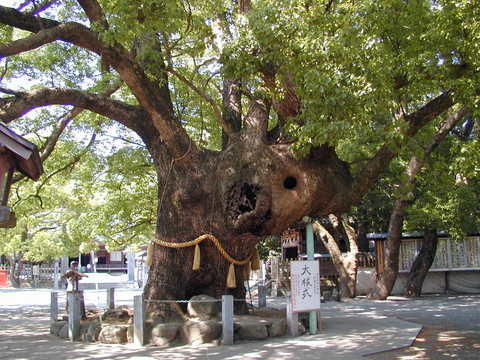
old camphor tree


schwere Zeiten
hinterlassen Spuren -
alter Kampferbaum


oooooooooooooooooooooooooooooooooooooo


a holy rope
marks the deity -
a thousand living years


ein heiliges Seil
schmueckt die Gottheit -
tausend Jahre Leben


oooooooooooooooooooooooooooooooooooooo


楠木や 千年万年の 傷の跡


大麻比古神社,大楠木
Oasahiko Shrine, Kusunoki


:::::::::::::::::::::::::::::::::::::::::::::::::::::::::::::::::::::::::::::::::::::::::::::::::::::


My full story of this shirne is here:
Daruma Doll Museum : Ooasahiko Shrine Naruto


More about the sacred rope to God's ear,
the Shimenawa 注連縄


Shikoku Summer 2005 Our own Haiku Pilgrimage May 2005


:::::::::::::::::::::::::::::::::::::::::::::::::::::::::::::::::::::::::::::::::::::::::::::::::::::


Kusunoki Masatsura 楠木正行
(1326 – February 4, 1348),

along with his father Masashige and brother Masanori, was a supporter of the Southern Imperial Court during Japan's Nanbokucho Wars.

Masatsura was one of the primary military leaders who revived the Southern Court in the 1340s. The Court had had little to no resources for three years; the strategy was too focused on defending their base at Yoshino, and not on gaining allies, land, or income. The Kusunoki family, and Masatsura in particular, fought to gain power and support for the Emperor.
In 1347, Masatsura led an attack on bakufu (shogunate) sympathizers in Kii Province and ended up attracting supporters from Kii, as well as Izumi and Settsu Provinces. When the Shogun's Northern Court sent Hosokawa Akiuji to stop him, Masatsura met Hosokawa and defeated him in the battle of Sakainoura.

After several more campaigns against the bakufu, Masatsura was killed in the Battle of Shijō Nawate, in February 1348 at the age of 22.
Before he died, he composed a death poem:

帰へらじと 兼ねて思へば 梓弓
亡き数に入る 名をぞとどむる

kaeraji to kanete omoeba azusayumi
nakikazu ni iru na o zotodomuru

I have a feeling
I will not be returning,
so among the names
of those who died by the bow
I inscribe my own.

© More in the WIKIPEDIA !


I could not return, I presume,
So I will keep my name
Among those who are dead with bows.

source : Mitch Campbell 2009


.................................................................................


The warrior Kusunoki Masashige 楠木正成 (died 1337)
had a small statue of Marishiten in the decoration of his helmet. Others say so did Yamamoto Kansuke 山本勘助, Maeda Toshiie 前田利家and other samurai of old. Others used the small figure of a wild boar and the swastika.

. MARISHITEN 摩利支天


. Kanshinji 観心寺 Kanshin-Ji .
This temple was a place of study for the young Kusunoki Masashige ...


. Aichi, 旭土人形 clay dolls from Asahi .


made by 美濃部泰作 Minobu Daisaku

..........................................................................................


撫子にかかる涙や楠の露
nadeshiko ni kakaru namida ya kusu no tsuyu

tears are falling
on this little pink -
dew from the camphor tree

Tr. Gabi Greve

Written about 貞亨元年, Matsuo Basho age 41 or later.

The pinks are below the camphor tree.
KUSU refers to the warrior Kusunoki Masashige 楠正成 (1294 - 1336).


The scene is "Separation in Sakurai"
(Sakurai no wakare 桜井の別れ), when Masashige has to send his son and heir Kusunoki Masatsura 楠木正行 (1326 - 1348) back to his headquarters in Kawachi Province. His tears fall on his sleeve, since this is a final farewell.
Basho represents the father as the tree,
the boy as the nadeshiko below the big tree.


MORE - Hokku about tears by
. Matsuo Basho 松尾芭蕉 - Archives of the WKD .


:::::::::::::::::::::::::::::::::::::::::::::::::::::::::::::::::::::::::::::::::::::::::::::::::::::::


observance kigo for early summer

Nankoosai 楠公祭 (なんこうさい) Nanko Festival
Festival for Lord Kusunoki
Nankoo matsuri (なんこうまつり)

May 25
(from May 24 to May 26)


Main shrine festival in honor of Kusunoki Masashige,
at Minatogawa Jinja in Kobe. 湊川神社 神戸
Masahige is believed to have died here.


More than 1000 people take part in the parade. Their costumes and equipment is all re-made like in the Kamakura period.
16 samurai as members of the Kusunoki clan take part riding on horseback.

. . . . .

CLICK for more photos

Homepage of Minatogawa Shrine
with a video of the festival
http://www.minatogawajinja.or.jp/festival/
http://www.minatogawajinja.or.jp/


. Saijiki for Japanese Festivals


:::::::::::::::::::::::::::::::::::::::::::::::::::::::::::::::::::::::::::::::::::::::::::::::::::::


. Kusunoki Jinja 楠木神社 .
andl the tanuki badger legend


Oldest camphor tree at
. Daizenji Tamadare no Miya 大善寺玉垂宮, .
Kurume city, Kyushu

:::::::::::::::::::::::::::::::::::::::::::::::::::::::::::::::::::::::::::::::::::::::::::::::::::::

. Azuma no Mori renri no azusa 吾嬬の森連理の梓
The Conjoined Camphor Trees by the Azuma-no mori Shrine .

Hiroshige print

Today there is the Shrine 吾嬬神社 Azuma Jinja where 日本武尊 Yamato Takeru and his wife, 弟橘姫 Princess Ototachibana Hime, are venerated.
Former 吾嬬権現社 Azuma Gongen no Yashiro
In the compound is a huge kusunoki 樟 camphor tree with bifurcated stem.

Yamato Takeru went to the the North of Japan. He lost his wife Oto Tachibana-Hime during a storm when she sacrificed herself to soothe the anger of the sea god.
The shrine was built there and two 供養箸 ritual chopsticks placed in the ground.
Legend knows that these two chopsticks grew into the camphor tree.


:::::::::::::::::::::::::::::::::::::::::::::::::::::::::::::::::::::::::::::::::::::::::::::::::::::


........................... plant KIGO


fallen leaves of the camphor tree,
kusu ochiba 楠落葉


this is a kigo for early summer, belonging to the group of
tokiwa ki no ochiba (tokiwagi ochiba)
ときはぎのおちば 常磐木落葉.


[ . BACK to DARUMA MUSEUM TOP . ]
[ . BACK to WORLDKIGO . TOP . ]
- #kusunoki #masashige -
::::::::::::::::::::::::::::::::::::::::::::::::::::::::::::::::::::::::::::::::::::::::::::::::::::: 

5/10/2010

Lupinus

[ . BACK to WORLDKIGO . TOP . ]
::::::::::::::::::::::::::::::::::::::::::::::::::::::::::::::::::::::::::::::::::::::::::::::::::::: 


03 some lupinus


lupinus ...
just one in my garden
one in my heart


04 one lupinus


CLICK For summer flower album


They used to grow abundantly in our garden in Germany, but I never managed to get them to grow here in my valley in Japan
... until this spring and early summer !


:::::::::::::::::::::::::::::::::::::::::::::::::::::::::::::::::::::::::::::::::::::::::::::::::::::


kigo for early summer

rupinasu ルピナス lupinus, Lupinie
tachifujisoo 立藤草(たちふじそう)"standing wisteria"
noborifuji 昇り藤(のぼりふじ) "wisteria climbing up"

Japanese tend to see the lupinus, which is not ingenious to Japan, as a kind of "downside up wisteria".


::::::::::::::::::::::::::::::::::::::::::::::::::::::::::::::::::::::::::::::::::::::::::::::::::::: 


Lupins or lupines (North America) are the members of the genus Lupinus in the legume family (Fabaceae).
The genus comprises between 200 and 600 species, with major centers of diversity in South America and western North America, in the Mediterranean region and Africa.

Bluebonnet lupins, notably the Texas Bluebonnet (Lupinus texensis) are the state flower of Texas, USA.
© More in the WIKIPEDIA !


:::::::::::::::::::::::::::::::::::::::::::::::::::::::::::::::::::::::::::::::::::::::::::::::::::::


bluebonnets gone...
even my cacti beds scorch
in this long drought


opie

The Texas bluebonnet is the state flower of Texas. This year, it only made a short appearance, due to the drought.
Texas, 2011


:::::::::::::::::::::::::::::::::::::::::::::::::::::::::::::::::::::::::::::::::::::::::::::::::::::


bluebonnets...
a universe of one
blue flower


- Shared by Jimmy ThePeach
Joys of Japan, March 2012


lupinus ...
the sense of joy
with aroma of honey


- Shared by Gennady Nov
Joys of Japan, March 2012


:::::::::::::::::::::::::::::::::::::::::::::::::::::::::::::::::::::::::::::::::::::::::::::::::::::

. WKD : North America Saijiki .


. . . Read my Haiku Archives

[ . BACK to WORLDKIGO . TOP . ]
:::::::::::::::::::::::::::::::::::::::::::::::::::::::::::::::::::::::::::::::::::::::::::::::::::::

3/03/2010

Hina Matsuri


hina matsuri ...
google japan
at its best


http://www.google.co.jp/


:::::::::::::::::::::::::::::::::::::::::::::::::::::::::::::::::::::::::::::::::::::::::::::::::::::


March 3 (the double three date)
third month, third day


. Hina Doll Festival (hina matsuri)  
雛祭り、ひなまつり

:::::::::::::::::::::::::::::::::::::::::::::::::::::::::::::::::::::::::::::::::::::::::::::::::::::


Robin D.Gill sent me this contribution


可愛いも初心の内ぞ、雛祭り
可愛いで生きる権利を今日守る
キュットが悪口になる世にこの日
世の中のデカイモノ禁止、女子の日
桃酒飲む爺婆とちびっ子しかいない日
さんざんに言われて何時からキュット忌
アニメよりいいものあったを、ひなまつり

二、三十年前、クラシック音楽ばかり好きお鼻が高い米保守派コラムニストGeorge Willが、米カントリ・ミュージックを誉めこけたが。楽観主義一辺倒のアメリカで、絶滅寸々の人権、the right to be unhappy 不幸せに生きる権利を、みごとに守りきっているのは、失恋のみならず、日常の暮らしの辛さをしみじみと歌う涙頂戴カントリーばかりではないか、と。不景気の今では、この人権こそ米にも無事でしょうが、cute で生きる、cuteを好き、cuteを敬う、cuteを崇めることは、ゲイばかりの専権となりがち。可愛いっくていいではないか、と堂々いう大人は少ない。ということを、数年前から、毎年の雛祭り、思う。

こっそりと押入れを出る女子の日

secretly
she comes out of the closet ...
Girl's Festival Day


思えば、日本は世界のキュットの御都だ。そのために、日本は好き、又嫌い。大学と企業のウェブサイトを廻れば、線美まったくない無味乾燥の経理学向きなフローチャットか、二、三才の子供しか喜ばないアニメっぽいごちゃごちゃしかない。前者で吐け気になり、後者で悲しくなる。キュットが、あるべきした人形の棚から出歩いては、怪物になってしまった。必然的にそうなったではない。コンピューターのハードとソフト関係の大者に趣味よきの一人だけおられたら、CADは別なものになったはずです。遠くから三月三日を祝うが、同時に、さんざんとやられてきた日本の風味というか、審美目というか、それを悲しみ、いたむ日である。

無目鼻棚下ば大目鼻なり


(Tr. by Gabi Greve)


:::::::::::::::::::::::::::::::::::::::::::::::::::::::::::::::::::::::::::::::::::::::::::::::::::::


google 2011


google 2012


. Google Japan LOGO - my collection  


. . . Read my Haiku Archives


googlelogo collection ... gabi

:::::::::::::::::::::::::::::::::::::::::::::::::::::::::::::::::::::::::::::::::::::::::::::::::::

12/24/2006

WKD - Blind People

[ . BACK to WORLDKIGO  TOP . ]
::::::::::::::::::::::::::::::::::::::::::::::::::::::::::::::::::::::::::::::::::::::::::::::::::::: 

Do blind people write haiku..?

This question strikes me as rather odd.
Almost like asking :
Can blind people feel happy ?

:::::::::::::::::::::::::::::::::::::::::::::::::::::::::::::::::::::::::::::::::::::::::::::::::::::

kigo for late spring

shakutoo-e 積塔会 (しゃくとうえ)
ceremony for blind people


..... shakutoo-e 石塔会(しゃくとうえ)
shakutoo 石塔(しゃくとう)"stone pagoda"
..... shakutoo 積塔(しゃくとう)
zatoo shakutoo 座頭積塔(ざとうしゃくとう)


Zatoo 座頭 blind minstrel


February 16
Blind people like biwa players (zatoo) meet on Kyoto, Seiju-an 清聚庵 at Shinomiya Kawara 四宮川原 and pray to the Deity of Blind People Amayo no mikoto 雨夜尊. This is a memorial service to the fourth son (shi no miya) of emperor Ninmyo 仁明天皇 (810 - 50), who was blind. He was a good player of the biwa.
This area of Kyoto is in the "demon direction" kimon in the northwest of the town. The blind monks and people each one places a stone on top of the other to build a "stone tower" in memory of all the blind people of Japan. Blind monks recice the "Heart Sutra" (Hanya Shinkyo) for 1000 times.
Later they sing and feast.


source: fukuchi shoten
Painting by Yosa Buson

:::::::::::::::::::::::::::::::::::::::::::::::::::::::::::::::::::::::::::::::::::::::::::::::::::::

observance kigo for late summer

zatoo no suzumi 座頭の納涼 (ざとうのすずみ)
blind people enjoying the cool

suzumi no too 涼の塔(すずみのとう) memorial stone pagoda in the coolness
suzumi shakutoo 、涼み積塔(すずみしゃくとう)

On the 19th day of the sixth lunar month, a special memorial service is held for the blind. It is also the memorial day for emperor Kookoo Tennoo 光孝天皇 Koko Tenno, who was the first blind emperor.


光孝天皇 Koko Tenno

830 - 887
The third son of Emperor Ninmyoo.
The Taira clan of Koko Heishi 光孝平氏 dates back to Emperor Koko.

. SAIJIKI ... Ceremonies and Festivals  

:::::::::::::::::::::::::::::::::::::::::::::::::::::::::::::::::::::::::::::::::::::::::::::::::::::

topic for haiku

blind woman, goze 女盲, ごぜ, ゴゼ, 瞽女
blind nun, ama goze 尼ごぜ、あまごぜ


From the Edo period (1600-1868) goze organized themselves in a number of ways.
. blind woman from Echigo, Echigo goze 越後女盲 .
越後ごぜ , 「瞽女(ごぜ)」
海御前(あまごぜ)

:::::::::::::::::::::::::::::::::::::::::::::::::::::::::::::::::::::::::::::::::::::::::::::::::::::

a warm smile on the
blind man's face -
summer sunshine

autumn sunset -
the blind man reaches
for his dog

the tearful eyes
of a blind woman -
winter sun


cheerful laughter
in the blind kid's school -
spring sunshine


:::::::::::::::::::::::::::::::::::::::::::::::::::::::::::::::::::::::::::::::::::::::::::::::::::::


source : Jules Bastien-Lepage

the look
in the blind beggar's eyes -
autumn sunset


Gabi Greve

:::::::::::::::::::::::::::::::::::::::::::::::::::::::::::::::::::::::::::::::::::::::::::::::::::::

雉なくや座頭が橋を這ふ時に
kiji naku ya zatoo ga hashi o hau toki ni

a pheasant cries out
as a blind man crawls
across the bridge

Tr. Chris Drake

This hokku is from the 2nd month (March) of 1818, when Issa was traveling around to various villages and towns near his hometown. In his diary at this time Issa has three hokku in a row about pheasants, of which the above hokku is the second. All three seem to be serious and based on close observation.

In the hokku, the pheasant has noticed something it feels to be important or dangerous, and it turns out to be a blind man (or woman -- the gender is not given) crawling across a nearby bridge. Perhaps it is a narrow bridge with no railing, or perhaps there is ice or cold rain on the bridge, making it slippery. In any case, the blind man decides it would be dangerous to try to walk across, and he gets down on his hands and knees and crawls across instead. The pheasant probably doesn't understand what's happening, but Issa seems impressed by the way it senses something is unusual or wrong.

The pheasant isn't warning of danger to itself, but it might be warning of danger it vaguely senses to another creature. Issa understands what's happening, and he may be using the pheasant's loud, sharp cry to suggest his own momentary worry for the safety of the blind man. There's no hint in the wording of the hokku that Issa is making fun of the blind man or comparing blindness to any form of benightedness or spiritual lack. After all, imperfection is the human condition, and Amida accepts sincere humans in spite of their weaknesses. Issa often compares himself to a beggar and calls himself a fool, and he is surely sympathizing with the man who is forced to crawl in order to stay alive. Perhaps the hokku is intended as a human form of crying out.

The word zatou literally means 'group leader' and is the lowest of four ranks in the organization created by blind performers in the Edo period. In addition to chanting ballads and plays, telling stories, and singing and composing songs to the accompaniment of various instruments, blind professionals were active in many fields, especially in acupuncture and massage. The term zatou can also simply mean a blind person.

Chris Drake
. WKD : Kobayashi Issa 小林一茶 in Edo .

座頭坊や赤椀で蠅追ひながら
zato boo ya aka wan de hae oi-nagara

the blind priest
with his red bowl...
shooing flies

Tr. David Lanoue


Two Blind Men Crossing a Log Bridge

. Hakuin Ekaku (白隠 慧鶴 Hakuin Ekaku) .
(1686-1769 or 1685-1768)

:::::::::::::::::::::::::::::::::::::::::::::::::::::::::::::::::::::::::::::::::::::::::::::::::::::

stop sign . . .
the blind veteran waves
a dozen roses


Don Baird

:::::::::::::::::::::::::::::::::::::::::::::::::::::::::::::::::::::::::::::::::::::::::::::::::::::

Close your eyes and spend one whole day like that!
Then you will know the answer, I hope.
WKD : World Handicap Day .. Black Day for the Blind

Haiku Topics in the World Kigo Database

::::::::::::::::::::::::::::::::::::::::::::::::::::::::::::::::::::::::::::::::::::::::::::::::::::: 

bedtime story
my grandfathers' fingers
touching the Braille


- Shared by John Wisdom -
Joys of Japan, 2012

::::::::::::::::::::::::::::::::::::::::::::::::::::::::::::::::::::::::::::::::::::::::::::::::::::: 

Blind People and Elephant 盲人と象 - Hokusai


O how they cling and wrangle, some who claim
For preacher and monk the honored name!
For, quarreling, each to his view they cling.
Such folk see only one side of a thing.


Buddha
. Katsushika Hokusai (1760-1849) 葛飾北斎 .

:::::::::::::::::::::::::::::::::::::::::::::::::::::::::::::::::::::::::::::::::::::::::::::::::::::

座頭かと人に見られて月見哉 / zatō
zatoo ka to hito ni mirarete tsukimi kana

I appear to people
like a blind man
watching the moon . . .


Written in 1686, Basho age 43. 貞亨3年八月十五夜
Basho was wearing the outfit of a monk, often used by blind poeple.

The cut marker KANA is at the end of line 3.
zatoo was one of the four grades of the Biwa Hooshi singers 琵琶法師:
kengyoo 検校 - bettoo 別当 - kootoo 勾当 - zatoo 座頭

During the Edo period it was also used for other kind of blind people.

. Matsuo Basho 松尾芭蕉 - Archives of the WKD .
. tsukimi 月見 つきみ moon viewing .

- quote -
The Story of the Blind Bankers of Edo Era Japan
Centuries ago, members of the Todoza saw no reason why being blind should keep them from being rich
By Cezary Jan Strusiewicz
- source : tokyoweekender.com/2021 ... -

:::::::::::::::::::::::::::::::::::::::::::::::::::::::::::::::::::::::::::::::::::::::::::::::::::::

. Pagoda and Stone Pagoda - Topics for Haiku

[ . BACK to WORLDKIGO  TOP . ]
[ . BACK to DARUMA MUSEUM TOP . ]

:::::::::::::::::::::::::::::::::::::::::::::::::::::::::::::::::::::::::::::::::::::::::::::::::::::

9/21/2006

Sage .. Salbei


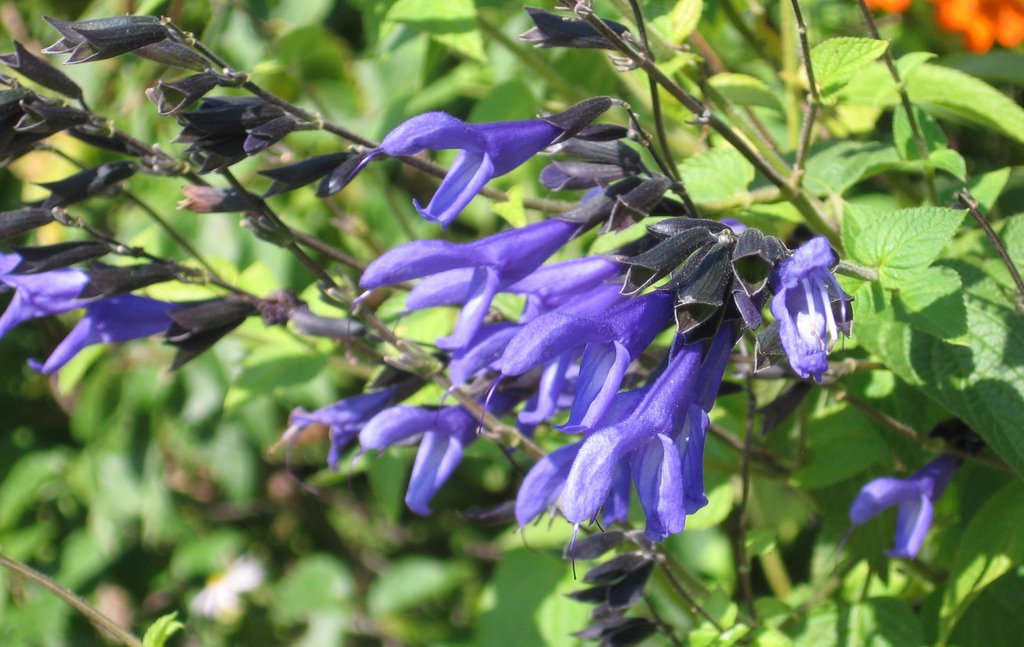
sage flowers -
little things with
a great power


Sage flowers, Salbei, seeji セージ、Salvia microphylla
Salvia, Scarlet sage, Salvia splendens, サルビア sarubia
kigo for late summer

some saijiki place it as a kigo for all autumn.


The flowers are seen rather long, from July till November.
It is the birthday flower for people born on August 31 and October 4.
salvea, in Latin language, means "health, healing". It was a powerful herb in olden times.

..........................................


Sage, the herb, in Ireland (and quite probably in the UK too) would be a Christmas kigo.

The traditional Christmas turkey is stuffed with a bread stuffing amply seasoned with onion and sage. In our town on Christmas Eve, both batch bread and dried sage powder completely sell out, and we have sometimes had to tour several shops before my sister could find both of them. The lesson of the story is, of course "Shop Early for Christmas"...!

To quote : "The flavour may be described as warm, pungent, slightly bitter with a hint of camphor... The combination of sage and onion for stuffing poultry is very well known. Sage is frequently used with rich and fatty dishes such as roast pork and eel, and is especially recommended with duck."
The Complete Book of Herbs and Spices, Claire
Loewenfeld and Philippa Back, 1978.

sage, she said --
there's an old jar of sage
behind these books!


Isabelle Prondzynski

:::::::::::::::::::::::::::::::::::::::::::::::::::::::::::::::::::::::::::::::::::::::::::::::::::::


Mugwort, yomogi 蓬 (よもぎ)
Artemisia princeps
kigo for all spring

Not to be mixed up with sage, it is a completely different plant.


::::::::::::::::::::::::::::::::::::::::::::::::::::::::::::::::::::::::::::::::::::::::::::::::::::: 

. PLANTS - - - the Complete SAIJIKI .  


[ . BACK to DARUMA MUSEUM TOP . ]
[ . BACK to WORLDKIGO . TOP . ]

:::::::::::::::::::::::::::::::::::::::::::::::::::::::::::::::::::::::::::::::::::::::::::::::::::::

9/06/2006

Chandrika Soap

:::::::::::::::::::::::::::::::::::::::::::::::::::::::::::::::::::::::::::::::::::::::::::::::::::::


Chandrika soap -
the smell of India
in my Japanese bath


Chandrika soap -
a whiff of Ayurveda
on his German skin


:::::::::::::::::::::::::::::::::::::::::::::::::::::::::::::::::::::::::::::::::::::::::::::::::::::


A friend has sent us a few cakes, and it brings back great memories of the outdoor shower room in Goa, where the monsoon would sometimes provide some additional shower power ...


India's natural, herbal, ayurvedic bath soap for freshness, cleanliness and health in a holistic-ayurvedic way.
www chandrika soap

:::::::::::::::::::::::::::::::::::::::::::::::::::::::::::::::::::::::::::::::::::::::::::::::::::::

A friend from India wrote :

Dear Gabi san

"chandrika" means "the moon faced one" or "luminous like the moon" ~ It is a female name.
I had a childhood friend called Chandrika.
chandra ~ moon ! [ Both Sanskrit words used in most Indian Languages
except the Urdu derived ones. ]
Incidentally this soap is made in Keralam where I live. We have been using it for over fifty years in our house! New versions of the same brand are available too now.

So you have an implicit polylingual autumn kigo!

NR

.................................................................................


Chandrika Soap is made with pure vegetable oils such as purified Coconut oil, Sandalwood oil, and Patchouli oil.
The soap does not use any animal fat or products.
Chandrika Soap is not tested on animals.

The product was launched in 1940. Even though the concept and founded by C. R. Kesavan Vaidyar, it is now owned by Bangalore headquartered Wipro.

- Reference -


:::::::::::::::::::::::::::::::::::::::::::::::::::::::::::::::::::::::::::::::::::::::::::::::::::::

. World Kigo Database .


Chandrika Soap
kigo for autumn in

. The INDIA Saijiki of the World Kigo Database .


[ . BACK to DARUMA MUSEUM TOP . ]
[ . BACK to WORLDKIGO . TOP . ]
:::::::::::::::::::::::::::::::::::::::::::::::::::::::::::::::::::::::::::::::::::::::::::::::::::::

11/19/2005

Harvest Festival

[ . BACK to WORLDKIGO . TOP . ]
::::::::::::::::::::::::::::::::::::::::::::::::::::::::::::::::::::::::::::::::::::::::::::::::::::: 


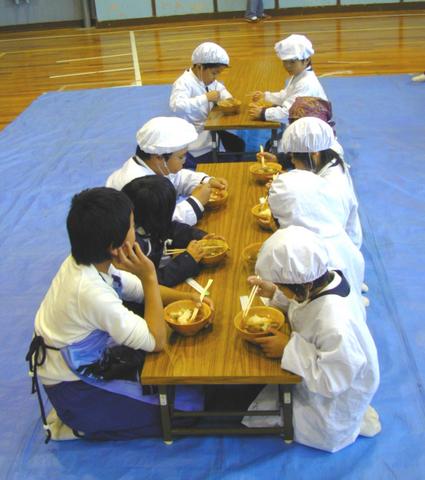
Harvest Festival (shuukakusai) in Ohaga


pounding rice -
steam rises from
the old mortar


smiling kids
with wooden food bowls -
harvest thanksgiving !


At the Ohaga Local School, November 19, 2005


Read more about it in my Ohaga BLOG

:::::::::::::::::::::::::::::::::::::::::::::::::::::::::::::::::::::::::::::::::::::::::::::::::::::


Kigo in this context:

Pounding rice (mochi tsuki)

Harvest Festival (Europe)


. Harvest and its Kigo  


[ . BACK to WORLDKIGO . TOP . ]
::::::::::::::::::::::::::::::::::::::::::::::::::::::::::::::::::::::::::::::::::::::::::::::::::::: 

7/10/2005

WKD - Woodpecker KIGO

[ . BACK to WORLDKIGO . TOP . ]
::::::::::::::::::::::::::::::::::::::::::::::::::::::::::::::::::::::::::::::::::::::::::::::::::::: 


knocking
at the wrong door -
woodpecker


er klopft
an der falschen Tür -
Buntspecht


In the birdhouse, a family of ants had taken refuge and the woodpecker was eagerly looking for his lunch...


It took him about a week to completely demolish the woody home.


Here is how this haiku came into being:

While I was sitting on the terrace pondering the problems with a haiku friend, the sentence came to my mind:
he seems to be always knocking at the wrong doors...

just at that very moment someone went KNOCK KNOCK KNOCK

so the haiku was born and the woodpecker kept knocking... I never caught him with the camera !


American friend -
the woodpecker knocking
at the wrong door


..................................................


these rotten trees ...
the woodpecker family
works overtime

Gabi Greve, Ocotber 2007
Read about the trees ...


early morning -
a woodpecker's drumming
fills the valley


. Gabi Greve, September 2010


light snow -
a woodpecker hammers
in the silence


. Gabi Greve, February 2011


:::::::::::::::::::::::::::::::::::::::::::::::::::::::::::::::::::::::::::::::::::::::::::::::::::::

CLICK for more photos !

woodpecker, kitsutsuki 啄木鳥
kigo for all autumn

family Picidae, Piciformes.

"tree pecker", kitsutsuki 木突(きつつき)
"tree hitter", kitataki 木たたき

kera けら
kera tsutsuki けらつつき


"carpenter bird", takumi dori 番匠鳥(たくみどり)

Woodpeckers are well-known birds, attracting attention with their habit of drilling and pounding trees with their bills to obtain insect food. About 180 species, including sapsuckers and flickers, are classified in several genera making up the subfamily Picinae; together with closely related piculets and wrynecks, they make up the family Picidae.
Woodpeckers are found over most of the world, but not in Madagascar, New Guinea, Australia, or New Zealand.

In Japan the most common woodpeckers are the small woodpecker, kogera 小げら, the red-headed woodpecker, akagera 赤げら and the blue-headed woodpecker, agogera 青げら. Many more species live in the northern island of Hokkaido. They live in Japan the whole year, but are a kigo for autumn because in that season their knocking is most frequent and their colorful bodies most prominent. It is a special pleasure to stand under a tree with bright colored leaves and listen to the knocking sound. In recent years you can also see them trying to knock on the wooden cedar pillar of an electricty pole.


Check the Wikipedia !
Woodpecker


More is here:
http://www.4to40.com/earth/geography/htm/birdsindex.asp?counter=107


Der Buntspecht

:::::::::::::::::::::::::::::::::::::::::::::::::::::::::::::::::::::::::::::::::::::::::::::::::::::


Kobayashi Issa 小林一茶


啄木もやめて聞かよ夕木魚
kitsutsuki mo yamete kiku ka yo yuu mokugyo

is the woodpecker
stopping to listen too?
evening's wooden drum

Tr. David Lanoue

He wrote this haiku on the way back from the grave of his daughter.


. Wooden Fish Gong, Mokugyo 木魚
Prayer Gong in the form of a Fish


.............................................................................


啄木のけいこにたたく柱哉
kitsutsuki no keiko ni tataku hashira kana

a woodpecker
bangs on a house pillar
just for practice


Tr. and comment from Chris Drake:

This hokku is from the 7th month (August) of 1819, not long after Issa's baby daughter has died, and her death may be in the background of the hokku. Judging from Issa's other hokku about woodpeckers in his diary from this period, the bird is probably pecking at a square wooden pillar or vertical beam in the framework of Issa's house, some of which is exposed and not hidden within thick walls. Or perhaps the bird is banging on a vertical beam in a hermitage or small hall near Issa's family temple in his hometown.

His daughter's grave is also near that temple (see my 7/17/2012 Issa translation), and he visited her grave on the 17th day after her death. Issa almost seems to envy the woodpecker, which cheerfully ignores all the distinctions humans make and chooses to peck holes in people's house pillars instead of in trees with insects living in them. There may be a hint of humorous self-criticism in Issa's gentle complaint to the woodpecker that it's ignoring the difference between trees and human houses and thus all too truthfully reminding humans of their transience and mortality.


Further discussion :
- Translating Haiku Forum -


.............................................................................


木つ々きが目利して居る庵哉
kitsutsuki ga mekiki shite iru iori kana

woodpecker
busy appraising
the meditation hut


I've translated the version that appears near the end of My Spring. In Issa's diary the first and second lines are slightly different, though the basic meaning is the same: kitsutsuki no mekiki shite miru.... Judging from the context in My Spring, the hut seems to be a meditation hut Issa saw inside the precincts of or near a temple after he went to pray at the grave of his young daughter on the 17th day after her death, an important memorial day. That temple is most probably Myousenji (明専寺), a Reformed Pure Land sect temple that was the Kobayashi family temple -- and its head priest mediated an end to the inheritance dispute over the house of Issa's dead father.

It was about a five minutes' walk from what eventually became Issa's house (and was his house at the time he wrote the hokku), and the temple graveyard was about five minutes beyond that. In My Spring a hokku to the dead baby girl is followed by two hokku about woodpeckers and then a hokku at the sutra library (kyoudou) of a temple, presumably Myousenji, so the hut is probably near or inside the temple precincts. The hokku just before the above hokku in My Spring also suggests that the hut or hermitage is near the temple. See below.


hito-nembutsu moおusu dake shiku susuki kana

saying a single
Buddha-name, placing
a stalk of miscanthus


This hokku evokes Issa's visit to his daughter's grave, and it is followed by:

will that woodpecker
ever stop and listen? -- monk beats
a wooden fish at nightfall


The first hokku discussed above follows these two hokku and seems to continue the mild bantering with the woodpecker. The hut or hermitage for meditation is a spiritual place, but the woodpecker looks at it with the eyes of an experienced and skilled realtor appraising the hut's physical value, and it seems uninterested in using its beak to make sounds praising Amida Buddha the way the wooden fish does. If the woodpecker were human, it would be thinking in terms of money, but as a bird it must be thinking in terms of the probable number of delicious worms inside the hut's beams and woodwork.

Finally, following the first hokku translated above is one about an experience inside the temple's sutra library hall:

Buddha smiles
and points at
a farting insect


The woodpecker's sounds are here counterpointed by the farting insect. Perhaps at this point Issa comes to regard even the materialistic sounds of the woodpecker and the farting sound of the insect to be amusing Buddha in their own way and thus creating fitting echoes of Issa's own single Buddha-name that might even cause his dead daughter's soul to smile as well.

Chris Drake


More woodpecker hokku by
. Issa with comments by Chris .

kitsutsuki no shine tote tataku hashira kana

kitsutsuki no tonde kara iru iori kana


:::::::::::::::::::::::::::::::::::::::::::::::::::::::::::::::::::::::::::::::::::::::::::::::::::::


木啄や枯木をさがす花の中
kitsutsuki no kareki sagasu ya hana no naka

a woodpecker
searching for dead wood
in the blossoms


--Joosoo (1643-1704), trans. Robin D. Gill

among blossoms
woodpeckers searching
for dead wood

--alternate Gill translation


The woodpecker looks for dead trees
Among the cherry-trees in bloom.

trans. Asastaroo Miyamori


What! mid the flowers the woodpecker
Is seeking out a withered tree.

trans. Basil Hall Chamberlain


Miyamori's comment:
What an unaesthetic bird!

A comment by Charles Horne, from his book, The Sacred Books and Early Literature of the East: Japan, based on Chamberlain's translation:
Highly unesthetic of the bird to neglect the blossoms and prefer a withered trunk.

- Compiled by Larry Bole, Kigo Hotline


. Naito Joso 内藤丈草 .


:::::::::::::::::::::::::::::::::::::::::::::::::::::::::::::::::::::::::::::::::::::::::::::::::::::


kisutsuki ya ochiba o isogu maki no kigi

woodpecker ——
leaves quickly fall
in the meadow


The scene is Akagi mountain of Gunma prefecture. The woodpecker is pecking at the tree and eating insects. People listening to the sound of the pecking, also notice that the leaves were already falling in the meadow. This is one scene of the highland meadows of late autumn.

This haiku is rather new in style, because haiku usually describes in black "sumie" style, but this haiku is written as if in the oil painting style of the French Impressionists. So Shuoshi seems to have the eyes of a Western artist towards Nature, seen in bright sun-light.

Comment by TAKAHA Shugyo.
MIZUHARA Shuoshi (1892 - 1981)


:::::::::::::::::::::::::::::::::::::::::::::::::::::::::::::::::::::::::::::::::::::::::::::::::::::


番匠鳥来てポプラ葉のまだ散らず  
takumidori kite popura ha o mada chirazu  

woodpeckers coming -
the leaves of the popular
not yet scattered


Hidehiko 秀彦
Tr. Gabi Greve


xxxxxxxxxxxxxxxxxxxxxxxxxxxxxxxxxxxxx

a woodpecker
pecks up
the coconut tree


Narayanan Raghunathan
India, September 2006


:::::::::::::::::::::::::::::::::::::::::::::::::::::::::::::::::::::::::::::::::::::::::::::::::::::


kitsutsuki no hashira o tataku sumai kana

But for a woodpecker
tapping at a post, no sound
at all in the house.


Basho
Tr. Sam Hamill


Tapping Woodpeckers
World Haiku Club 2002


.............................................................................


啄木鳥も庵は破らず夏木立
kitsutsuki mo io wa yaburazu natsu kodachi

even woodpeckers
don't damage this hut:
summer grove

Tr. Barnhill


Even woodpeckers did not
Damage this hermitage
In the summer grove

Tr. Oseko


About the hermitage of Zen pries Butchoo 仏頂和尚, Butcho, his master, temple Ungan-Ji 雲岸寺.
Basho left this message at the entrance post of the hermitage and left, because the Master was not at home.


even a woodpecker
won't (dare to) damage this hermitage -
summer grove

Tr. Gabi Greve


Oku no Hosomichi, Station 8 - Unganji
. Matsuo Basho 松尾芭蕉 - Archives of the WKD .


:::::::::::::::::::::::::::::::::::::::::::::::::::::::::::::::::::::::::::::::::::::::::::::::::::::

YEMEN

Arabian woodpecker (Dendrocopos dorae)
breeding from February to May
source : www.birdsoman.com

source : Arabian Woodpecker Trecking Tour


surprising chill...
from a lonely acacia
woodpecker's drumming

***

the mulberry tree
provides shade - now on top
woodpecker's drumming


***

how lucky they are
in their yard pomegranates ...
sound of a woodpecker


Heike Gewi, September 2010

. YEMEN SAIJIKI  


:::::::::::::::::::::::::::::::::::::::::::::::::::::::::::::::::::::::::::::::::::::::::::::::::::::

[ . BACK to WORLDKIGO . TOP . ]
:::::::::::::::::::::::::::::::::::::::::::::::::::::::::::::::::::::::::::::::::::::::::::::::::::::

7/06/2005

Love


your life and mine
united in love -
mimosa branches


dein Leben und mein Leben
in Liebe vereint -
Mimosenzweige


you
and me -
mimosa branches


君在りて 我また在りて ミモザかな


The Japanese is a translation by Onohi san. Thank you so much!
June 2005


::::::::::::::::::::::::::::::::::::::::::::::::::::::::::::::::::::::::::::::::::::::::::::::::::::


What KIGO does to my love !!


This is a short musing about love
and what our kigo can do to it.

It all started with me watching the mimosa branches for a while, suddenly coming up with the haiku above.

This was a simple but special present to my husband, nothing more, sort of given to me by the mimosa itself.

My German friends thought as a haiku it was too obvious, stating it all, leaving no part for imagination or association. So I changed it to

you
and me -
Mimosa branches


du
und ich –
Mimosenzweige


This was better! Now there was the love between the lines and the reader could add up his own imagination, take part of the interpretation, well, it was even considered worth for publication in the WHR.

But I refused.

Such minimal haiku are not my style.


And this got me working on it. If the two lines represent the love between the lines, well, how about this one then?

. . . . .


you
and I –
cold coffee


cold coffee is a nonseasonal topic, while its colder cousin, ice coffee is a kigo for summer.

http://worldkigodatabase.blogspot.com/2005/09/iced-coffee-aisu-koohii-japan.html


But in the haiku above, what had happened to the love between the lines?
Cold coffe, a hot cup gotten cold, stale, yakks… Kalter Kaffee in German has even more negative meaning. There is a lot between the lines here too, but certainly not the simple and pure love from the first version of the haiku.


. . . . .


you
and I –
summer heat


This is definitely a kigo for summer, but there we might associate the relationship not so much with love, more with lust… and leaving the next morning without even knowing the name of the other one…


. . . . .


you
and I –
three black raven


Raven itself is a nonseasonal topic, but somehow here the haiku gets a different flavor again. THREE, what is happening to the relationship now?
http://worldkigodatabase.blogspot.com/2005/03/crow-karasu.html


. . . . .


you
and I –
cold coming back


Here we have a kigo for spring, when the cold is coming back
and the feeling of desolation is even greater.
http://happyhaiku.blogspot.com/2005/03/cold-coming-back.html


Somehow the love seems gone, and not even to be found between the lines any more….

. . . . .

I could go on like that with more kigo, but let me stop here.


you
and I –


This alone is not enough to read between the lines about a simple, pure love.


I guess you see by now, the kigo is very important to set the underlying mood of a sentence, a couple of words, the other two lines in a haiku.
The meaning between the lines depends a lot on the meaning of the kigo, which sets the general mood of a haiku.
Therefore it is important to know which mood a certain kigo is setting and then use this mood skillfully.


:::::::::::::::::::::::::::::::::::::::::::::::::::::::::::::::::::::::::::::::::::::::::::::::::::::

[ . BACK to WORLDKIGO  TOP . ]
[ . BACK to DARUMA MUSEUM TOP . ]

::::::::::::::::::::::::::::::::::::::::::::::::::::::::::::::::::::::::::::::::::::::::::::::::::::: 

5/25/2005

WKD - Horseheaded Kannon

[ . BACK to DARUMA MUSEUM TOP . ]
::::::::::::::::::::::::::::::::::::::::::::::::::::::::::::::::::::::::::::::::::::::::::::::::::::: 

for hakuba, white Shinto horses, see below

::::::::::::::::::::::::::::::::::::::::::::::::::::::::::::::::::::::::::::::::::::::::::::::::::::: 

Horseheaded Kannon (Batoo Kannon)
馬頭観音 Bato Kannon
馬頭観世音


Horseheaded Kannon -
please share my headache!
too much sake ...


Temple Eifuku-Ji, Nr. 54 Shikoku


My husband just brought a wagonload full of horse
manure from a nearby farm to prepare the vegetable fields.
And I helped, of course ...

I will spare you the smell that goes with this haiku ...


shoveling manure
to the summer fields -
Horseheaded Kannon


:::::::::::::::::::::::::::::::::::::::::::::::::::::::::::::::::::::::::::::::::::::::::::::::::::::


CLICK for more photos

The Horseheaded Kannon

Batou Kannon is not only said to protect dumb animals, particularly those who labor for mankind, but she extends her power to protecting their spirits and bringing them ease and a happier life than they experienced while on earth.

By neighing like a horse, the horseheaded deities ward off the bad demons. Batoo Kannon has been known in Japan since 7th century. He/She is especially honored by the horse breeders in Northern Japan. Nowadays you even find bicycles in front of the stone votive statues on waysides.

Read more about this Batoo Kannon at Mark Schumacher's pages.

Kannon Bosatsu is an important deity in the Buddhist pantheon.
bato kannon

. Eko-In, Ekō-in 回向院 Ryogoku, Tokyo .

:::::::::::::::::::::::::::::::::::::::::::::::::::::::::::::::::::::::::::::::::::::::::::::::::::::


kubi uma 首馬 "horse head" toys

. Kubi ningyoo 首人形 head dolls INFO .
from various temples dedicated to Bato Kannon.


:::::::::::::::::::::::::::::::::::::::::::::::::::::::::::::::::::::::::::::::::::::::::::::::::::


on earthen clods
he talks of next year
shoveling manure

michele


::::::::::::::::::::::::::::::::::::::::::::::::::::::::::::::::::::::::::::::::::::::::::::::::::::: 


source : www.shimogamo-jinja.or.jp
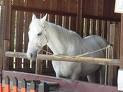
A white horse in a Shinto ceremony at Shimogamo Shrine, Kyoto
Mikage Matsuri 御蔭祭 "honorable shadow festival"

. "honorable shadow festival" Miare shinji .


Horse-deities of Japan
CLICK for more photos
White horse, hakuba 白馬 sacred horse at Shinto shrines


quote
As in all the oldest nations, we find in Japan, as its most ancient religion — Sun-worship. Nor are the Elements forgotten, as those are the abodes of all the "minor gods or spirits" — namely, the Powers or Forces of Nature. The Sun still receives deific honours; and its emblem has fully survived in the Sinto temples, called Maya, [Divine residence. Hence the name of the ecclesiastical metropolis Myako, the abode of the Spiritual Emperor] where no idols or images are to be found, save a bright mirror in the shape of a disc, before which are placed high metallic poles, with long and broad slips of paper attached to them, and mysterious inscriptions on these, traced in the Nai-den style, that peculiar sacerdotal written language used only for religious and mystical subjects.
Strange to think, the Japanese practise in reference to Sun-worship that curious ceremony so well known in India under the name of the aswamedha, or sacrifice of the horse. Anciently the horse was considered by every nation an emblem of the primeval and universal manifested being, who, when identified with the Sun, had the horse given him as his attendant.

"The horses of the Sun" are famous, and were deified in all the old religious systems, even in the youngest of the latter — the Mosaic, or Jewish creed. [And he (Josiah) took away the horses that the Kings of Judah had given to the Sun, at the entering of the House of the Lord. (2 Kings, xxiii. II)]
Every Sun-God has a horse (always white) associated with him. Sosiosh, born of a virgin, is expected to appear at the end of the days upon a white horse as Redeemer, says the book Bun Dehesh. Vishnu, or the "Kalanki Avatar", is to come upon a white horse; and St. John, in the Revelation (xix., 11, 14), sees the heavens opened and the "Faithful and True", or the coming Christian Messiah, seated on a white horse; and the "armies which were in heaven followed him upon white horses". The white horse is the horse of the Sun; and Mithra, the old Medo-Arian Sun-God, reappears everywhere. [ “The Manicheans held that the Sun, who is Mithra, is Christ himself,” says St. Augustine (cap 8) who had belonged to that sect]

For the Sun is the fiery source of Spirit-power or Spirit of LIFE, while the chariot typifies the body, and the horse its animating principle. And thus in Japan Ten-Zio-Dai-Zen, "he who darts out his rays" is presented with its emblem, the horse, at its Temple on certain festive days. A number of sacred horses in pictures and horses cut out of paper with sacred inscriptions on them are hung on the walls.
source :  www.theosophical.ca


At Saijo Inari Shrine, Okayama pref.
Photo Gabi Greve 2008

. hakuba 白馬と伝説 Legends about a white horse .


:::::::::::::::::::::::::::::::::::::::::::::::::::::::::::::::::::::::::::::::::::::::::::::::::::::


CLICK for more photos

At Kibune Shrine, Kyoto
貴船神社の馬


The ancient Japanese religion was heavily concerned with water, many of the oldest shrines were placed at important water sources, and this is the case with Kibune. Enshrined here are the God Kuraokami no kami and his wife the Goddess Mizuhonone no kami, both considered water gods. Once the capital was moved to Kyoto the Emperor would visit here for ceremonies connected with rain.
If rainfall was needed,
a black horse would be offered to the shrine,
if dry weather was needed, a white horse.
source :  japanvisitor.blogspot.com


:::::::::::::::::::::::::::::::::::::::::::::::::::::::::::::::::::::::::::::::::::::::::::::::::::::
CLICK for more shinba photos

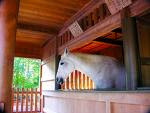
jinme, shinme, shinba 神馬,
kamikoma 神駒(かみこま), 御神馬
horses offered to a shrine as vehicles for the gods


The White Horse at Miyajima 宮島白馬
Horse of the Gods at Miyajima 宮島の神馬

One of the seven wonders of Miyajima.
Horses offered to this shrine will turn to a white color within four or five years of living here.
It is sayed that Taira no Kiyomori, who had the shrine build, came visiting often because there was a beautiful woman with white skin living on the island.


© PHOTO : www.miyajima1.com


. Itsukushima Shrine and Kigo 厳島神社  


:::::::::::::::::::::::::::::::::::::::::::::::::::::::::::::::::::::::::::::::::::::::::::::::::::::


At Shrine Oasahiko Jinja in Awaji
Oasahiko no Okami 大麻比古の大神


Photo Gabi Greve, 2007

Oasahiko Shrine - Introduction


:::::::::::::::::::::::::::::::::::::::::::::::::::::::::::::::::::::::::::::::::::::::::::::::::::::


White horse ema votive tablet of Hakone shrine
箱根神社

:::::::::::::::::::::::::::::::::::::::::::::::::::::::::::::::::::::::::::::::::::::::::::::::::::::


Memyo Bosatsu 馬鳴菩薩(めみょうぼさつ)
"Neighing Horse Bosatsu"


"Neighing horse deity", menari myojin 馬鳴明神

馬に乗る女神の蚕玉神
Silkworm Goddess on a Horse

The Woman Who Married a Horse
Japanese SILK Deities


::::::::::::::::::::::::::::::::::::::::::::::::::::::::::::::::::::::::::::::::::::::::::::::::::::: 


batoo jizoo  馬頭地蔵 "horse-headed Jizo Bosatsu"
still looking for the details.

謎の「馬頭地蔵(ばとうじぞう)
- reference - xxx

:::::::::::::::::::::::::::::::::::::::::::::::::::::::::::::::::::::::::::::::::::::::::::::::::::::


Horse-headed Fudo Myo-O. Bato Fudo Myo-O
不動明王馬頭独鈷杵 Batoo Fudoo Myoo Oo

On a Nepalese Vajra


- reference -


:::::::::::::::::::::::::::::::::::::::::::::::::::::::::::::::::::::::::::::::::::::::::::::::::::::
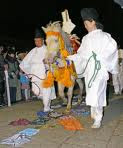

The Horse in Japanese Haiku


Ema 絵馬 Votive Plaques, Votive Tablets, Prayer Boards
Lit. "Paintings of Horses"


::::::::::::::::::::::::::::::::::::::::::::::::::::::::::::::::::::::::::::::::::::::::::::::::::::: 


CLICK for more photos

. hakubasai, hakuba sai 白馬祭(はくばさい)
Festival of the White Horse

oumesai, o ume sai 【白馬祭(おうめさい)】

ao-uma no matsuri 青馬祭 (あおうまのまつり) 
aouma no sechi-e 青馬(あおうま)の節会(せちえ)
. . . . also called
hakuba sechi-e 白馬節会
nanuka no sechi-e 七日の節会 (なぬかのせちえ)
Seasonal Feast on the seventh day (of the New Year)

kigo for the New Year

If you see a white horse during the New Year celebrations, you will live a long life and ward off evil for the coming year and stay healthy. Therefore shrines with a white horse make a parade for all to see the animal. Some parades are quite famous and reach back to the Kamakura period. In Kashima, they parade seven white horses. If you pick up a small stone where the horses walked or have your hankerchief trodden on, this will bring your love to fulfillment.
On this day, white sweet ricewine (amazake) and porridge of seven herbs is also served.

There is a poem by Otomo Yakamochi 大伴家持 in the ManyoShu poetry collection, dating from 758:

水鳥の鴨の羽の色の青馬を
今日見る人はかぎりなしといふ

The people who viewed the white horse today
- the color of the wings of a white duck -
Will enjoy long life, it is said.

Tr. Taro Sakamoto

. hakuba 白馬と伝説 Legends about a white horse .

::::::::::::::::::::::::::::::::::::::::::::::::::::::::::::::::::::::::::::::::::::::::::::::::::::: 


The famous Painter Higashiyama Kai has a serious of "white horse" paintings,
"White Horse in a Forest" is the most famous.
. . . CLICK here for Photos !
東山 魁夷【白馬】


:::::::::::::::::::::::::::::::::::::::::::::::::::::::::::::::::::::::::::::::::::::::::::::::::::::


. Kunimuke matsuri 平国祭(くにむけまつり)Kunimuke Festival   
with a sacred horse procession

. "Horse-headed Kannon of Kamioka"
上岡の馬頭観音 .

with a famous market for ema votive tablets of horses
Saitama, Kanto

. Koma 駒 horse folk toys from Japan


[ . BACK to WORLDKIGO . TOP . ]
[ . BACK to DARUMA MUSEUM TOP . ]
- #batokannon #horsehead -

:::::::::::::::::::::::::::::::::::::::::::::::::::::::::::::::::::::::::::::::::::::::::::::::::::::