Showing posts with label plants. Show all posts

12/08/2012

First Snow 2012


to keep warm
with a cap of snow -
much too early


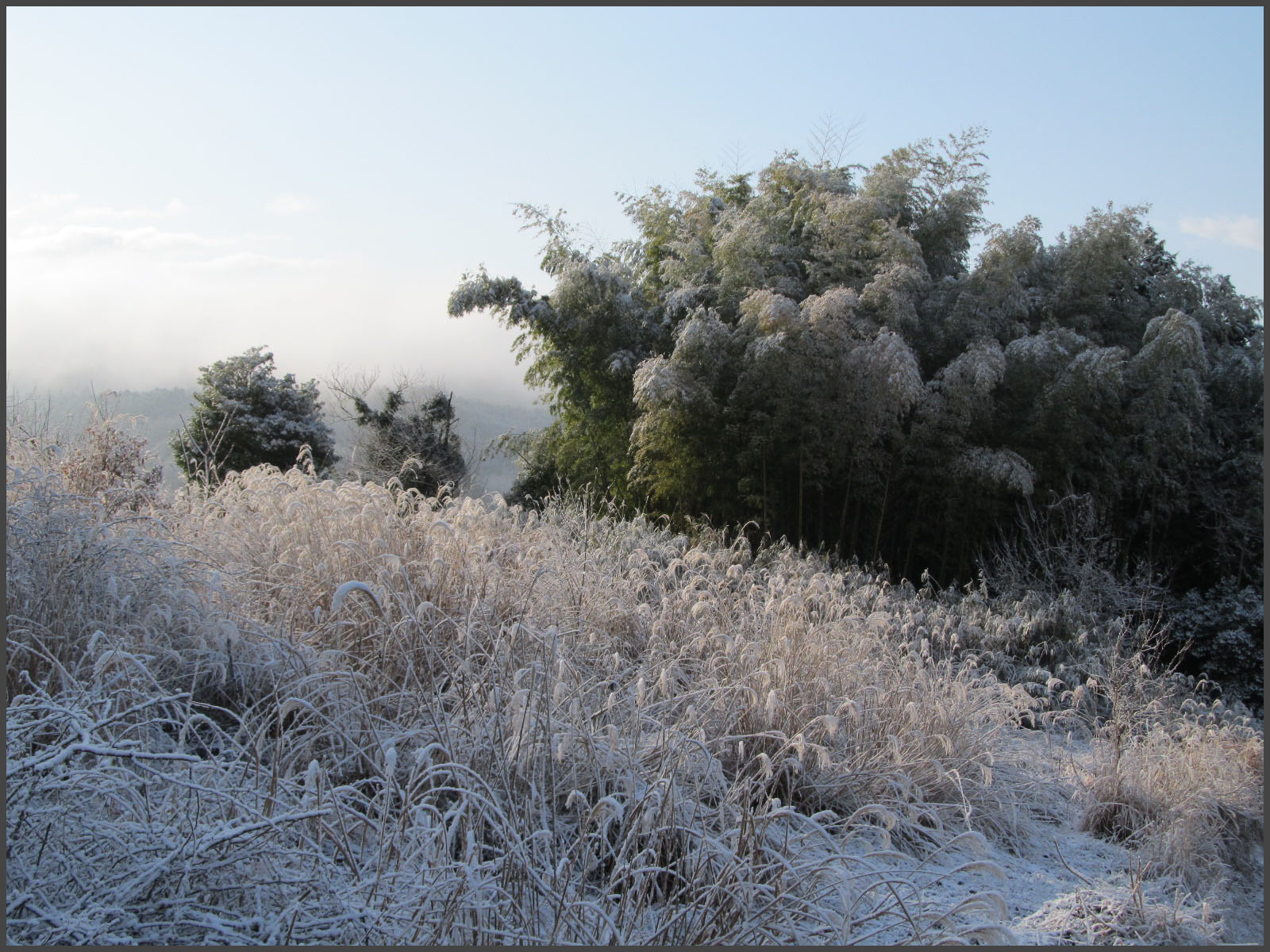
First Snow on December 9, 2012

cold wave -
at 5 in the afternoon it is already minus 2 centigrade !

Storm and blizzard in North Japan.


. Album from this morning - 4 photos .


. SNOW in my valley .


:::::::::::::::::::::::::::::::::::::::::::::::::::::::::::::::::::::::::::::::::::::::::::::::::::::

. . . Read my Haiku Archives . . .

:::::::::::::::::::::::::::::::::::::::::::::::::::::::::::::::::::::::::::::::::::::::::::::::::::

10/18/2012

Pink Chrysanthemum


so many fingers
stretching to the light -
My Pink Lady


Photo shared by Diane Dehler, Joys of Japan


:::::::::::::::::::::::::::::::::::::::::::::::::::::::::::::::::::::::::::::::::::::::::::::::::::::


. Chrysanthemum (kiku 菊) .


. . . Read my Haiku Archives . . .

:::::::::::::::::::::::::::::::::::::::::::::::::::::::::::::::::::::::::::::::::::::::::::::::::::

9/01/2012

weeding summer grasses

:::::::::::::::::::::::::::::::::::::::::::::::::::::::::::::::::::::::::::::::::::::::::::::::::::::

May 15, 2012


weeding my garden -
such great peace
and sunshine


every sunshine
and every drop of rain
feed my weeds


- Shared by Hideo Suzuki -
Joys of Japan, 2012


:::::::::::::::::::::::::::::::::::::::::::::::::::::::::::::::::::::::::::::::::::::::::::::::::::::


September 1, 2012

some were discussing the pros and cons of defining haiku in English . . .
citing the famous haiku by Basho about summer grasses . . .

夏草や兵どもが夢の跡
natsukusa ya tsuwamano-domo ga yume no ato


haiku is a word of the Japanese language, where it has a certain meaning.
haiku has also become a word in other languages, where it has taken on various meanings.

so writing a short poem called "haiku" is different things to different people - we just have to acknowledge this in the end, I think.

I write mostly Japanese haiku of the traditional flavor, but sometimes (it all depends on the situation) I write senryu, zappai or just plain short little poems . . . I hope the reader can figure out which is which ... if not, please label them as is fit to your understanding of the genre
and most of all -
enjoy what you are reading.


summer grasses
grow wild in my garden -
I call them weeds

sometimes
I call my weeds "wild flowers" -
it all depends on the situation


................................................................................


summer weeds
yet I bend my back gladly
to gather them

Ella Wagemakers


summer weeds -
plants that grow best for me
in this region

Elaine Andre


summer grasses -
some with flowers
others with vines

Hideo Suzuki


- Shared at Joys of Japan Poetry -

:::::::::::::::::::::::::::::::::::::::::::::::::::::::::::::::::::::::::::::::::::::::::::::::::::::

. . . Read my Haiku Archives . . .

:::::::::::::::::::::::::::::::::::::::::::::::::::::::::::::::::::::::::::::::::::::::::::::::::::

8/26/2012

cutting roses

:::::::::::::::::::::::::::::::::::::::::::::::::::::::::::::::::::::::::::::::::::::::::::::::::::::


cutting roses -
I think about you
and you and you


:::::::::::::::::::::::::::::::::::::::::::::::::::::::::::::::::::::::::::::::::::::::::::::::::::::


cutting roses...
softly I prick the thorns
for pleasure


Dr. Kumarendra Mallick, India
Kigo Hotline


:::::::::::::::::::::::::::::::::::::::::::::::::::::::::::::::::::::::::::::::::::::::::::::::::::::

. . . Read my Haiku Archives . . .

:::::::::::::::::::::::::::::::::::::::::::::::::::::::::::::::::::::::::::::::::::::::::::::::::::

5/03/2012

WKD - bamboo shoots


bamboo shoots -
the more I look
the more I find


today we harvested
the first eight huge ones


:::::::::::::::::::::::::::::::::::::::::::::::::::::::::::::::::::::::::::::::::::::::::::::::::::::


bamboo groves
in backyards past...
shadows of time


Two resources for bamboo shoot info:
http://agsyst.wsu.edu/bambroc.pdf
http://www.bamboo.org/FAQ.html#CanIEatTheShoots


Tom Conally, USA
Happy Haiku Forum


:::::::::::::::::::::::::::::::::::::::::::::::::::::::::::::::::::::::::::::::::::::::::::::::::::::


market day
two baskets of bamboo shoots
sold in bulk


- Shared by Bos Tsip, Philippines -
Joys of Japan, 2012


:::::::::::::::::::::::::::::::::::::::::::::::::::::::::::::::::::::::::::::::::::::::::::::::::::::


May 15 :

to study in silence -
I wish I could grow
like a bamboo shoot


:::::::::::::::::::::::::::::::::::::::::::::::::::::::::::::::::::::::::::::::::::::::::::::::::::::


Bamboo shoots or bamboo sprouts
are the edible shoots (new bamboo culms that come out of the ground) of many bamboo species including Bambusa vulgaris and Phyllostachys edulis. They are used in numerous Asian dishes and broths. They are sold in various processed shapes, and are available in fresh, dried, and canned versions.
Shoots of several species of bamboo are harvested for consumption:
© More in the WIKIPEDIA !


.............................................................................


閑居して筍番をしたりけり
kankyo shite takenoko ban o shitari keri

now retired,
I stand guard over
bamboo shoots


Kobayashi Issa


Comment by Chris Drake :

This is an important hokku written three months after Issa received half of his father's land in his hometown that seems to show Issa's attitude toward his new lifestyle. The tone is humorous and directed at himself. He uses a deliberately grandiose phrase for his new life as half-owner of his father's house and land, a phrase that in Issa's time was commonly used by wealthy merchants who retired early, turned over their business to a son or head clerk, and concentrated on one of the traditional arts, such as tea ceremony.

In the 19th century kankyo shite commonly means "having separated/secluded myself from the noisy commercial world," and in Issa's case it means above all that he's left behind his life of wandering around the greater-Edo haikai world and has settled down in the country -- though he'll make many trips to greater Edo in the future. Any respectable retired Edo merchant or literati has an equally respectable avocation to fill his spare time, a custom parodied by Issa when he says he now works as the self-appointed official guard of the bamboo shoots on his father's property.

There may be some utilitarian value to Issa's new guard duties, since bamboo shoots are harvested for their food value, and monkeys, deer, wild boars, and bears also enjoy eating them, but bamboo shoots grow quickly, often in great profusion, so Issa may be deliberately be presenting himself as a guard of a natural process that happens even without guarding. Two hokku before this hokku in Issa's diary (for the 4th month [May] of 1813) he writes:

tsuyu chiru ya waka-takenoko no zokuzoku to

dripping dew,
young bamboo shoots
rise endlessly


(I follow Maruyama Kazuhiko's reading.) So it seems Issa is parodying himself as he goes around looking at vigorous bamboo shoots rising upward in May. The shoots may also be an image for Issa's view of hokku (and renku) as creations rooted in the earth that appear of their own accord and mostly just need a little looking after.

Chris Drake


BACK TO
. WKD : take no ko, takenoko 竹の子 bamboo shoots 筍  .


:::::::::::::::::::::::::::::::::::::::::::::::::::::::::::::::::::::::::::::::::::::::::::::::::::::

. Food with bamboo shoots .


. Bamboo shoots in 2010 .


. . . Read my Haiku Archives . . .

:::::::::::::::::::::::::::::::::::::::::::::::::::::::::::::::::::::::::::::::::::::::::::::::::::

4/17/2012

bamboo and cherry

:::::::::::::::::::::::::::::::::::::::::::::::::::::::::::::::::::::::::::::::::::::::::::::::::::::


above the bamobo grove
cherry blossoms shine
in early morning light


My valley has finally made it into spring ...


:::::::::::::::::::::::::::::::::::::::::::::::::::::::::::::::::::::::::::::::::::::::::::::::::::::


source : wakei-seijyaku

spring patterns with bamboo and sakura


:::::::::::::::::::::::::::::::::::::::::::::::::::::::::::::::::::::::::::::::::::::::::::::::::::::

. WKD : Bamboo (take 竹) .

. Bamboo, the Asian Plant 竹とだるま .


. . . Read my Haiku Archives . . .

:::::::::::::::::::::::::::::::::::::::::::::::::::::::::::::::::::::::::::::::::::::::::::::::::::

3/29/2012

plum park KUME


sunshine deepens
their shades of pink -
plum blossoms


Walk with me through the plum park of Kume
Click on the NEXT tab on top to see till Nr. 35.

. Kume Plum Park 2012 .


久米の里 梅公園

:::::::::::::::::::::::::::::::::::::::::::::::::::::::::::::::::::::::::::::::::::::::::::::::::::::


. Kume Plum Park 2006 .


. Kume Plum Park 2008 .


. . . Read my Haiku Archives . . .

:::::::::::::::::::::::::::::::::::::::::::::::::::::::::::::::::::::::::::::::::::::::::::::::::::

3/28/2012

frost on plums


my plum blossoms
get another hit -
frost in the morning


「霜紅梅」sweet called
"frost on red plum blossoms"
source : yamada no cake


:::::::::::::::::::::::::::::::::::::::::::::::::::::::::::::::::::::::::::::::::::::::::::::::::::::


Join me on a walk through the plum park of Kume
on the next day -

. Kume Plum Park .


. WAGASHI SAIJIKI
Sweets from Japan .


. . . Read my Haiku Archives . . .

:::::::::::::::::::::::::::::::::::::::::::::::::::::::::::::::::::::::::::::::::::::::::::::::::::

3/25/2012

wilderness


The Wilderness


.................................................................................


The Bamboo Grove


:::::::::::::::::::::::::::::::::::::::::::::::::::::::::::::::::::::::::::::::::::::::::::::::::::::

. . . Read my Haiku Archives . . .

:::::::::::::::::::::::::::::::::::::::::::::::::::::::::::::::::::::::::::::::::::::::::::::::::::

3/21/2012

plum buds


the plum bud
speaks for herself -
no haiku


.................................................................................


. Plum Blossoms (ume 梅) .


:::::::::::::::::::::::::::::::::::::::::::::::::::::::::::::::::::::::::::::::::::::::::::::::::::::

. . . Read my Haiku Archives . . .

:::::::::::::::::::::::::::::::::::::::::::::::::::::::::::::::::::::::::::::::::::::::::::::::::::

3/20/2012

palm in snow


late snow -
the palm tree wonders
about global warming


Reaction from friends :


You should be in Canada, Gabi! Normally we're dealing with temps hovering around freezing or just a tad above, in March... instead we are in a heat wave with mid 20's Celsius... I know I should worry about global warming too,
but this sure does beat snow and ice and winter coats!!!!!

still winter
yet on the maple tree
new growth


D.


D. and Gabi

We had such a sever drought last year....and so much loss due to fires...and this year, lots of rain/huge storm fronts creating havoc in TX....flooding, tornadoes, sink holes...it's so strange and yet we are led to believe...it's normal. We had no real winter here and so my roses were not pruned...they bloomed continuously all winter and I couldn't (didn't know how either, with such growth on them) cut into them. My yard is a swamp.

It has rained so much I have to walk the dogs on the driveway and the edges only...if they venture into the grass/way over grown weeds....they will sink knee deep in mud. I know all this is trivial compared to what is happening elsewhere in the world...but it is the "everyday" weirdness...the small things that have been getting me lately...and... in the last few years. Things like (I'm no bird watcher...but I should get a few books) birds in my yard in greater quantities and birds I have never seen before in my yard (in 30 years of living here....have to wonder what is happening at my other home in the Keys).... makes you wonder. Personally, I think it's (the weird weather) only going to get worse.

spring rain
the cannas bob
with heavy heads


P.


On the way to global warming, expect global weirding.
B.


:::::::::::::::::::::::::::::::::::::::::::::::::::::::::::::::::::::::::::::::::::::::::::::::::::::

. . . Read my Haiku Archives . . .

:::::::::::::::::::::::::::::::::::::::::::::::::::::::::::::::::::::::::::::::::::::::::::::::::::

3/12/2012

earth in spring


the joys of Japan
and the duties of Japan -
earth in spring


. Japan after the BIG earthquake March 11, 2011 .


KIGO
. earth in spring, haru no tsuchi 春の土 .


:::::::::::::::::::::::::::::::::::::::::::::::::::::::::::::::::::::::::::::::::::::::::::::::::::::


that day to this
buddha's smile beneath
a hat of snow


- Shared by Sheila Windsor ‎
Virtual Haiku, March 2012


:::::::::::::::::::::::::::::::::::::::::::::::::::::::::::::::::::::::::::::::::::::::::::::::::::::


. . . Read my Haiku Archives . . .

:::::::::::::::::::::::::::::::::::::::::::::::::::::::::::::::::::::::::::::::::::::::::::::::::::

3/03/2012

chainsaws


listening
to the sound of chainsaws -
neighbours felling trees


.
maybe some of you will remember
the wonderful cherry blossom road
Just below my home ...

well, the trees are gone!
.

And the big pines are on the list today ...
three are already down with a loud crash ...

This is terrible,
but we can do nothing
but look and listen . . .


After a day of rain they were back, March 3

and then this unexpected thing happened


An ambulance came and
one of the workers was taken to hospital.
What exactly happened, we do not know.


. Photos - start from here .


:::::::::::::::::::::::::::::::::::::::::::::::::::::::::::::::::::::::::::::::::::::::::::::::::::::

. . . Read my Haiku Archives . . .

:::::::::::::::::::::::::::::::::::::::::::::::::::::::::::::::::::::::::::::::::::::::::::::::::::

1/31/2012

snow on robai


morning meditation -
how yellow
is yellow ?


. Photos from this morning .

:::::::::::::::::::::::::::::::::::::::::::::::::::::::::::::::::::::::::::::::::::::::::::::::::::::


. WKD : Wintersweet roobai 蝋梅 .


. . . Read my Haiku Archives . . .

:::::::::::::::::::::::::::::::::::::::::::::::::::::::::::::::::::::::::::::::::::::::::::::::::::

12/12/2011

dandelion in snow


snow fluffs
on dandelion fluffs -
winter begins


 タンポポの Snow
 綿毛の雪で On dandelion fluffs
 冬を知る Winter has come
Esho Shimazu


. WKD : Dandelion (tanpopo) .


:::::::::::::::::::::::::::::::::::::::::::::::::::::::::::::::::::::::::::::::::::::::::::::::::::::

. . . Read my Haiku Archives . . .

:::::::::::::::::::::::::::::::::::::::::::::::::::::::::::::::::::::::::::::::::::::::::::::::::::

11/15/2011

autumn weeds

:::::::::::::::::::::::::::::::::::::::::::::::::::::::::::::::::::::::::::::::::::::::::::::::::::::


my "Paradise Garden"
has so many weeds -
autumn sunshine


 極楽と (Gokuraku to) "Paradise Garden"
 名づけし庭に (Nazukeshi niwa ni) So named [my] garden
 茂りたる (Shigeri taru) Growing are
 名もなき草に (Namonaki kusa ni) Nameless weeds
 秋の陽は照る (Aki no hi wa teru) Autumn sunshine on them"


Translation from my facebook friend Esho Shimazu

:::::::::::::::::::::::::::::::::::::::::::::::::::::::::::::::::::::::::::::::::::::::::::::::::::::

. . . Read my Haiku Archives . . .

:::::::::::::::::::::::::::::::::::::::::::::::::::::::::::::::::::::::::::::::::::::::::::::::::::

11/03/2011

- my autumn - one leaf autumn


わが秋の道端にある宝かな


not much
and yet
my autumn


.................................................................................


63 persimmons
high up in the tree -
reflecting my life


November 3, my birthday


:::::::::::::::::::::::::::::::::::::::::::::::::::::::::::::::::::::::::::::::::::::::::::::::::::::


review by Susumu Takiguchi, WHR December 2011

not much
and yet
my autumn

Gabi Greve

The Editor’s Choice in this issue of World Haiku Review does not come from usual submissions. Rather, it comes from the flagship of the World Haiku Club: WHCworkshop. This is a general and free discussion forum (mailing list) where members enjoy showing their works, doing c & c, exchange views, debate haiku issues etc.

The author is well-known. A German scholar in Buddhist studies, she lives a paradise-like life (gokuraku=paradise) in an idyll of a countryside in Japan where she has taken up long residence. Her exceptionally keen interest in and devotion to haiku can only be matched by her deep love for her cats.

I am presenting this haiku here for a number of specific reasons. Firstly, it may well pass unnoticed, or be rejected, by poets deeply influenced by American-led haiku trend as it may not mean much to them and/or it may violate their rules: “Show, not tell”, “my” autumn is wrong etc. All too often these rules are poor compensation for not being able to grasp the most important thing about haiku, i.e. haiku spirit or the essence of haiku, which is elusive, obscure and mysterious for them. Gabi Greve is one of the few poets who have been lucky enough to grasp haiku spirit from which her poems naturally emerge. Her haiku do not normally emanate from rules, except for fundamental Japanese haiku conventions (i.e. an integral part of the constitution of haiku) such as kigo. She is a natural. However, this does not mean that one can forget or overlook the fact that she has made tremendous efforts in her study of haiku.

Secondly, if this haiku poem does not much appeal to the American-led haiku followers, one important reason may lie in the power of kigo (season word). For those who deny or are insensitive to kigo, to present this haiku is to cast pearls before swine. At least half the job in the haiku is done by the kigo which silently speaks volumes about the circumstances and the stories associated with it.

Thirdly, as was already indicated, many might object the “my” in line 3 on account of another rule that one’s “self” must not appear in a haiku. The trouble is that this same “my” is what makes this poem a haiku and a superior one at that. Every Japanese haiku poet would react to it favourably. There have been a countless number of haiku having “self” appearing in them. Gabi Greve’s haiku has an especial resonance with Issa of course but the sentiment is universal in Japan.

Fourthly, the excellence of this haiku and the difficulty it might have in being appreciated by non-Japanese haiku poets may both be due to the fact that Gabi Greve has lived in Japan for a long time, speaks good Japanese, trained as a haijin under the tutelage of Japanese haiku masters, studied classical haiku and is versed in all aspects of Japanese culture. In other words, she has learned haiku in the right and proper way. No doubt, other non-Japanese haiku poets living outside Japan would not have such a privilege as she enjoys but they can at least emulate her and make some efforts to learn haiku as properly as their circumstances allow.

Fifthly, as Gabi Greve has a stringent policy of never sending her haiku poems for publication to magazines and competitions I have taken the initiative of asking her if she would permit me to introduce this particular haiku here to wider audience.

Sixthly, as far as my understanding goes Gabi Greve wishes to be as free as possible from any particular haiku school or haiku style, such as the minimalist, the four-line school, one-liner, S-L-S form or any other rigid and dogmatic position. I thoroughly approve this stance of hers and wish to go so far as to say that many more should follow suit. My way of saying the same thing, as I have done in many of my writings, is:
LET A PARTICULAR HAIKU DECIDE.
Each haiku is different as each child is different. Let each haiku develop as it wants to develop itself without imposing preconceived or fixed rules, ideas, policies etc. This would often solve such questions as the lengths and patterns of each line, choice of words, kigo or not kigo, the order of lines and words. It is just like letting each child develop as it wants to develop instead of imposing parents’ will, decisions, or preconceived ways of child-rearing, especially wishful thinking, or their own unfulfilled wishes. Some people such as, I suspect, Gabi Greve do this naturally or instinctively. Others can learn (with not an insignificant efforts) how to do it. Simply put, give yourself freedom you deserve, and then, and only then, give each haiku freedom it deserves. Do not put the cart (rules, preconceived ideas etc.) before the horse (haiku).

Gabi Greve’s haiku has been presented with her own photograph of a single autumn leaf having all its glorious colours. She experienced an intense sense of autumn in a single leaf. It is not that this leaf represents symbolism of the season. It is the autumn itself. In such a humble and ordinary thing as a leaf the whole season has revealed itself, which is a wonder and a celebration of life and nature. You do not need mountains and mountains of autumn colours. You only need to look around your home. The modest discovery needed no extravagant expression. A few words and simple lines are all that is required. This has nothing to do with the minimalist dogma. The nature has found the most natural words and lines. The haiku of the Editor’s choice in this issue is the result.

source : whr-december-2011


:::::::::::::::::::::::::::::::::::::::::::::::::::::::::::::::::::::::::::::::::::::::::::::::::::


ora ga aki - my autumn

ora ga haru - my spring (Issa )


The world of dew --
A world of dew it is indeed,
And yet, and yet . . .

露の世は露の世ながらさりながら

tsuyu no yo wa tsuyu no yo nagara sari nagara


to write a new poem
but alluding to an original poem (honka)
. honkadori 本歌取り .


:::::::::::::::::::::::::::::::::::::::::::::::::::::::::::::::::::::::::::::::::::::::::::::::::::::


Dear Gabi

not much
and yet
my autumn


It sounds very familiar, and I wondered if perhaps it is an unconscious rewriting of the common misquote of Shakespeare,

"A poor thing, but mine own."

D.


Shakespeare As You Like It

TOUCHSTONE:

God 'ild you, sir; I desire you of the like. I
press in here, sir, amongst the rest of the country
copulatives, to swear and to forswear: according as
marriage binds and blood breaks: a poor virgin,
sir, an ill-favoured thing, sir, but mine own; a poor
humour of mine, sir, to take that that no man else
will: rich honesty dwells like a miser, sir, in a
poor house; as your pearl in your foul oyster.”


Act 5, Sc 4 - As You Like It


Literal meaning
it may not be good, but it's the best I have to offer.
source : www.phrases.org.uk


Dear D.
I am not good at English literature and the Shakespeare quote is not in my mind.

But it is always interesting to see how a haiku can lead to other shores.
And how it can induce discussions about the haiku form.

Just as the ELH author is free to name anything a haiku,
so is the reader free to judge anything as a haiku or not.

My two versions inspired by the one leaf
are not translations of each other.

One was perceived with my Japanese haiku mind.
One was perceived with my English language mind.


to be
or not to be -
it this a haiku ?


Gabi
aha


not much
and yet
my haiku


.................................................................................


March 20, 2012

minus two -
not much and yet
my spring


おらが春 ora ga haru


:::::::::::::::::::::::::::::::::::::::::::::::::::::::::::::::::::::::::::::::::::::::::::::::::::::


. Life, my life (mi no ue) .


. Haiku is the poetry of the first person .


. . . Read my Haiku Archives . . .

:::::::::::::::::::::::::::::::::::::::::::::::::::::::::::::::::::::::::::::::::::::::::::::::::::

5/10/2010

Lupinus

[ . BACK to WORLDKIGO . TOP . ]
::::::::::::::::::::::::::::::::::::::::::::::::::::::::::::::::::::::::::::::::::::::::::::::::::::: 


03 some lupinus


lupinus ...
just one in my garden
one in my heart


04 one lupinus


CLICK For summer flower album


They used to grow abundantly in our garden in Germany, but I never managed to get them to grow here in my valley in Japan
... until this spring and early summer !


:::::::::::::::::::::::::::::::::::::::::::::::::::::::::::::::::::::::::::::::::::::::::::::::::::::


kigo for early summer

rupinasu ルピナス lupinus, Lupinie
tachifujisoo 立藤草(たちふじそう)"standing wisteria"
noborifuji 昇り藤(のぼりふじ) "wisteria climbing up"

Japanese tend to see the lupinus, which is not ingenious to Japan, as a kind of "downside up wisteria".


::::::::::::::::::::::::::::::::::::::::::::::::::::::::::::::::::::::::::::::::::::::::::::::::::::: 


Lupins or lupines (North America) are the members of the genus Lupinus in the legume family (Fabaceae).
The genus comprises between 200 and 600 species, with major centers of diversity in South America and western North America, in the Mediterranean region and Africa.

Bluebonnet lupins, notably the Texas Bluebonnet (Lupinus texensis) are the state flower of Texas, USA.
© More in the WIKIPEDIA !


:::::::::::::::::::::::::::::::::::::::::::::::::::::::::::::::::::::::::::::::::::::::::::::::::::::


bluebonnets gone...
even my cacti beds scorch
in this long drought


opie

The Texas bluebonnet is the state flower of Texas. This year, it only made a short appearance, due to the drought.
Texas, 2011


:::::::::::::::::::::::::::::::::::::::::::::::::::::::::::::::::::::::::::::::::::::::::::::::::::::


bluebonnets...
a universe of one
blue flower


- Shared by Jimmy ThePeach
Joys of Japan, March 2012


lupinus ...
the sense of joy
with aroma of honey


- Shared by Gennady Nov
Joys of Japan, March 2012


:::::::::::::::::::::::::::::::::::::::::::::::::::::::::::::::::::::::::::::::::::::::::::::::::::::

. WKD : North America Saijiki .


. . . Read my Haiku Archives

[ . BACK to WORLDKIGO . TOP . ]
:::::::::::::::::::::::::::::::::::::::::::::::::::::::::::::::::::::::::::::::::::::::::::::::::::::

3/05/2009

Cherry blossom logo

:::::::::::::::::::::::::::::::::::::::::::::::::::::::::::::::::::::::::::::::::::::::::::::::::::::


text


:::::::::::::::::::::::::::::::::::::::::::::::::::::::::::::::::::::::::::::::::::::::::::::::::::::

. . . Read my Haiku Archives 2010


:::::::::::::::::::::::::::::::::::::::::::::::::::::::::::::::::::::::::::::::::::::::::::::::::::

1/27/2007

Last Apple Tree

:::::::::::::::::::::::::::::::::::::::::::::::::::::::::::::::::::::::::::::::::::::::::::::::::::::


He had been tending his many orchards for many years. Getting older, things got more difficult and one by one, he had to cut down the many trees in his orchards.
Today I observed the old farmer below in my valley :


winter cold -
he felled his last
apple tree


Winterkälte -
er fällt den letzten
Apfelbaum


:::::::::::::::::::::::::::::::::::::::::::::::::::::::::::::::::::::::::::::::::::::::::::::::::::::


The sad reality of rural Japan 2007, where the old get older rapidly and there are no young ones to take over. So the weeds, badgers and wild boars thrive ...


Read my Haiku Archives from January 2007


***************************

BACK

To the Daruma Museum Index

To the World Kigo Database