Showing posts with label mandala. Show all posts

1/22/2007

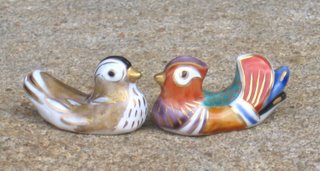
Mandala Plate


winter's eve -
the mandala
on my dinner plate


More about Mandala and Haiku


More about my Pottery and Haiku


Read my Haiku Archives from January 2007


::::::::::::::::::::::::::::::::::::::::::::::::::::::::::::::::::::::::::::::::::::::::::::::::::::: 

[ . BACK to DARUMA MUSEUM TOP . ]
[ . BACK to WORLDKIGO . TOP . ]

:::::::::::::::::::::::::::::::::::::::::::::::::::::::::::::::::::::::::::::::::::::::::::::::::::::

11/09/2006

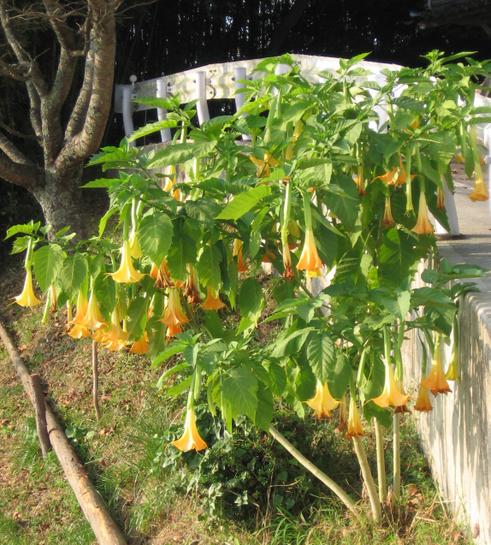
Trumpet Flower

:::::::::::::::::::::::::::::::::::::::::::::::::::::::::::::::::::::::::::::::::::::::::::::::::::::


autumn deepens -
the soundless sound of
a pink trumpet


:::::::::::::::::::::::::::::::::::::::::::::::::::::::::::::::::::::::::::::::::::::::::::::::::::::


Angel's Trumpet Flower エンセルス・トランペット
kigo for late summer

The species name is Datura candida, from the Solanaceae family (same as the potato). The plant contains the drug scopolamine, which is used in medicine to control motion-sickness.
A low-growing wild variant is called “sacred datura” or “loco weed,” which is still used by some southwest Native Americans as a hallucinogen in religious rituals. Cattle ranchers are careful to keep their livestock away from poisonous loco weed. Many people know the trumpet flower from a famous painting by Georgia O’Keeffe.

Billie Dee, USA


dachura ダチュラ Datura, trumpet flower
choosen asagao 朝鮮朝顔(ちょうせんあさがお)Korean morning glory
mandarage 曼荼羅華(まんだらげ)"Mandala flower"
zensoku tabako 喘息煙草(ぜんそくたばこ)"asthma tobacco"
kichigai nasu 気違茄子(きちがいなす)"crazy eggplant"


:::::::::::::::::::::::::::::::::::::::::::::::::::::::::::::::::::::::::::::::::::::::::::::::::::::


In Japan, there are various names for this flower, which originates in South Asia. It was introduced to Japan as a medicinal plant during the Edo period. It might grow as much as 2 meters in hight and flowers from Summer to late autumn. From the leaves a medicine for asthma and coughing is produced.


Trumpet Flower, Kodachi Choosen Asagao
"Tree-like Korean Morning Glory"

コダチチョウセンアサガオ(学名:Brugmansia x candida ) 朝鮮朝顔
キダチチョウセンアサガオと似ており、花は白色または黄色が多く、ガクの先端は2~3深裂して角ばらない。一般にはガクの先端は見分けにくいため、いずれもエンゼルス・トランペットと呼ばれる。漢字で書くとキダチチョウセンアサガオもコダチチョウセンアサガオも「木立朝鮮朝顔」となる。最近では観賞用として広く植えられているが、これらも有毒である。
(C) Wikipedia


The flower is also called :
Mandala Flower, mandarage 曼陀羅華.
Datura ダチュラ、ダチューラ
"tobacco for coughing" zensoku tabako 喘息煙草 ぜんそくたばこ
"eggplant that makes you crazy" kichigai nasu 気違茄子きちがいなす


More flowers in my neighborhood.
Click on the photo to see the enlargement.


© Photos by Gabi Greve, October 2006

:::::::::::::::::::::::::::::::::::::::::::::::::::::::::::::::::::::::::::::::::::::::::::::::::::::


bee droning
from a wilted bloom
trumpet flower

George Steel , Shiki Archives 1997

:::::::::::::::::::::::::::::::::::::::::::::::::::::::::::::::::::::::::::::::::::::::::::::::::::::

Worldwide

India
trumpet tree, golden yellow trumpet tree

Amapa amarilla (Mexico)
kigo for spring

quote
February is on its way out with Bangalore getting as hot as an oven! But the gift from nature to endure the heat is the golden yellow abundance of the Tabebuia chrysantha that is flowering all over the City, gladdening the tired eye.
. . . CLICK here for Photos !

Also known as the Trumpet Tree, this Brazilian beauty has several species which range from northern Mexico to northern Argentina and central Venezuela. In Bangalore it starts amazing everyone with its turmeric yellow dazzle in the oddest places. Venkatappa Art Gallery has a grove of this gorgeous, ornamental tree which is useful for bees with its honey plants and humming birds love it as well. It will blossom only during February and March.
© www.deccanherald.com


Trumpet tree
the wind plays with
his flowers


Marita Schrader (Germany)
source : ww.asahi.com, 2005


:::::::::::::::::::::::::::::::::::::::::::::::::::::::::::::::::::::::::::::::::::::::::::::::::::::

KENYA

trumpet plant
Solandra glandiflora
Family : Solanaceae

kigo for the cold, dry season

The Angel's Trumpet grows in many of the large gardens in the well-off suburbs of Nairobi, where it flowers in July, making it a kigo for the cold dry season.


trumpet  flower 01 till 05

. LOOK at more photos from Caleb Wothes Mutua!


.................................................................................


Moonflower, Angel's Trumpet
Datura suaveolens


A soft-wood, fast-growing shrub from 4-12 feet (1.3 - 4 metres) in height, it bears large, pendant, trumpet-shaped flowers. The white variety is very sweetly scented in the evening.

This is a common, but very poisonous garden plant. It is available in a variety of different colours, including white, yellow and pink, and in single and double forms.

~ John Karmali and Camerapix, 1988, The Beautiful Plants of Kenya


.................................................................................


trumpet plant--
the first buds appearing
in July cold


early July--
trumpet blossoms scatter
on the green lawn


Caleb Mutua, Kenya


. . . CLICK here for Photos : Datura suaveolens !


:::::::::::::::::::::::::::::::::::::::::::::::::::::::::::::::::::::::::::::::::::::::::::::::::::::


RELATED KIGO

Trumpet Creeper (noozenkazura 凌霄の花)
Chinese Trumpet Creeper


Poui Tree (Tabebuia Family)
kigo for the Tropical Rainy Season


:::::::::::::::::::::::::::::::::::::::::::::::::::::::::::::::::::::::::::::::::::::::::::::::::::::

To the Daruma Museum Index
To the World Kigo Database

:::::::::::::::::::::::::::::::::::::::::::::::::::::::::::::::::::::::::::::::::::::::::::::::::::::

6/23/2006

Fireflies


chasing fireflies <>
all I catch is
haiku


We drove through a very steep lonely vally, for more than 10 kilometers, pitchdark and full of fireflies. Up to the high mountain ridges they were
swirling and sparkling ...


Inspired by a ku from Robert Wison

shhhhs, let the
american poets think
it's a haiku!

Simply Haiku Forum

Aaaa, let them THINK! indeed ...


:::::::::::::::::::::::::::::::::::::::::::::::::::::::::::::::::::::::::::::::::::::::::::::::::::::


lost souls
down by the brook
the fireflies

<>

fireflies cruising in
bumpy circles
Mandala Valley

<>

moonless night
the fireflies dancing
double shifts


:::::::::::::::::::::::::::::::::::::::::::::::::::::::::::::::::::::::::::::::::::::::::::::::::::::


World Kigo Database : Fireflies (hotaru 蛍) 

***************************

Please send me your contributions

To the Daruma Museum Index

To the WHC Worldkigo Database

6/10/2006

Pilgrim's Path


竹林 上り下りの 遍路道


bamboo grove -
the pilgrim's path leads
up and down


:::::::::::::::::::::::::::::::::::::::::::::::::::::::::::::::::::::::::::::::::::::::::::::::::::::


© Bamboo Grove, Photo Curtesy of Amy Chavez, Shiraishi, June 2006


!!!!! Read the details here:
Our Shiraishi Pilgrimage, June 2006
.


Sunset for the Pilgrims, June 2006

Watching Benten Island, June 2006

Daruma Rock, June 2006


the ardent pilgrim -
herding his cows like
herding his thoughts


. Read about a Pilgrim Cow Herder of India .


Pilgrim's Path, a KIGO for spring

:::::::::::::::::::::::::::::::::::::::::::::::::::::::::::::::::::::::::::::::::::::::::::::::::::::

Friends inspired to write :

stone trail --
the pilgrim path
leads in circles


hortensia anderson


Mandala, the Path in Circles


::::::::::::::::::::::::::::::::::::::::::::::::::::::::::::::::::::::::::::::::::::::::::::::::::::: 

[ . BACK to DARUMA MUSEUM TOP . ]
[ . BACK to WORLDKIGO . TOP . ]

::::::::::::::::::::::::::::::::::::::::::::::::::::::::::::::::::::::::::::::::::::::::::::::::::::: 

11/15/2005

Pottery and Haiku

. Yakimono 焼物 Pottery Introduction .


頬っぺたに 当てなどすなり 赤い柿

hoppeta ni
ate nado sunari
akai kaki

red persimmons -
try to hold them
to your cheeks


This is a large plate we use to serve entrees to our visitors.


. Persimmon (kaki) as KIGO  


Listen to the delicious sound of autumn colors


:::::::::::::::::::::::::::::::::::::::::::::::::::::::::::::::::::::::::::::::::::::::::::::::::::::


My collection of Pottery and Haiku

New Sun <> Pottery and Poetry

Light or Shade, Praying Hands of Takagaki Mondo 高垣門土の作品

Bizen Pot and more by Takagaki Mondo

Zen Monks enjoying the Water of Wisdom

Mouse eats bread, Oil Dish

Mandala Plate from Tottori


More Pots and Plates from GokuRakuAn


and a bit of theory in my library:
'What's art and what's craft?'


::::::::::::::::::::::::::::::::::::::::::::::::::::::::::::::::::::::::::::::::::::::::::::::::::::: 


In a whale’s eye
The glaze of a T'ang bowl –
Reflected!


source : Ian Watson 1975 : ‘The Jonah Kit’


::::::::::::::::::::::::::::::::::::::::::::::::::::::::::::::::::::::::::::::::::::::::::::::::::::: 


haiku -
at the potter's wheel
clay of poetry


Gennady Nov
Joys of Japan, October 2012


::::::::::::::::::::::::::::::::::::::::::::::::::::::::::::::::::::::::::::::::::::::::::::::::::::: 

[ . BACK to WORLDKIGO . TOP . ]
[ . BACK to DARUMA MUSEUM TOP . ]

::::::::::::::::::::::::::::::::::::::::::::::::::::::::::::::::::::::::::::::::::::::::::::::::::::: 

6/07/2005

Amida Buddha

. Amida Nyorai Legends 阿弥陀如来と伝説 .


Amida Buddha -
you smile at life
you smile at death


Amida Buddha -
you smile at a friend
who took her own life

(at age 20)


Amida Buddha -
you smile at a mother
who left too early

(at age 53, cancer)


Amida Buddha -
you smile at me
I smile at you


Amida Buddha comes down
from the Paradise in the West
to welcome the souls of the dead and
take them back to his heaven.


Read Mark Schumacher with the details of
Amida Nyorai 阿弥陀如来

. Introducing Japanese Buddha Statues .

:::::::::::::::::::::::::::::::::::::::::::::::::::::::::::::::::::::::::::::::::::::::::::::::::::::

kigo for mid-spring

CLICK for more photos

roku Amida moode 六阿弥陀詣 (ろくあみだもうで)
visiting six temples with Amida statues

..... roku Amida mairi 六阿弥陀参(ろくあみだまいり) Rokuamida
..... roku Amida 六阿弥陀(ろくあみだ)
It was popular in Edo, Kyoto and other cities. Often on January 15

In Kyoto, these temples are included:
Shinnyo-do Temple (Jodoji Shinnyo-cho Sakyo-ku)
Eikan-do Temple (Eikando-cho Sakyo-ku)
Amida-do Hall in Kiyomizu-dera Temple (Kiyomizu Higashiyama-ku)
Ansho-in Temple (Higashiyama Gojo Higashiyama-ku)
Anyo-ji Temple (Shinkyogoku Takoyakushi Nakagyo-ku)
Seigan-ji Temple (Shinkyogoku Sanjo Nakagyo-ku)


Roku Amida Pilgrims

- quote -
Rokuamida Meguri 六阿弥陀廻
Rokuamida Meguri was the name of an excursion for the people of Edo period in which one could pray to enter to Pure Land of Amida by visiting six temples which enshrine six statues of Amida made of sacred trees that drifted from Kumano during the weeks of the equinox in spring and autumn.
Enmei-in Temple in Kohoku of Adachi Ward was the second among the six 六阿弥陀札所 Amida Fudasho (temples where amulets may be obtained).
It is called "Ichijun Roku-ri 一巡六里 (one pilgrimage, six ri)" (one "ri" is approximately four kilometers).
- source : Tokyo Metropolitan Museum -

:::::::::::::::::::::::::::::::::::::::::::::::::::::::::::::::::::::::::::::::::::::::::::::::::::::

Namu Amida Butsu 南無阿弥陀仏
WKD : The Amida Prayer and Haiku 


haikai kuhonbutsu 俳諧九品仏
The nine Buddha stages of haiku poets
. Takahama Kyoshi and Amida

:::::::::::::::::::::::::::::::::::::::::::::::::::::::::::::::::::::::::::::::::::::::::::::::::::::

My Amida at the First Sunrise 2005


The above statue is from the Stone Gallery, Sekiraku.
ストーンギャラリー  石楽

Here is my Stone Jizo haiku from the same Gallery.
http://happyhaiku.blogspot.com/2004/12/jizoo.html

:::::::::::::::::::::::::::::::::::::::::::::::::::::::::::::::::::::::::::::::::::::::::::::::::::::

My entries about Amida

Stone Buddhas .. 石仏
... Amida Buddha  南無阿弥陀   
... Arhats in Stone 五百羅漢
... Buddha's Footprints (Bussokuseki) 仏足石     
... Buddha's Voice (Shakyamuni)
... Azalea and Shaka (Shakyamuni)
... Mikaeri Amida 見返り阿弥陀 Amida looking Back
... Snow Night Meditation (Shakyamuni)
... Walking with the Gods 神様の散歩道

Prayer of the Rain September 2006

. asekaki Amida 汗かき阿弥陀 sweating Amida .

:::::::::::::::::::::::::::::::::::::::::::::::::::::::::::::::::::::::::::::::::::::::::::::::::::::


「阿弥陀鉤召図」, 12th cent. Heian 平安 period.
Amitabha Buddha is pulling in a reluctant monk to the Pure Land.

http://bunka.nii.ac.jp/heritages/detail/149464
- shared on facebook -

::::::::::::::::::::::::::::::::::::::::::::::::::::::::::::::::::::::::::::::::::::::::::::::::::::: 

柴の戸の月やそのまま阿弥陀坊 
shiba no to no tsuki ya sono mama Amida boo

this brushwood hut's
moon; just as it was
for Amidabō

Tr. Barnhill


- - - - - Discussion of this poem by
. Matsuo Basho 松尾芭蕉 - Archives of the WKD .

::::::::::::::::::::::::::::::::::::::::::::::::::::::::::::::::::::::::::::::::::::::::::::::::::::: 

58 golden amida detail


57 golden Amida Buddha

Amida at Temple Tanjo-Ji, Okayama

. Temple Tanjo-Ji and Honen Shonin 法然上人 誕生寺

:::::::::::::::::::::::::::::::::::::::::::::::::::::::::::::::::::::::::::::::::::::::::::::::::::::

. Tannishoo, Tannishō 歎異抄 Tannisho .
and the concept of jiriki and tariki 自力 / 他力 -
Help and Salvation through the vow of Amida

. Saint Shinran 親鸞 (1173 - 1263).

.......................................................................

. 紅頗梨色阿弥陀如来 Gubari Amida Nyorai in red cloth .

:::::::::::::::::::::::::::::::::::::::::::::::::::::::::::::::::::::::::::::::::::::::::::::::::::::
:::::::::::::::::::::::::::::::::::::::::::::::::::::::::::::::::::::::::::::::::::::::::::::::::::::

Buddhastatuen ... Who is Who

Amida Nyorai (Amitaabha)
Der Buddha des Unendlichen Lichts (Muryoo Koobutsu; ami~aaba) und des Unendlichen Lebens (Muryoo Juubutsu; amita~ayus). Das Sanskrit-Wort AMI bedeutet "unendlich, nicht meßbar, grenzenlos".
Wichtigste Kultfigur der Joodo-Sekte des Reinen Landes, besonders seit der Fujiwara-Zeit. Seine Strahlen erreichen ohne Hindernis die ganze Welt. Lebt im Reinen Land, dem Paradies des Westens (gokuraku joodo), wo er unermüdlich mit der Auslegung der Lehre beschäftigt ist. Dieses Paradies wird in zahlreichen Mandala-Gemälden (Joodo Mandara) dargestellt, z.B. im Taima Mandala. (Siehe 25 Bosatsu).

Amida war ursprünglich ein indischer Prinz, der seine Heimat verließ und sich unter dem Namen Mönch Hoozoo (Hoozoo Biku; Dharmakara Bhiksu) einer besonders langen und schwierigen Askese unterzog. Er legte 48 Gelübde (shijuuhachi gan) ab, und wurde schließlich zum Bosatsu und dann zum Amida Nyorai. Das 18. Gelübde besagt, daß er alle Wesen rettet und in sein Paradies bringt, wenn sie ihn erfürchtig anrufen (Namu Amida Butsu). Siehe Amida aus dem Paradies kommend.

Die Gesamtstruktur der frühen Tempel der Joodo-Sekte drückt die 16 Kontemplationen des Paradieses des Westes (jurokkan) aus, z.B. Byoodooin in Uji oder Tempel Jooruriji.

Dabei gibt es meist eine eigene, quadratische Amida-Halle (Amida-Doo), in der die Statue mit dem Rücken nach Westen steht, so daß sie im Abendlicht besonders eindrucksvoll wirkt.

Amida ist die wichtigste Verkörperung eines Gewährungs-Körpers des Buddha (hoojin). Die Kraft des Weltalls ist unmeßbar und unendlich, sie gewährt alle Dinge. Sie ist "muryoojuu nyorai, amida nyorai". Um sich dieser Kraft zu versichern, ruft der Gläubige den heiligen Namen des Amida an (Namu Amida Butsu).

Im esoterischen Shingon-Buddhismus als Muryoo Juubutsu in der Mutterschoßwelt und als Amida in der Diamantwelt. In der Joodo-Sekte häufig Statuen der Amida-Dreiergruppe, während sich in der neuen Joodo Shinshuu Sekte nur Statuen eines stehenden Amida finden. Diese Statuen haben immer einen runden Nimbus um den Kopf mit 48 Strahlen entsprechend den 48 Gelübden.

Ikonografie:
Alle Merkmale einer Nyorai-Statue.
Vor der Heian-Zeit häufig die Geste Fürchtet Euch nicht! und Wunschgewährung oder Haltung des Drehens des Rades der Lehre, da er im Paradies des Westens die Lehre auslegt.
In der mittleren Heian-Zeit häufig in Meditationshaltung oder Erlösungshaltung. Seit der Fujiwara-Zeit besonders die neun Hand~haltungen des Amida.
Fast alle Figuren haben einen Strahlen-Nimbus, der meist 48 Strahlen entsprechend der 48 Gelübde hat.
Bei Figuren seit dem 12. Jhd. sind die Augen manchmal aus Bergkristall gefertigt, die Pupille aus schwarzer Seide, um einen möglichst lebensnahen Ausdruck zu schaffen.
Im Unterschied zu anderen Nyorai-Figuren berühren sich bei einem Amida immer der Daumen und ein weiterer Finger einer Hand.


Besondere Statuen:

Amida aus dem Paradies kommend (Raigoo Amida)
Amida über die Berge kommend (Yamagoe Amida)

Häufig auf Abbildungen, seltener als Statuen.
Amida kommt dem Sterbenden aus dem Paradies entgegen, um dessen Seele nach dem Tod zum Paradies des Westens zu geleiten. Häufige Form von Statuen und Bildern der Fujiwara-Zeit.
Sutra: Muryoojukyoo und Kanmuryoojuukyoo.

Abbildung des Oberkörpers von Amida, hinter Bergen aufragend. Damit wird ausgedrückt, daß Amida schon ganz nahe gekommen ist. Seit der Kamakura-Zeit auch mit fliegenden Wolken dargestellt, um die Geschwindigkeit der Errettung zu zeigen (haya raigoo).

Bei manchen Statuen und besonders Bildrollen dieser Art gingen von den Daumen fünffarbige Schnüre aus, die der Sterbende in die Hand nahm, damit seine Seele auch nicht vom richtigen Weg abkommt und er getrost sterben konnte.

Neben dem Amida steht rechts eine Kannon Bosatsu mit einem Lotusgefäß (rendai), in dem die Seele des Toten aufgefangen wird. Seishi Bosatsu links hat die Hände gefaltet und gibt damit der Freude ausdruck, daß wieder eine neue Seele ins Paradies kommt. Die Begleitfiguren haben oft leicht gebeugte Knie, wie auf Wolken stehend, da sie ebenfalls gerade aus dem Paradies kommen.

In Abbildungen auch oft mit einem großen Gefolge von Bosatsu, alle auf fliegenden Wolken (Amida Shooju Raigoozu).
Eine besondere Form ist der "zurückblickede Amida" (Mikaeri Amida). Der Körper wird frontal, aber der Kopf nach links gewendet dargestellt. Amida blickt zurück zu Kannon Bosatsu, der die Seelen ins Paradies geleiten soll.
. . . . . Mikaeri Amida

Die Statue des Tempels Zenrinji in Kyoto entstand nach einer Vision des Priesters Eikan, dem die Gottheit nach langer Meditation und Anrufung des Amida auf diese Weise erschien.


source : Gankoji - facebook

Amida-Dreiergruppe (Amida sanzon)
Eine andere Version des Amida aus dem Paradies kommend.
Mit Kannon rechts mit kleiner Verkörperung in der Hohen Krone und Seishi Bosatsu links mit Wassergefäß in der Hohen Krone. Meist ein großer gemeinsamer schiffsförmiger Nimbus, aber ein eigener Lotussockel für jede Figur.
Die Begleitfiguren halten jede ein kleines Juwel oder eine Lotusblüte in den vor der Brust gefalteten Händen.
Häufig in Tempeln der Joodo- und der Zenkooji-Sekte.

Selten mit Jizoo Bosatsu an Stelle des Seishi Bosatsu.
Manchmal von weiteren 25 Bosatsu-Statuen (nijuugo Bosatsu) umgeben, die aus dem Paradies kommen, um eine neue Seele willkommen zu heißen.

Neun Amida-Statuen (Kutai Amidazoo, Kuhonbutsu)
Jede lebende Seele gehört zu einer der neun Kategorien geistigen Strebens und Wirkens, den sogenannten neun Klassen des Nirvaana. Diese Kategorien bestimmen den Weg, auf dem eine Seele ins Paradies des Westens eingeht. Daher gibt es auch entsprechend neun Amida-Manifestationen, die durch ihre Handhaltung diese neun Kategorien ausdrücken. Vergleiche die "Neun Handhaltungen" des Amida.

Neun einzelne, meist vergoldete Statuen mit den neun verschiedenen Handhaltungen des Amida. Es gibt auch spezielle Pilgerfahrten zu neun Tempeln mit jeweils einer Statue. Manchmal auch drei Tempel mit jeweils drei Statuen. Besonders beliebt während der Fujiwara-Zeit.
Einfache Überlegung: Viele Statuen können viele Menschen retten. (z.B. Tempel Jooruriji in Kyoto.)

Amida wie im Tempel Zenkooji (Zenkoojishiki Amida)
In der Provinz Nagano befindet sich im Tempel Zenkooji eine Amida-Dreiergruppe, die als Geheim-Buddha bisher nicht zu sehen war. Diese Figur soll dem chinesischen Stil der Zeit der Drei Reiche (220 - 265) entsprechen.
In ähnlichem Stil gibt es aber in ganz Japan, hauptsächlich in Nordjapan, über 200 Statuen aus Bronze. Bei vielen Statuen findet sich eine gegossene Stifterinschrift (meibun).
Amida steht mit zwei Bosatsu als Begleitfiguren vor einem gemeinsamen großen Nimbus. Amida mit der Geste Fürchtet Euch nicht! und die Linke ebenfalls zur Brust erhoben oder nach unten, Handfläche nach vorne, der kleinen und den Ringfinger eingebogen, die anderen Finger in einer Sonderform der Geste der Wunschgewährung ausgestreckt.
Die Begleitfiguren haben Hohe Kronen, keinen Schmuck und die Hände vor der Brust übereinandergelegt.

Lange meditierender Amida (Gokoo Shiyui Amida)
Im esoterischen Buddhismus gibt es eine Amida-Version, die zum Ausdruck bringt, daß der Mönch Hoozoo "unendlich lange" (gokoo) in nachdenklicher Haltung (shiyui) verbringt und dabei seine Haare lang gewachsen sind, bevor er zum Amida wurde. Dabei ist das Kopfhaar in Form von Wirbeln besonders groß und auffällig gestaltet. Hände entweder vor der Brust gefaltet oder in Meditationshaltung.

Nackter Amida (Ragyoo Amida)
Stehende Statue mit nacktem Oberkörper. Wird mit den echten Gewändern eines Priesters bekleidet. Manche Figuren sind auch vollkommen nackt. Derartige nackte Figuren wurden besonders in der Kamakura-Zeit mit ihrem realistischen Ansatz für Statuen hergestellt. Andere Beispiele sind der Nackte Jizoo oder die Nackte Benten.

Roter Amida (Gubarishiki Amida)
In einer Geheimzeremonie der Shingon-Sekte wird eine besondere Staute des Amida verehrt. Er trägt eine Hohe Krone als Ausdruck der höchsten Weisheit, immer in Meditationshaltung auf einem roten Lotussockel sitzend, mit einem Nimbus aus zwei Kreisen um Kopf und Körper. Auf Abbildungen ist der Körper meist rot, während Statuen im allgemeinen vergoldet sind.

Amida der konstanten Anbetung (Joogyoo Amida)
Gegenstand der Geheimzeremonie der konstanten Anbetung (joogyoo zanmai) des esoterischen Buddhismus der Tendai-Sekte. Die Statuen befinden sich in der Mitte von viereckigen Hallen und der Gläubige muß 90 Tage darumherumlaufen, die Anbetung des Amida aussprechen und sich den Amida in seinem Herzen vorstellen.
Statuen mit Hoher Krone und einem Gewand, das die Brust ganz bedeckt. Oft auch mit einer Schmuckkette vor der Brust.


Buddhastatuen ... Who is Who, Publizierte Artikel
Buddhistische Kultgegenstände Japans

:::::::::::::::::::::::::::::::::::::::::::::::::::::::::::::::::::::::::::::::::::::::::::::::::::::

. Legends about Amida Nyorai 阿弥陀如来と伝説 .
[ . BACK to WORLDKIGO  TOP . ]
[ . BACK to DARUMA MUSEUM TOP . ]
- #amida #amidanyorai #gubariamida -
:::::::::::::::::::::::::::::::::::::::::::::::::::::::::::::::::::::::::::::::::::::::::::::::::::::

4/22/2005

Tulips

[ . BACK to WORLDKIGO  TOP . ]
::::::::::::::::::::::::::::::::::::::::::::::::::::::::::::::::::::::::::::::::::::::::::::::::::::: 


.. .. .. .. .. .. .. .. .. Tulips in Spring 2005


tulip petals
hitting my cheek -
storm in the valley


:::::::::::::::::::::::::::::::::::::::::::::::::::::::::::::::::::::::::::::::::::::::::::


spring flowers -
colors competing
everywhere


::::::::::::::::::::::::::::::::::::::::::::::::::::::::::::::::::::::::::::::::::::::::::::::::


tulip petals
falling one by one -
a mother's death


For My Mother.


:::::::::::::::::::::::::::::::::::::::::::::::::::::::::::::::::::::::::::::::::::::::::::


yo no naka ya ... 世の中や
kage to hikari no ...影と光の

chuurippu ...チュウリップ

this fleeting world !
light and shadow
on the tulips


:::::::::::::::::::::::::::::::::::::::::::::::::::::::::::::::::::::::::::::::::::::::::::


deep inside
a mandala enfolding -
stars in the green sky


:::::::::::::::::::::::::::::::::::::::::::::::::::::::::::::::::::::::::::::::::::::::::::


.. Spring Flowers in my Garden, Album 2005 ..

© April 2005


 SPRING in my Garden
... more ALBUMS


:::::::::::::::::::::::::::::::::::::::::::::::::::::::::::::::::::::::::::::::::::::::::::

Tulip .. .. .. as a kigo


:::::::::::::::::::::::::::::::::::::::::::::::::::::::::::::::::::::::::::::::::::::::::::::::::::::

[ . BACK to WORLDKIGO  TOP . ]
[ . BACK to DARUMA MUSEUM TOP . ]

::::::::::::::::::::::::::::::::::::::::::::::::::::::::::::::::::::::::::::::::::::::::::::::::::::: 

4/19/2005

Mandala 02

[ . BACK to WORLDKIGO  TOP . ]
::::::::::::::::::::::::::::::::::::::::::::::::::::::::::::::::::::::::::::::::::::::::::::::::::::: 


.. .. .. .. .. Mandala in my Garden

Spring 2005

mandalaanemonered


spring begins -
a new garden mandala
of flowers


:::::::::::::::::::::::::::::::::::::::::::::::::::::::::::::::::::::::::::::::::::::::


mandaladandelion

dandelions -
even my weeds
turn mandala


© Spring 2005

:::::::::::::::::::::::::::::::::::::::::::::::::::::::::::::::::::::

Look here for part 01 of the mandala files

MANDALA .. Just the Beginning 。。曼荼羅


:::::::::::::::::::::::::::::::::::::::::::::::::::::::::::::::::::::::::::::::::::::::::::::::::::::

[ . BACK to WORLDKIGO  TOP . ]
 

[ . BACK to DARUMA MUSEUM TOP . ]

::::::::::::::::::::::::::::::::::::::::::::::::::::::::::::::::::::::::::::::::::::::::::::::::::::: 

3/04/2005

KOAN and Haiku (01)

[ . BACK to DARUMA MUSEUM TOP . ]
::::::::::::::::::::::::::::::::::::::::::::::::::::::::::::::::::::::::::::::::::::::::::::::::::::: 

. KOAN and Haiku (02) .. Dreams 夢

. KOAN and Haiku (03) .. Original face and Immortality

. Four-word Zen Teachings 四字禅語 yoji zengo .

::::::::::::::::::::::::::::::::::::::::::::::::::::::::::::::::::::::::::::::::::::::::::::::::::::: 


.. .. .. .. .. .. .. .. Koan and Haiku 公案と俳句

They may not be HAIKU in the purist sense, but they connect in the realm where Zen and Haiku meet. Some need a lot of explanation to be understood, some stand quite well by themselves.

This is an ongoing topic of my haiku life.
Check it out, if you please, and come up with your version.


smacking a child -
the sound of one hand
clapping


http://www.poster.de/Duerer-Albrecht/Duerer-Albrecht-Betende-Haende-2632906.html


a mosquito
aiming noisily -
the sound of one hand


. Daruma san and the Mosquito .


what is the sound
of one hand slapping
its own back ?


the SIGHT of one hand -
. Hakuin Zenji 白隠禅師 .


:::::::::::::::::::::::::::::::::::::::::::::::::::::::::::::::::::::::::::::::::::::::::

.. .. .. Koan, the Monkey Lessons


The Monkey Lesson from The Chuang Tzu

An arrogant prince took his friends on a boat trip to an island famous for its monkeys; but as the royal boat docked, the monkeys - with one exception - fled in terror and hid. The one monkey who had not fled put on an extraordinary show of agility for the visitors. He swung through the branches, leaping and twirling in the most graceful way.

The prince drew his bow and shot an arrow at the monkey; but the animal caught the arrow in mid-flight.

The prince would not be twarted by such an ostentatious monkey; and so he ordered his guards to kill the monkey with all deliberate speed. Immediately a hail of arrows pierced the monkey who fell dead at the prince's feet. Then the prince turned to his companion, Yen Bu, "You see what happens to fools who advertise their cleverness. He wanted to be noticed, to stand out from all the others of his kind. Creatures who crave such attention soon get more than they bargained for."

Yen Bu considered the monkey's actions and his fate and the prince's contemptuous words. As soon as he returned home he approached a holy man and asked to be accepted as his disciple. "I seek the humble life," he said, "the life of one who does not perform for others and therefore does not have to rely upon their approval and generous natures - which they may not possess.
I seek to find my happiness within myself; and when I find it I will regard it as a treasured gem and keep it safely hidden."

Yen Bu found his happiness within himself and in keeping it hidden, he kept himself out of sight, too. Everyone belived that he had to be a great man since he so easily shunned the court. And surely, they thought, he must have gained a great fortune to be so independent of royal patronage. Everywhere he went, people were in awe of him and sought to touch the hem of his robe. Without trying, he had acquired the mystique of greatness.
http://www.hsuyun.org/Dharma/zbohy/Sruti-Smriti/DharmaTalks/dharma-talks-home.html
http://www.hsuyun.org/Dharma/zbohy/Sruti-Smriti/DharmaTalks/the-monkey.html


. Zhuangzi, Chuang-tsu and Haiku  


:::::::::::::::::::::::::::::::::::::::::::::::::::::::::::::::::::::::::::::::::::::::::::::::::::::::::::::::::::::::::::


.. .. .. .. .. .. .. .. RELATIVITY


the tallest dwarf
meeting the smallest giant -
same size


MASTER XU YUN :
Dear Friends, let me tell you a little story a wise man once told me.
He said:
"Once I found myself in an unfamiliar country, walking down a strange street. I looked around trying to get my bearings; and seeing two men who were standing nearby, I approached them. `Where am I?' I asked. `Who are you people?'

"The first man replied, `This is the world of Samsara, and in this world I happen to be the very tallest dwarf there is!' And the other man replied, `Yes, and I happen to be the shortest giant!'
"This encounter left me very confused because, you see, both men were exactly the same height."


I preface my remarks to you with this little story because I want to emphasize at the outset how important it is to consider the perception of things.

Hui Neng, the Sixth and last Patriarch of our Chan Path, once came upon two monks who were arguing about a banner that was waving in the wind.
The first monk said, "It is the banner that is moving." The other monk said, "No! It is the wind that is moving."
The Sixth Patriarch admonished them both. "Good Sirs," he said. "It is your mind that is doing all the moving!"


In the world of Samsara, Man is the measure of all things. Everything is relative. Everything is changing. Only in the real world, the world of Nirvana, is there constancy.
In Chan our task is to discriminate - not between the false and the false, but between the false and the real. Differences in outward appearance do not matter at all. The real world is inside us. It is even inside our mind.
http://www.jcrows.com/XuYunTeachings.html


fahne im wind -
der geist
still

.. .. .. .. .. .. flag in the wind -
.. .. .. .. .. .. the mind
.. .. .. .. .. .. unmoved


:::::::::::::::::::::::::::::::::::::::::::::::::::::::::::::::::::::::::::::::::::::::::


.. .. .. .. .. .. .. .. .. .. .. GOOD SNOW


http://www.ne.jp/asahi/raruru/cg-gallery/kita/data03a/mori03.html


good snow -
the flakes do not fall
elsewhere


I put this lesson of Upasaka in three lines, it seems to make a fine haiku.

When the Upasaka left Yo Shan, the latter sent ten Ch'an monks to accompany him to the front door of the monastery. Pointing his finger at the falling snow, the Upasaka said to them:
"Good snow! The flakes do not fall elsewhere."

A Ch'an monk named Ch'uan asked him: "Where do they fall?" The Upasaka slapped the monk in the face, and Ch'uan said: "You can't act so carelessly." The Upasaka replied: "What a Ch'an monk you are! The god of the dead will not let you pass." Ch'uan asked: "Then what does the Venerable Upasaka mean?" The Upasaka slapped him again and said: "You see like the blind and you talk like the dumb."

There is a lot more on this site:
http://www.hsuyun.com/en/hsuyun/hsuyun3eng.html

:::::::::::::::::::::::::::::::::::::::::::::::::::::::::::::::::::::::::::::::::::::::::::::


.. .. .. .. .. .. .. Bee and Paper


this foolish bee
taking real paper
for real


As the old master sat under a waxed- paper window studying a sutra, a bee began to buzz around the room; and the bee, drawn to the outside light, kept crashing into the window paper, trying to get out of the room.
Shen Zan watched the frustrated bee and said, "So you want to get out and enter the infinity of space! Well, you won't do it by penetrating old paper..." Then he said simply, "The door stands open but the bee refuses to go through it. See how it knocks its head against the shut window.

Foolish Bee! When will it understand that the Way is blocked by paper?"

CLICK here for more photos


Look at more amazing Images and Reflections

Photographs by Yao Xiang
with accompanying haiku by Basho, Buson, Issa, and others

http://hsuyun.org/Dharma/zbohy/VisualArts/IandR/set1/photos-1.html

:::::::::::::::::::::::::::::::::::::::::::::::::::::::::::::::::::::::::::::::::::::::::::::


wiping away
thoughts about homecoming ...
snow on snow

Chen-ou Liu
Taiwan/Canada


Wiping off thoughts alludes to a famous story about the third patriarch of Zen, Sosan:

Sosan approached Master Hui-ko (the second patriarch) and said to him:
“My mind is possessed by thoughts. I beg you, Master, wipe away these thoughts.”

Hui-ko appeared surprised and Sosan away saying,
“Go. Find your thoughts and bring them to me, then I’ll wipe them away for you.”

Sosan went outside. After some time he returned and said,
“Although I’ve looked for my thoughts, I can’t find them.”

To this Hui-ko replied,
“It seems then that I’ve done a good job ofwiping away your thoughts.”

-- an excerpt from The Book of Nothing,p.13


:::::::::::::::::::::::::::::::::::::::::::::::::::::::::::::::::::::::::::::::::::::::::::::


.. .. .. .. .. .. .. .. .. .. Arrows of Time


春の矢は未来を放ち 山笑う

spring arrow
to hit
the future

summer arrow
to hit
the moment

夏の矢は今を放ち 山滴り


秋の矢は過去を放ち 山粧う

autum arrow
to hit
the past

winter arrow
to hit
eternity

冬の矢は永遠を放つ 山眠る


Nan Hua Chan Buddhist Society

The ancients had the same problems with time that we have.
They said, "Days pass like a shuttle in a loom." First one way, then the other way. Back and forth, side to side.
Sometimes they said, "Days pass like arrows overhead."
We stand there and watch them fly by, wondering where they're all going.

Read the great teachings of Xu Yun here:
http://www.jcrows.com/XuYunTeachings.html


Safecopies of the above koans are here:
http://groups.yahoo.com/group/DarumaArchives-002/message/51


Kyudo is one of the Japanese martial arts, and is similar to archery.
http://www.kyudo.jp/english/


::::::::::::::::::::::::::::::::::::::::::::::::::::::::::::::::::::::::::::::::::::::::


Some stories with a morale, not necessarily Zen
http://www.dimdima.com/khazana/stories/showstory.asp?q_cat=Moral+Stories

::::::::::::::::::::::::::::::::::::::::::::::::::::::::::::::::::::::::::::::::::::::::

. 庭前柏樹子 teizen hakujushi .
“the cypress tree in the courtyard”
“the cypress in front of the yard”
“that oak tree in the garden”
“the tree in the middle of the garden”

- the TREE . . . byakushin 柏槙 a kind of mountain juniper

::::::::::::::::::::::::::::::::::::::::::::::::::::::::::::::::::::::::::::::::::::::::

My more serious treatment of Koan and Daruma san
.. .. KATSU! 渇  .. ..


http://darumamuseum.blogspot.com/2010/02/katsu-koan.html


"What does it take to enlighten a mouse?
A good KATZ!"

Gabi's Cat Koan


:::::::::::::::::::::::::::::::::::::::::::::::::::::::::::::::::::::::::::::::::::::::


.. .. .. .. .. comparing good things

The Closer You Get, The Closer You Get

“A rich man visited a farmhouse. The farmer gave him a piece of cake and boasted: ‘This is the best cake in the whole world!’ The rich man tasted it, and commented, ‘It is all right. I would like, however, to invite you to my home and to taste the cake we serve there.’ The farmer returned his visit, later on. When he tasted the rich man’s cake, he exclaimed, ‘I never knew there was such good cake in existence!’

“The other replied, ‘I didn’t want to hurt your feelings, but you were familiar only with that dry cake of yours. I know many varieties. That is how I knew that yours was by no means the best in the world.’

“So it is when you get a taste of divine bliss: You know that nothing else in existence can equal it. Temptation then becomes dry and loses all its attractiveness. The best way to conquer temptation is to have something better to compare it with.”

Parhamahansa Yogananda

Comparing haiku, how does this one taste ?
How does Basho taste ?
And how Issa ?


Striving for the best we can do every day !

.......................................................................


. ISSA'S EIGHT HOKKU ON JOSHU'S DOG KOAN .

A monk asked Joshu,
"Do dogs have a Buddha-nature?"
Joshu answered, "Not."

:::::::::::::::::::::::::::::::::::::::::::::::::::::::::::::::::::::::::::::::::::::::::::::::::::::


Narayanan Raghunathan from India and his versions of

Metaphysical Haiku ~1~ Radiant Visions ~
Metaphysical Haiku ~2 ~ Bodha ~
Metaphysical Haiku ~3 ~ Chants of Silences ~

:::::::::::::::::::::::::::::::::::::::::::::::::::::::::::::::::::::::::::::::::::::::::::::::::::::


My thoughts on .. Cosmos and the Universe

sipping the universe
the stars in my wineglass
sparkle

the universe -
my heart floating
on autumn clouds


a cool breeze
from the depth of the universe -
sunset in the valley

small haiku
use small words -
BIG UNIVERSE

http://groups.yahoo.com/group/happyhaiku/message/168


finding haiku -
the whole universe
in my mind

a few more of my thoughts on the subject :
finding haiku / a way to live


:::::::::::::::::::::::::::::::::::::::::::::::::::::::::::::::::::::::::::::::::::::::::::::::::::::


. Which is sugar?
Which is salt ?


:::::::::::::::::::::::::::::::::::::::::::::::::::::::::::::::::::::::::::::::::::::::::::::::::::::


Continue here with more of my Koan Haiku :

KOAN and Haiku (02) .. Dreams 夢 , Finger pointing to the moon

KOAN and Haiku (03) .. The Original Face


Yin and Yang Cats ..陰と陽と猫

Zen Riddles with BEE ..ミツバチと禅
. .. .. .. .. .. .. .. .. .. .. .. .. .. .. .. Haiku and Moments

Voice of Buddha .. .. Frogs Farting :o) 。。蛙の屁

MANDALA .. Just the Beginning 。。曼荼羅

Mirror Moon Mind

Experience

Teapot philosophy

Change in Life

Insides and Teeth

Prayer of the Rain

Gladiola
Flower Heart

Frogs and Truth

Pilgrim Herder
Pilgrim's Path

Bowing Deeply

Bowl of silver filled with snow


. QUOTES . .. .. .. .. .. to enjoy haiku even more

.. .. .. .. .. .. .. Tao, Dao and Haiku 道教と俳句
.. .. .. .. .. .. .. Tao of a useless tree

::::::::::::::::::::::::::::::::::::::::::::::::::::::::::::::::::::::::::::::::::::::::::::::::::::: 


a cup of tea
and a koan to go -
cold morning


Nan-in, a Japanese master during the Meiji era (1868-1912), received a university professor who came to inquire about Zen.

Nan-in served tea.
He poured his visitor's cup full, and then kept on pouring.

The professor watched the overflow until he no longer could restrain himself. "It is overfull. No more will go in!"

"Like this cup," Nan-in said,
"you are full of your own opinions and speculations.
How can I show you Zen unless you first empty your cup?"

Gabi Greve, February 2012

::::::::::::::::::::::::::::::::::::::::::::::::::::::::::::::::::::::::::::::::::::::::::::::::::::: 

External LINK
Zen Koans Database
http://cincinato.org/koans/list_en.php

:::::::::::::::::::::::::::::::::::::::::::::::::::::::::::::::::::::::::::::::::::::::::::::::::::::

. heijooshin 平常心 Heijoshin, the even mind .

[ . BACK to WORLDKIGO  TOP . ]
[ . BACK to DARUMA MUSEUM TOP . ]

:::::::::::::::::::::::::::::::::::::::::::::::::::::::::::::::::::::::::::::::::::::::::::::::::::::

1/10/2005

Trees, my best friends

[ . BACK to WORLDKIGO  TOP . ]
::::::::::::::::::::::::::::::::::::::::::::::::::::::::::::::::::::::::::::::::::::::::::::::::::::: 

。。。Trees, my Best Friends 。。。

We practise a form of Qigong with the trees, jurin kikoo 樹林気功 .
Naturally, viewing special trees in one joy of our traveling experience in Japan. I will try and introduce some of my very dear friends to you.


never be bound
by your roots and twigs -
swirling tree energy


Visiting Koya-San in May 1995. Read more here:
Koya-san in Wakayama


:::::::::::::::::::::::::::::::::::::::::::::::::::::::::::::::::::::::::::::::::::::::::::::::::::


The Mandala Tree at the Mandala Temple

Planted by Kobo Daishi himself, but withered by the time we visited in 2001.


enduring time
without a complaint -
teach me, round tree

Read more about it here:

. Takamatsu Daruma Hunting .


:::::::::::::::::::::::::::::::::::::::::::::::::::::::::::::::::::::::::::::::::::::::::::::::::::



burning desires
fading with time -
trees in Autumn

They are my daily view at the end of our Mandala Valley.


:::::::::::::::::::::::::::::::::::::::::::::::::::::::::::::::::::::::::::::::::::::::::::::::::::


a loving couple
at the end of the journey -
Hinomisaki

I will write more about this special place later. It is at the end of Western Japan, near Izumo, where the Gods once stood and fished the Japanese islands out of the Ocean.
Meanwhile, read more about happy couples here:

. Loving couples - meoto 夫婦 and takasago 高砂 .


:::::::::::::::::::::::::::::::::::::::::::::::::::::::::::::::::::::::::::::::::::::::::::::::::::



.. .. .. .. learning from the plum -
.. .. .. .. never give up
.. .. .. .. spring blossoming

the tree is so crooked and full of greenish moss, so old and fragile during winter
AND YET
come spring
come blossoms


:::::::::::::::::::::::::::::::::::::::::::::::::::::::::::::::::::::::::::::::::::::::::::::::::::::


treepineprayerflag


prayer flags -
the old pine swayes
unmoved


. Prayer Flags and Haiku


. . . . .


Click on the following haiku to look at the
Dragon Branches

deepening autumn -
Dragon branches reaching
down to mother earth


:::::::::::::::::::::::::::::::::::::::::::::::::::::::::::::::::::::::::::::::::::::::::::::::::::


useless tree -
too old to move,
I just sit here


READ
Tao of a useless tree


:::::::::::::::::::::::::::::::::::::::::::::::::::::::::::::::::::::::::::::::::::::::::::::::::::::


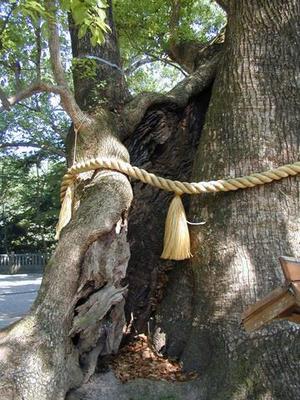
. a holy rope
marks the deity -
a thousand living years .


大麻比古神社,大楠木 Kusunoki
Oasahiko Shrine, Naruto, Shikoku


:::::::::::::::::::::::::::::::::::::::::::::::::::::::::::::::::::::::::::::::::::::::::::::::::::::


My album with more Tree pictures:
http://www.flickr.com/photos/gabigreve2000/sets/72157600520930196/detail/


Some links about old trees in Japan
http://groups.yahoo.com/group/happyhaiku/message/349

Celtic worship of trees
http://www.controverscial.com/In%20Worship%20of%20Trees.htm

:::::::::::::::::::::::::::::::::::::::::::::::::::::::::::::::::::::::::::::::::::::::::::::::::::::


Bäume sind Heiligtümer.
Wer mit ihnen zu sprechen, wer ihnen zuzuhören weiß, der erfährt die Wahrheit. Sie predigen nicht Lehren und Rezepte, sie predigen, um das Einzelne unbekümmert, das Urgesetz des Lebens ...
Wer gelernt hat, Bäumen zuzuhören, begehrt nicht mehr, ein Baum zu sein. Er begehrt nichts zu sein, als was er ist. Das ist Heimat. Das ist Glück.

Hermann Hesse


Trees are sanctuaries. Whoever knows how to speak to them, whoever knows how to listen to them, can learn the truth.
They do not preach learning and precepts, they preach, undeterred by particulars, the ancient law of life.

Whoever has learned how to listen to trees no longer wants to be a tree.
He wants to be nothing except what he is.
That is home. That is happiness.

Hermann Hesse , 1918

From "Hermann Hesse: Wandering", translated by James Wright

More is here in English
http://ic.ucsb.edu/~ggotts/hesse/works/trees.html


:::::::::::::::::::::::::::::::::::::::::::::::::::::::::::::::::::::::::::::::::::::::::::::::::::::


It is a 12' tree troll,
lovingly carved in memory of the artist's father.
source : shared by JS on facebook


:::::::::::::::::::::::::::::::::::::::::::::::::::::::::::::::::::::::::::::::::::::::::::::::::::::

Trees as haiku topics ... ... and kigo with trees


[ . BACK to WORLDKIGO  TOP . ]
[ . BACK to DARUMA MUSEUM TOP . ]

::::::::::::::::::::::::::::::::::::::::::::::::::::::::::::::::::::::::::::::::::::::::::::::::::::: 

8/04/2004

LABYRINTH

[ . BACK to DARUMA MUSEUM TOP . ]
:::::::::::::::::::::::::::::::::::::::::::::::::::::::::::::::::::::::::::::::::::::::::::::::::::::::::::::::::::::::::::

The Labyrinth and the Honey Pot

As you know, one of my professions is a specialist in Apitherapy, using the BEE products to help keep human beings healthy and heal diseases.

Checking many things about the bees, I found some information about the honeypot in connection with the labyrinth. Well, my separate interest in Mandala and Bees had finally merged !

.. .. .. .. .. The Honeypot and the Labyrinth


going in circles -
a honeypot at the end
of the quest


Mandalas and labyrinths have been known for more than 4000 years. Some have been used as tools for meditation. Labyrinths come in many ways, usually the ones where you get lost and have to find your way out. The Walking Mandala in the picture above is of a different kind, there is only one path and you can not get lost, but you have to keep going.

This one has its original in the Grand Cathedral in Chartres, France, where it was built in the 13th century. Pilgrims used to walk the labyrinth in the middle of the church to find their final place with God.


It has been so successfull that Church authorities later forbade to use it. Nowadays it is open again and many copies of it are made all over the world to have this experience.

Read a lot more details about the labyrinth later here:
http://www.veriditas.net/about/labyrinths.html

For now, let us get to the honeypot part of the story.

This story takes us back to ancient Greece and the island of Knossos. There was an inaccessible palace called "Labytinth". More than 2000 years ago, the culture of Minos flourished on this island.

According to ancient greek myths, the great greek King Aegeus was forced to pay tribute to King Minos of the Minoans, whose kingdom was on the island we now call Crete. Every year the tribute included seven young men and seven young maidens. Underground far below King Minos' palace at the city of Knossos lay a huge maze built for him by the inventor and master architect Daedalus. Inside the maze Minos kept a monster called the Minotaur. The Minotaur was a hideous creature that was half man and half bull.
. . . CLICK here for Photos !

The fourteen young people from Greece would be let loose into the maze, the labyrinth, where they would become hopelessly lost and eventually be eaten by the Minotaur.

According to the legend, King Aegeus' son, Thesesus, decided to volunteer as one of the sacrificial victims, so that he could attempt to kill the Minotaur. Thesesus was successful. He slew the Minotaur, then used a trail of twine he'd started laying down at the entrance of the labyrinth to find his way out of the maze.

The name "Labyrinth" comes from the word "labrys" meaning "double-ax", and the dynasty of King Minos was referred to as the "House of the Double-Ax". Clearly there is history behind the myth here, for many images of double-axes have been found by archaeologists on Crete from a time even earlier than that of the mythological heroes.

Let us go back to Theseus and Ariadne.
One year the Athenian king sent his own son Theseus as part of the sacrifice. Theseus was determined finally to stop the slaughter, and to this end he was aided by Ariadne, daughter of the Minoan king, half-sister to Asterion and Mistress (or High Priestess) of the Labyrinth. Ariadne shared with Theseus the secrets and mysteries of the Labyrinth, and taught him the means by which Asterion might be killed. This she did because she loved Theseus.


Theseus entered the Labyrinth, and, aided by Ariadne’s secret magic, bested the tricks of the Labyrinth and killed Asterion in combat. Then, accompanied by Ariadne and her younger sister Phaedre, Theseus departed Crete and its shattered Labyrinth for his home city of Athens.


This labyrinth was constructed by Daedalus. Here is a bit about his legend:

He fled to the island of Crete, where he began to work at the court of King Minos and Queen Pasiphae, in the magnificent palace of Knossos. There he constructed a wooden cow for the queen to hide in to satisfy her amorous longings for a white bull sent by Poseidon, and by which she became pregnant with the Minotaur.
When the Minotaur was born, Daedalus built the Labyrinth to contain the monstrous half-man, half-bull. For years Minos demanded a tribute of youths from Athens to feed the creature.

We know that Theseus solved the problem, but that spelled trouble for Daedalus.
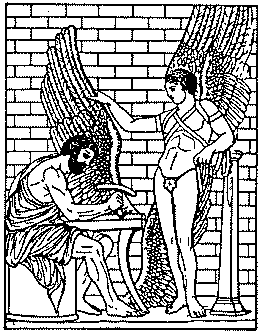
Daedalus decided that he and his son Icarus had to leave Crete and get away from Minos, before he brought them harm. However, Minos controlled the sea around Crete and there was no route of escape there. Daedalus realized that the only way out was by air.


http://thanasis.com/daedal2.gif

And as you see in the above picture, off he went with his son Ikarus.

To escape, Daedalus built wings for himself and Icarus, fashioned with feathers held together with wax. Daedalus warned his son not to fly too close to the sun, as it would melt his wings, and not too close to the sea, as it would dampen them and make it hard to fly.
They successfully flew from Crete, but Icarus grew exhilarated by the thrill of flying and began getting careless. Flying too close to the sun god Helios, the wax holding together his wings melted from the heat and he fell to his death, drowning in the sea.

These wings, held together with WAX, another product of the bees.

Let us look at an ancient tablet of the time, with the following inscription

pa-si-te-o-i me-ri
da-pu-ri-to-jo po-ti-ni-ja me-ri

To all the gods, one honey amphor,
To the Mistress of the Labyrinth, one honey amphor

http://www.escaped.it/doublevision/texts.htm


.........................................Another text reads

Be sure to take this Honey as a gift
to give the Lady of the Labyrinth.

http://www.cs.utk.edu/~mclennan/BA/HL/ritual.html

The Mistress of the Labyrinth is of course Ariadne, who helped Theseus escape. In ancient times, the honeybee was the symbol of death and rebirth.


When offering honey to the Gods, a dance was performed, known as Geranos.

We learned of Theseus who killed the Minotaur at the labyrinth of Knossos. On his way back to Athens, Theseus stopped at Delos where he offered sacrifice to the gods for having saved him. During the sacrifice, he danced a dance with serpentine movements which represented his tortuous path through the maze and the tight ring in which the fight with the Minotaur took place. This is the dance of the labyrinth or Geranos ( Geranos ) as it is known in the ancient texts. Historians put this myth at the time of the power of the Minoan civilization, that is more than 3000 years ago.

Some 3400 years ago, an unknown scribe employed at Knossos, site of the fabled labyrinth and prison for the unfortunate Minotaur, recorded on a clay tablet the offering of a pitcher of honey to
"Potnia of the Labyrinth."


This is the first evidence for the use of Labyrinthos - the original Greek word we now know as Labyrinth.

http://www.labyrinthos.net/


The name "Potnia" or "po-ti-ni-ja," "The Lady," has survived inscribed on tablets at Knossos.
"Potnia of the Labyrinth," or "da-pu-ri-to-jo po-ti-ni-ja."
A Knossos tablet describes an offering of honey to her, assuring us that she had a sanctuary dedicated to her in some part of the Labyrinth at Knossos. Only this particular temple was referred to in antiquity as the Labyrinth.
http://www.widdershins.org/vol8iss6/07.htm


With the above the connection between the Labyrinth, Ariadne and Honey is firmly established, I believe.

:::::::::::::::::::::::::::::::::::::::::::::::::::::::::::::::::::::::::::::::::::::::::::::::::::::


Links used for this story, where you find more details:
http://www.unmuseum.org/minot.htm
http://www.tqnyc.org/NYC030435/Theseus_Minotaur_Analysis.htm
http://www.pccc.cc.nj.us/asrc/readwrit/theseus.html
http://homepage.mac.com/cparada/GML/Ariadne.html
http://www.mythweb.com/encyc/entries/labyrinth.html
http://www.saradouglass.com/theseus.html
http://thanasis.com/icarus.htm
http://www.cs.utk.edu/~mclennan/BA/HL/ritual.html

:::::::::::::::::::::::::::::::::::::::::::::::::::::::::::::::::::::::::::::::::::::::::::::::::::::


From this link, you can launch the ONLINE labyrinth walker.


Grace Cathedral has two labyrinths. The outdoor labyrinth is made of terrazzo stone and is located to the right of the cathedral doors. This labyrinth is open 24 hours daily for walking.

source www.gracecathedral.org/labyrinth/


Here is the worldwide Labyrinth Locator.

The World-Wide Labyrinth Locator has been designed to be an easy-to-use database of labyrinths around the world. Information about labyrinths you can visit, including their locations, pictures, and contact details, are accessible here, along with information about the many types of labyrinths found worldwide. Labyrinths occur in many forms, shapes, and sizes, and the Locator contains both historic and modern examples.

If you input JAPAN you will find the one in my garden and the one we made in the city of Tsuyama.
http://wwll.veriditas.labyrinthsociety.org/


Pictures of our Labyrinth in Tsuyama Japan and more worldwide labyrinth types are here:


. Tsuyama 2004 - Labyrinth Photos .

. 津山のまちなか・元気ラビリント  .


Read more about my Mandala and Haiku here
MANDALA

Read more about my Mandala Therapy
Mandala Therapy .. coloring mandala patterns

:::::::::::::::::::::::::::::::::::::::::::::::::::::::::::::::::::::::::::::::::::::::::::::::::::::


Lavender Labyrinth
Kastellaun, Germany.

- Shared by GreenBuildTV - facebook -

:::::::::::::::::::::::::::::::::::::::::::::::::::::::::::::::::::::::::::::::::::::::::::::::::::::

[ . BACK to WORLDKIGO  TOP . ]


[ . BACK to DARUMA MUSEUM TOP . ]
::::::::::::::::::::::::::::::::::::::::::::::::::::::::::::::::::::::::::::::::::::::::::::::::::::: 


:::::::::::::::::::::::::::::::::::::::::::::::::::::::::::::::::::::::::::::::::::::::::::::::::::::

。。 。。 。。 迷路の中の蜂蜜ポット

曼陀羅や迷路は4000年も前から瞑想の道具として使われたそうです。でもこちらのパターンは迷路ではなく、曼陀羅です。実物はフランスの有名なチャルトレス市の大聖堂の床にあります。13世紀で作ったものです。古典的な遍路道で、11回のサークリングができます。中央に本当の自分と出会うことが出来ます。

曼陀羅のサークルを歩きながら心が晴れてきて、今まで見えないものが見えてくる。生きる力が湧いてくる。 この曼陀羅の道は一本道です。どこかの分かれ道で物事を決定することが必要ありません。身を任せるだけです。人生にもそう言う捕らえ方があるといいですね。歩きながらものを考えるのではなくて、自分の真の感情に直面することが出来る。

オンラインでも迷路を行く曼陀羅を見つけた。ぜひやってみてください。
http://www.gracecathedral.org/labyrinth/interactions/index.shtml#


迷路の真中に蜂蜜のポットが待っています。

話は古代クレタ島のクノッソス市にもどります。
盛時にはラビリンス(迷宮)と呼ばれていた宮殿は、今でも迷宮だ。そのクノッソス宮殿。紀元前2000年頃にミノア文明時代のクレタの王ミノスがデダロス名大工に築らせたと言われている。ところで現在では迷宮と訳されているラビリンス Labyrinth という言葉だけど、本来の意味は違っていただそうです。クノッソス宮殿の玉座の間には、双頭の斧が置かれていた。その双頭の斧のことをラブリュス Labrys と呼んだらしい。これがミノアの宗教において重要な意味を持っていた。宗教と政治を司る王の宮殿には、聖なる双頭の斧が置かれる。つまり 「双頭の斧の家」。それがラビリンスの本来の意味だと言う話。
これから有名なテセウス神話の世界になりますが、英雄テセウスと王妃アリアドネの話はこちらで読んでください。
http://forum.nifty.com/fworld/pictures/greek0205/04.htm
http://www.infoaomori.ne.jp/~yappi/w.history/100kodai/111chichukai1.html
このテセウス神話は実に有名です。羽や蜜蝋で翼を作り、迷路から逃げるデダロス、イカロス親子の話も、半分雄牛のミノタウロスなどヨーロッパで親しまれた英雄やアイヂアがたくさん登場します。


考古学の発掘でわかったのですが、あるクノッソスの紀元前1400年のタブレットから次の文書が現れた:
Linear B tablet KN Gg702

pa-si-te-o-i me-ri da-pu2-ri-to-jo po-ti-ni-ja me-ri

To all the gods, one honey amphor,
To the Mistress of the Labyrinth, one honey amphor
http://www.escaped.it/doublevision/texts.htm

神々に蜂蜜のアンフォーラを
迷路の女神に蜂蜜のアンフォーラを

迷路の女神はやはりテセウス神話にでるアリアドネのことです。
me-riはmel, mielつまり蜂蜜のことです。
当時では蜂蜜は死や再生のシンボルでもありました。蜂蜜を神様にささげる踊りの時にもつかいました。女神にささげる特別なダンス、Geranosゲラノス踊りはテセウス神話に登場する迷路を再現するダンスです。その話はまだ長いのですから省略。


古いクノッソスのタブレットはこちらです。
Some 3400 years ago, an unknown scribe employed at Knossos, site of the fabled labyrinth and prison for the unfortunate Minotaur, recorded on a clay tablet the offering of a pitcher of honey to "Potnia of the Labyrinth."
http://www.labyrinthos.net/

::::::::::::::::::::::::::::::::::::::::::::::::::::::::::::::::::::::::::::::::::::::::::::::::::::: 

. Parikrama - circumambulation .
of a holy place, in Hinduism, Buddhism etc.

:::::::::::::::::::::::::::::::::::::::::::::::::::::::::::::::::::::::::::::::::::::::::::::::::::::::::::::::::::::::::::


Finally a Japanese version of the book

聖なる道を歩く
黙想と祈りのラビリンス・ウォーク


source : www.amazon.co.jp

ISBN-10: 4324098549

:::::::::::::::::::::::::::::::::::::::::::::::::::::::::::::::::::::::::::::::::::::::::::::::::::::::::::::::::::::::::::

[ . BACK to DARUMA MUSEUM TOP . ]
[ . BACK to WORLDKIGO . TOP . ]

:::::::::::::::::::::::::::::::::::::::::::::::::::::::::::::::::::::::::::::::::::::::::::::::::::::::::::::::::::::::::::