6/18/2005

Buddha's Voice


We were sitting on the terrasse,
enjoying some evening breeze,
looking over the quiet valley.

Suddenly the stone Buddha next to the flower bed
started chanting sutras:


whaa, whaa, Amida
whaa, whaa, Amida


We listened to the enchanted sound for a while,
then reality took over.

On a closer look, there was
the originator of the voice:

Look again at the picture above to find him,
before you scroll down !


One of our tiny friends, Karl the Frog,
had taken seat on the Buddha's halo

and chanted his nightly song!


But he did not like the flash of attraction and stopped his song,
as you can see,

his throat is all flat now.

little green frog -
even your voice
the voice of Buddha


ishibotoke
sono koe ni naru
kaeru kana

石仏 - その声になる蛙かな


June 2005
:::::::::::::::::::::::::::::::::::::::::::::::::::::::::::::::::::::::::::::::::::::::::::::::::::::


I have written about the Frog and Buddha before:

Voice of Buddha and Frog


Prayer of the Rain .. Namu Amida Butsu


Amida Nyorai and the Amida Prayer:
Namu Amida Butsu
南無阿弥陀仏


. Buddha Shaka in my Garden .  


.......................................................................................................

Frog (kawazu, kaeru)
a kigo for haiku


:::::::::::::::::::::::::::::::::::::::::::::::::::::::::::::::::::::::::::::::::::::::::::::::::::::

6/17/2005

Summer Metamorphosis


bursting
into new form -
summer metamorphosis


鬼百合や 形になれる 前の顔


************************
Please send your contributions to Gabi Greve
http://groups.yahoo.com/group/happyhaiku/


To the Daruma Museum Index
http://www.geocities.com/gabigreve2000/index.html


To the WHC Worldkigo Database
http://worldkigodatabase.blogspot.com/

6/13/2005

WKD - LOTUS / LOTOS water lily

[ . BACK to WORLDKIGO  TOP . ]
::::::::::::::::::::::::::::::::::::::::::::::::::::::::::::::::::::::::::::::::::::::::::::::::::::: 


manifold fingers
bending in prayer -
lotus in the pond


:::::::::::::::::::::::::::::::::::::::::::::::::::::::::::::::::::::::::::::::::::::::::::::::::::::


Quote from
The Art of Chinese Brush Painting

The sacred Lotus, Nelumbo nucifera, is an extreme important spiritual symbol in Eastern religions. It represents purity, divine wisdom, and the individual's progress from the lowest to the highest state of consciousness.

When Chan (Zen) Buddhism bloomed in China, the lotus did not lose stature, but Buddhist art became more subdued, and the use of color in depictions of the lotus declined. After the Song dynasty, folk culture grabbed hold of the lotus with gusto, giving it symbolic meaning that was no longer purely religious.

Down to the present, even if Chinese don't understand the Lotus Sutra or lotus-related Zen esoterica, they will surely know that you light lotus lanterns on the Ghost Festival and that Songzi Niangniang allowed the Gold Boy and Jade Girl to get on a lotus and float to the world of men. In which case it's not hard to imagine that a small lotus pedestal can remove bad karma, direct souls of the deceased to proceed with reincarnation, and help cultivate one's inner spirit.

Legend of the Lotus / China / Hans Christian Von Baeyer

:::::::::::::::::::::::::::::::::::::::::::::::::::::::::::::::::::::::::::::::::::::::::::::::::::::


Ancient CHINA : On loving lotus

Lotus on four sides and willows on three,
Half a pool of autumn water reflects a hill.
Distant fragrance is all the more delicate and fresh.


Zhou Dunyi, Song dynasty

Lotus is also called lotus flower.
On loving lotus written by Zhou Dunyi says lotuses are not dirty although born in mud and not coquettish although bathing in ripples of water, so lotuses can symbolize chasteness and nobleness. The word green lotus has the same pronunciation with the word incorruptness in Chinese, which is qinglian.

Therefore the pattern the most incorruptness formed by lotuses symbolizes having high official titles without embezzlement, and also symbolizes incorruptness. So lotuses are often used to praise upright and incorruptible officials.

And lotuses also symbolize love. So the pattern of lotuses with shared pedicel formed by one peduncle and two flowers symbolizes devotion between husbands and wives and happiness.
Auspicious flowers in Chinese Art
© www.shanghai.gov.cn

CLICK for more JADE art of Lotus
Jade art and Lotus


:::::::::::::::::::::::::::::::::::::::::::::::::::::::::::::::::::::::::::::::::::::::::::::::::::::


Ohara Koson /Hoson / (1877-1945)


LOTUS /LOTOS KIGO

... ... ... Lotus in Kigo for late summer:

hasu
蓮 renge 蓮華
hasu no hana 蓮の花
white lotus, byakuren 白蓮
red lotus, benihasu 紅蓮
leaf of a lotus, hasu no ha 蓮の葉

viewing lotus, hasumi 蓮見
boat for viewing lotus, hasumibune 蓮見舟
lotus pond, hasuike 蓮池

fragrance of lotus, hasu no ka 蓮の香
"Devil's Lotus", oni hasu 鬼蓮 > See Comment


... ... ... Lotus in Kigo for early summer:

hasu no ukiha 蓮の浮葉 (はすのうきは) floating lotus leaves
..... hasu ukiha 蓮浮葉(はすうきは)
..... ukiba 、浮葉(うきは), zeniha 銭葉(ぜには)
makiba 巻葉(まきば)"rolled leaves"
hasu no ha 蓮の葉(はすのは) lotus leaves


.................................................................................


... ... ... Lotus in Kigo for Early Autumn:
aki no hasu 秋の蓮 (あきのは)
lotus in autumn


... ... ... Lotus in Kigo for Mid-Autumn:

. seeds of the lotus
.. hasu no mi 蓮の実 (はすのみ) .


hasu no mi tobu 蓮の実飛ぶ(はすのみとぶ)
.. lotus seeds flying around


... ... ... Lotus in Kigo for Late Autumn:

withered lotus, broken lotus (lit. broken bag)
.. yarehasu 敗荷, yarehachisu 破れ蓮(破蓮)


.................................................................................


... ... ... Lotus in Kigo for All Winter:

dry lotus, withered lotus, karehasu 枯蓮 (かれはす)
..... kare hachisu 枯はちす(かれはちす)
lotus withers, hasu karu 蓮枯る
..... hasu karuru 蓮枯るる(はすかるる)
hasu no hone 蓮の骨(はすのほね) "lotus bones"
lotus roots, renkon 蓮根 (food)


. WASHOKU
Regional Dishes with Lotus Root


:::::::::::::::::::::::::::::::::::::::::::::::::::::::::::::::::::::::::::::::::::::::::::::::::::::


For more information about the lotus see the comments below, please.

Lotus (padma), in the India Saijiki


::::::::::::::::::::::::::::::::::::::::::::::::::::::::::::::::::::::::::::::::::::::::::::::::::::: 


the silent dawn
shines through thin petals...
this lotus flower


- Shared by Taro Aizu -
Joys of Japan, 2012


::::::::::::::::::::::::::::::::::::::::::::::::::::::::::::::::::::::::::::::::::::::::::::::::::::: 


THE STORIES OF THE LOTUS SUTRA
by Gene Reeves.
...
In his book on the Lotus Sutra, Reeves presents the stories in digest form, supplementing the tales with interpretation and commentary. The author furnishes the uninitiated reader with analysis of a high order. Along the way, he clarifies a number of terms like dharma, samadhi, and nirvana, whose meanings are often only obtusely understood. There are also words we think we know, like "interdependence" and "mutability," which, in the Buddhist context, may require a degree of readjustment.

One of the revelations in reading these commentaries is discovering that the Lotus Sutra offers practical guidance and imaginative solutions to problems of a very non-theological kind that are as relevant today as they were in the fifth century B.C. The classic parable of the burning house, for example, demonstrates how a father tries to save his children from the fires of suffering, which they are unable to disengage from because of excessive attachments.
source : STEPHEN MANSFIELD, Japan Times April 2011


:::::::::::::::::::::::::::::::::::::::::::::::::::::::::::::::::::::::::::::::::::::::::::::::::::::


lotus
i am open to all
new ideas


John Tiong Chunghoo, May 2009
WKD Facebook


:::::::::::::::::::::::::::::::::::::::::::::::::::::::::::::::::::::::::::::::::::::::::::::::::::::


世の中よ針だらけでも蓮の花
yo no naka yo hari darake demo hasu no hana

this world
is full of needles and thorns ...
yet lotus blooms


Kobayashi Issa
Tr. Gabi Greve


:::::::::::::::::::::::::::::::::::::::::::::::::::::::::::::::::::::::::::::::::::::::::::::::::::::

kigo for mid-summer

koohone 河骨 (こうほね) Spatterdock, pond lily
..... kawahone かわほね
Nuphar japonicum, Nuphar japonica 川骨. Japanische Teichrose
kind of water lily, cow lily
The plant likes clean water in rivers, ponds and swamps. Its roots are a strong white.


河骨の二もとさくや雨の中 
koohone no futatsu mo saku ya ame no naka

even two spatterdocks
are blossoming here -
in the rain


. Yosa Buson 与謝蕪村 in Edo .


CLICK for more photos
Four family crests with this flower 家紋
She is a well-loved motive for a family crest.


:::::::::::::::::::::::::::::::::::::::::::::::::::::::::::::::::::::::::::::::::::::::::::::::::::::

kigo for late summer

suiren 睡蓮 "colorful water lily"
Nymphaea colorata, water lily, Seerose
. . . CLICK here for Photos !

hitsujigusa 未草(ひつじぐさ)water lily
Nymphaea tetragona
. . . CLICK here for Photos !


kigo for mid-spring
. suiren uu 睡蓮植う (すいれんうう) planting water lilies  


:::::::::::::::::::::::::::::::::::::::::::::::::::::::::::::::::::::::::::::::::::::::::::::::::::::
::::::::::::::::::::::::::::::::::::::::::::::::::::::::::::::::::::::::::::::::::::::::::::::::::::: 


蓮の葉に片足のせて昼寝哉
hasu no ha ni kata ashi nosete hirune kana

one foot propped
on the lotus leaves...
siesta


Kobayashi Issa
Tr. David Lanoue


Written at the home of Fukuroya Seizaemon 袋屋清左衛門邸 in Nakano town.
Now a rich merchant for soy sauce and miso paste.
Issa, at age 60, visited there and walked in the large garden.
There is also a stone where Issa used to sit and practise zazen
一茶の座禅石.

source : naganoetokino1

Now there is also a Fukuroya Museum 袋屋美術館.

::::::::::::::::::::::::::::::::::::::::::::::::::::::::::::::::::::::::::::::::::::::::::::::::::::: 


蓮の香や水をはなるる茎二寸
hasu no ka ya mizu o hanaruru kuki ni sun

fragrance of a lotus -
above the water
the stem is two sun


. Yosa Buson 与謝蕪村 in Edo .


one SUN 寸 is about 3.03 cm.
It is said that the lotus fragrance is best
when the stem is about 6 cm (2 sun) above the water.

::::::::::::::::::::::::::::::::::::::::::::::::::::::::::::::::::::::::::::::::::::::::::::::::::::: 

. Matsuo Basho 松尾芭蕉 - Archives of the WKD .

蓮の香を目にかよはすや面の鼻
. hasu no ka o me ni kayowasu ya men no hana .
the fragrance of lotus and the nose of a Noh mask

..........................................................................


手向けけり芋は蓮に似たるとて
. tamuke keri imo wa hachisu ni nitaru tote .
For Senpuu 仙風 Senpu, father of 杉山杉風 Sugiyama Sanpu.

..........................................................................


瓜の皮剥いたところや蓮台野 
. uri no kawa muita tokoro ya Rendaino .

Rendaino is a graveyard in Kyoto, near Mount Funaokayama 船岡山.

::::::::::::::::::::::::::::::::::::::::::::::::::::::::::::::::::::::::::::::::::::::::::::::::::::: 


. WASHOKU - Regional Dishes with Lotus Roots  


:::::::::::::::::::::::::::::::::::::::::::::::::::::::::::::::::::::::::::::::::::::::::::::::::::::::


Dance in the woods
Rie Homma (b.1975)

:::::::::::::::::::::::::::::::::::::::::::::::::::::::::::::::::::::::::::::::::::::::::::::::::::::::

[ . BACK to WORLDKIGO . TOP . ]
[ . BACK to DARUMA MUSEUM TOP . ]

::::::::::::::::::::::::::::::::::::::::::::::::::::::::::::::::::::::::::::::::::::::::::::::::::::: 

6/12/2005

WKD - Tao, Dao and Kigo

[ . BACK to Worldkigo TOP . ]
:::::::::::::::::::::::::::::::::::::::::::::::::::::::::::::::::::::::::::::::::::::::::::::::::::::

observance kigo for mid-summer

tenshi o egaku 天師を画く
painting the heavenly master


This refers to the custom of making a painting of Chooryoo 張陵 Choryo, Zhang Daoling, the founder of the Daoist movement
Gotoheidoo (Gotomaido) 五斗米道 "Way of the Five Pecks of Rice" .
The painting was sent to the disciples and kept as an amulet to ward off evil.

Tenshidoo 天師道 "Way of the Celestial Masters"

Choodooryoo 張道陵 Zhang Daoling

Eastern Han Dynasty Taoist hermit who founded the Way of the Celestial Masters sect of Taoism, which is also known as the Way of the Five Pecks of Rice.
Celestial Master Zhang (張天師), Ancestral Celestial Master (祖天師) or Zhengyi Zhenren (正一真人) to Taoists.
... Zhang died on Mount Qingcheng in 156 during the reign of Emperor Huan of Han at the age of 123.


© More in the WIKIPEDIA !


. Zooka 造化 the creative force .
zooka, zouka, zōka - zoka


. Abe no Seimei 阿倍晴明 .
Onmyodo, onmyoodoo 陰陽道 The Way of Yin and Yang


. Yin and Yang 陰陽 and my cats .


. Chinese origin of Japanese kigo .


. ZEN and Haiku ... well, well, well .


:::::::::::::::::::::::::::::::::::::::::::::::::::::::::::::::::::::::::::::::::::::::::::::::::::::


Taoism (Daoism)
is a philosophical and religious tradition that emphasizes living in harmony with the Tao (romanized as "Dao").
The term Tao means "way", "path" or "principle", and can also be found in Chinese philosophies and religions other than Taoism. In Taoism, however, Tao denotes something that is both the source and the driving force behind everything that exists. It is ultimately ineffable: "The Tao that can be told is not the eternal Tao."
© More in the WIKIPEDIA !


:::::::::::::::::::::::::::::::::::::::::::::::::::::::::::::::::::::::::::::::::::::::::::::::::::::


QUOTE

As long as the sun rises
And your heart beats,
Tao is at hand.


People think that Tao can only be known through fairy-tale stories of old men in the mountains or obscure poetry about gods riding dragons. Other declare that elaborate ritual, frightening talismans, and mumblings from the depths of spirit possession are necessary for understanding. This simply not true.


Why put another’s experience before your own? Tao is in each of us. Admittedly, an individual’s common ignorance usually obscures awareness of Tao, but this does not mean that there is no Tao or that it is not important.
Tao is there for us to experience any time that we can open ourselves to it.

Is the sun shining? Does night follow day?
Is the sky blue? Do you have feeling?
Then it is possible to know Tao directly and immediately.
Don’t delay, don’t think yourself too insignificant.

Feel for it. Right now.
As long as you are alive, Tao is right at hand !

............................................

Now, replace TAO with HAIKU and read the text again !

Haiku is right at hand !


Qoute taken from here, with a picture, Lisbeth West:
http://www.duckdaotsu.org/06/accessibility.html

:::::::::::::::::::::::::::::::::::::::::::::::::::::::::::::::::::::::::::::::::::::::::::::::::::::

the mirror-like mind
reflects what is -
haiku of the seasons


READ : Taoism, the concept of Ziran

:::::::::::::::::::::::::::::::::::::::::::::::::::::::::::::::::::::::::::::::::::::::::::::::::::::

QUOTE

About Nondoing (wu-wei)

The nondoing (wu-wei) concept is one of the most important for Taoist philosophy. Its importance results from the fact that it is directly connected to an essential idea of the philosophical Taoism: the adjustment to the demands of time, to changes. The whole metaphysics of the ancient philosophical Taoism is focused on this point, which, let's make a clear breast, doesn't include anything metaphysical!

From this follows the pragmatism of the Chinese philosophy which represents the object of our study from this site. (Chinese people also had the knowledge of speculation, mystic, magic - the way they are nowadays in vogue in the modern world - but we are not interested here by these aspects.)

Nondoing at Alan Watts
The apparently best explanations of the term nondoing we find again at Alan Watts. Just a few quotes from this prolific author:

[...] The principle of 'nonaction' (wu-wei) is not to be considered inertia, laziness, laissez-faire or mere passivity.

Thus, wu-wei as "not forcing" is what we mean by going with the grain, rolling with the punch, swimming with the current, trimming sails to the wind, taking the tide at its flood, and stooping to conquer.

Wu-wei is thus the life-style of one who follows the Tao, and must be understood primarily as a form of intelligence - that is of knowing the principles, structures, and trends of human and natural affairs so well that one uses the least amount of energy in dealing with them. (1)

Unfortunately, despite the undeniable seduction of such explanations, they are still incomplete. Because nondoing is not a method that can be applied in any circumstance, as Watts' lines seem to indicate.

Usually, nondoing has to be connected with doing, if we want to follow the Taoist logic. The adjustment to the demands of time, as I have already mentioned, has the exigency of a sort of behavioral flexibility that does not remain stuck in its position, but emulates the requirements of the moment. Thus, at the same time, one may have to bend over in order to succeed, or, on the contrary, to remain firm in order to win.

Nondoing in I-ching
We can find many examples in this respect in the old Taoist literature. For instance, in I-ching, hexagram no 25 - Innocence (the Unexpected) - the second line, we find that if our doing is according to the requirements of time, it will be successful even if we do not explicitly target success. In other words, it is not necessary to push for the results of an action if it is performed in due time. After all, it is like doing nothing, or like having the feeling that "everything goes smoothly".

Wilhelm's comments to the entire hexagram show that the spontaneous, instinctive action is not always suitable. The action has to be according to the Heaven in order to have the chance of success.

Nondoing at Lao-tzu
Lao-tzu himself is not an unconditional adept of nondoing if we take into account the historical fact that he held an official position at the sovereign's court. Later on, he left his work and withdrew from the mundane world, but not because he followed the principles of a fully spiritual lifestyle, but because he was disgusted with the decay of the morality at the court.

Lao-tzu's reaction confirms in fact what I have said above: nondoing (here in the sense of withdrawal from the public life) has to be according to the requirements of time and not an absolute principle of life.

So, nondoing should be regarded as a complement of doing and not as a virtue or as an absolute model of life!

This aspect is ignored in its manifest feature by Alan Watts, and not only by him. Max Kaltenmark, one of the most well known Taoist experts, is also far from this obvious thing. Not to mention Ssu-ma Ch'ien himself, the historian of the Chinese classicism, who also limits Taoism (Lao-tzu's philosophy) to the ideas of seclusion from public life, of monastic life, and so forth.

Notes:
1. From Alan Watts: "Tao: The Watercourse-Way", Pantheon Books, 1975.
2. The original text of the line states that:

If one does not count on the harvest while plowing,
Nor on the use of the ground while clearing it,
It furthers one to undertake something.


Here's the Wilhelm's commentary:

We should do every task for its own sake as time and place demand and not with an eye to the result. Then each task turns out well, and anything we undertake succeeds. Paper by Jhian Yang

Copyright 1999-2006, Way of Perfect Emptiness.
http://www.taopage.org/nondoing.html


Rooshi 老子 老荘 Lao-tzu, Lao-Tsu, Laozi Li Erh

Tao Te Ching, Dao De Jing, or Daodejing (道德經)
Dootokukyoo 道徳経
© More in the WIKIPEDIA !

... ... ... ...

The Praying Mantiss and Wu Wei
It is indeed difficult to know when to interfere and when not, the Chinese WU WEI is one way of teaching us.
Happy Haiku Forum, Gabi Greve

More in the Happy Haiku Forum


. WKD : Laozi, Lao-tzu, Rooshi, Roshi【老子】 .

:::::::::::::::::::::::::::::::::::::::::::::::::::::::::::::::::::::::::::::::::::::::::::::::::::::


winter with Tao <>
to write haiku
without words


true words aren't beautiful

Read it all HERE !


:::::::::::::::::::::::::::::::::::::::::::::::::::::::::::::::::::::::::::::::::::::::::::::::::::::

Knowing others is intelligence;
knowing yourself is true wisdom.

Mastering others is strength;
mastering yourself is true power.

If you realize that you have enough,
you are truly rich.


from the Tao Te Ching

............................................

if you have enough
you have enough
to write haiku


:::::::::::::::::::::::::::::::::::::::::::::::::::::::::::::::::::::::::::::::::::::::::::::::::::::


More of my TAO / DAO Quotes

The ego is a monkey catapulting through the jungle.

Division is contrary to the nature of the Tao.

words have an ancestor

An ocean of ink in a single drop

One gives birth to two: meaning of numbers


Please find more quotes HERE !


:::::::::::::::::::::::::::::::::::::::::::::::::::::::::::::::::::::::::::::::::::::::::::::::::::::


Taoism is the mirror of life


Taoism is not somebody's invention, Lao-tzu's or Chuang-tzu's.
It is not something instantly made up by somebody's mind - by a sage or a
philosopher.
Taoism is the mirror of life, life as it is reflected in the human mind.

source : www.taopage.org


:::::::::::::::::::::::::::::::::::::::::::::::::::::::::::::::::::::::::::::::::::::::::::::::::::::


Daoist Studies Website
http://www.daoiststudies.org/


PMJS : Daoism in Japan


More of my . LINKS . my links about Daoism.


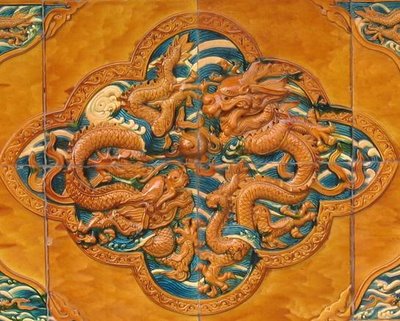
PHOTO: Dragon Stone from a Garden in Shanghai.
My Shanghai Travelogue 1994

My Asian Haiku Travelogue


::::::::::::::::::::::::::::::::::::::::::::::::::::::::::::::::::::::::::::::::::::::::::::::::::::: 

. Chinese origin of Japanese kigo .


[ . BACK to WORLDKIGO . TOP . ]
[ . BACK to DARUMA MUSEUM TOP . ]

:::::::::::::::::::::::::::::::::::::::::::::::::::::::::::::::::::::::::::::::::::::::::::::::::::::

6/11/2005

Taking Shelter


taking shelter
in the Buddha's light -
a dove in the morning


Zuflucht suchen
in Buddha's Licht -
eine Taube am Morgen


灯篭の灯りに隠れし鳩一羽


My SHIKOKU HENRO pilgrimage ARCHIVES


:::::::::::::::::::::::::::::::::::::::::::::::::::::::::::::::::::::::::::::::::::::::::::::::::::::


typhoon -
in the folds of my robe
a bee hiding


Typhoon is a kigo for mid-autumn.

:::::::::::::::::::::::::::::::::::::::::::::::::::::::::::::::::::::::::::::::::::::::::::::::::::::


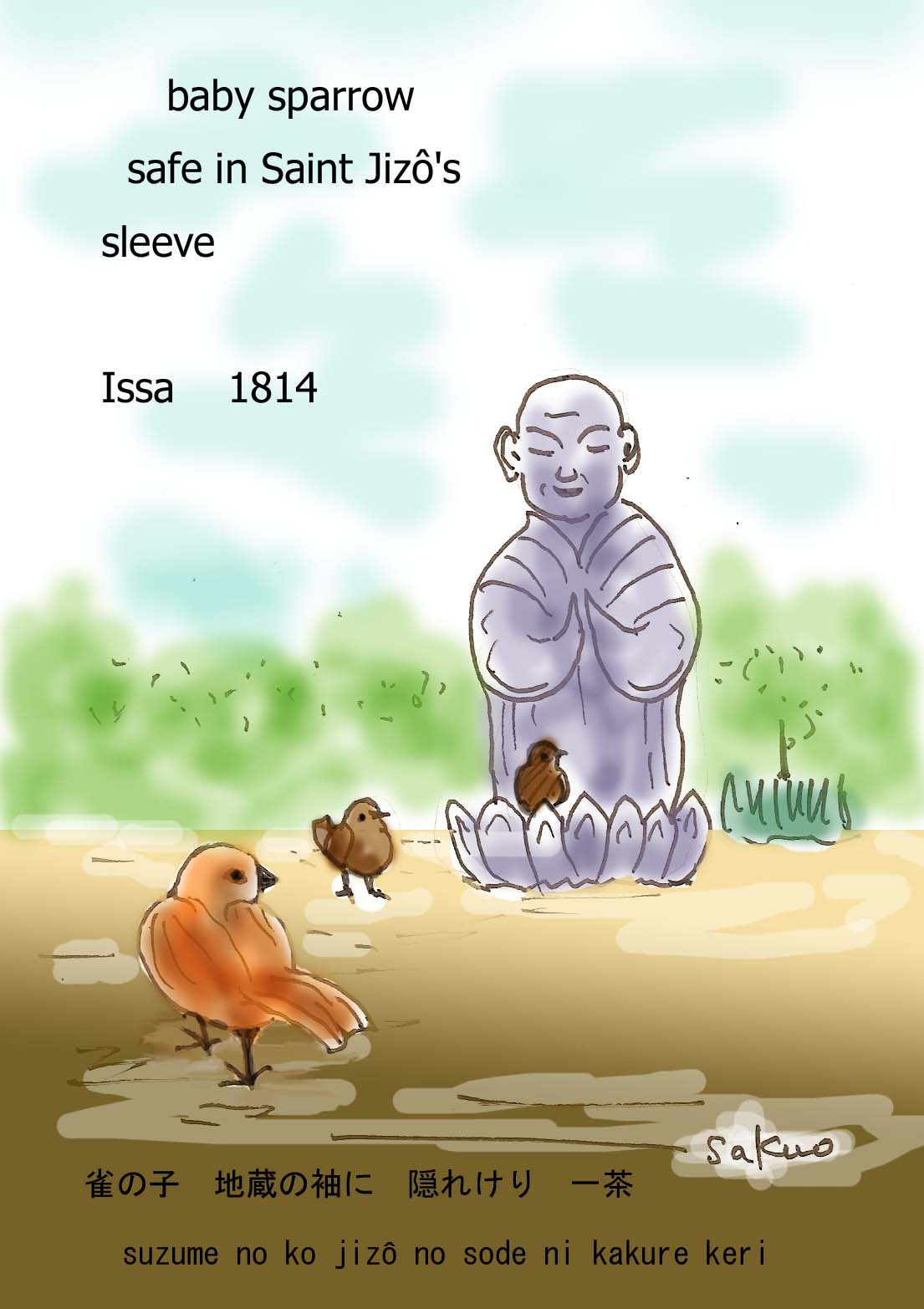
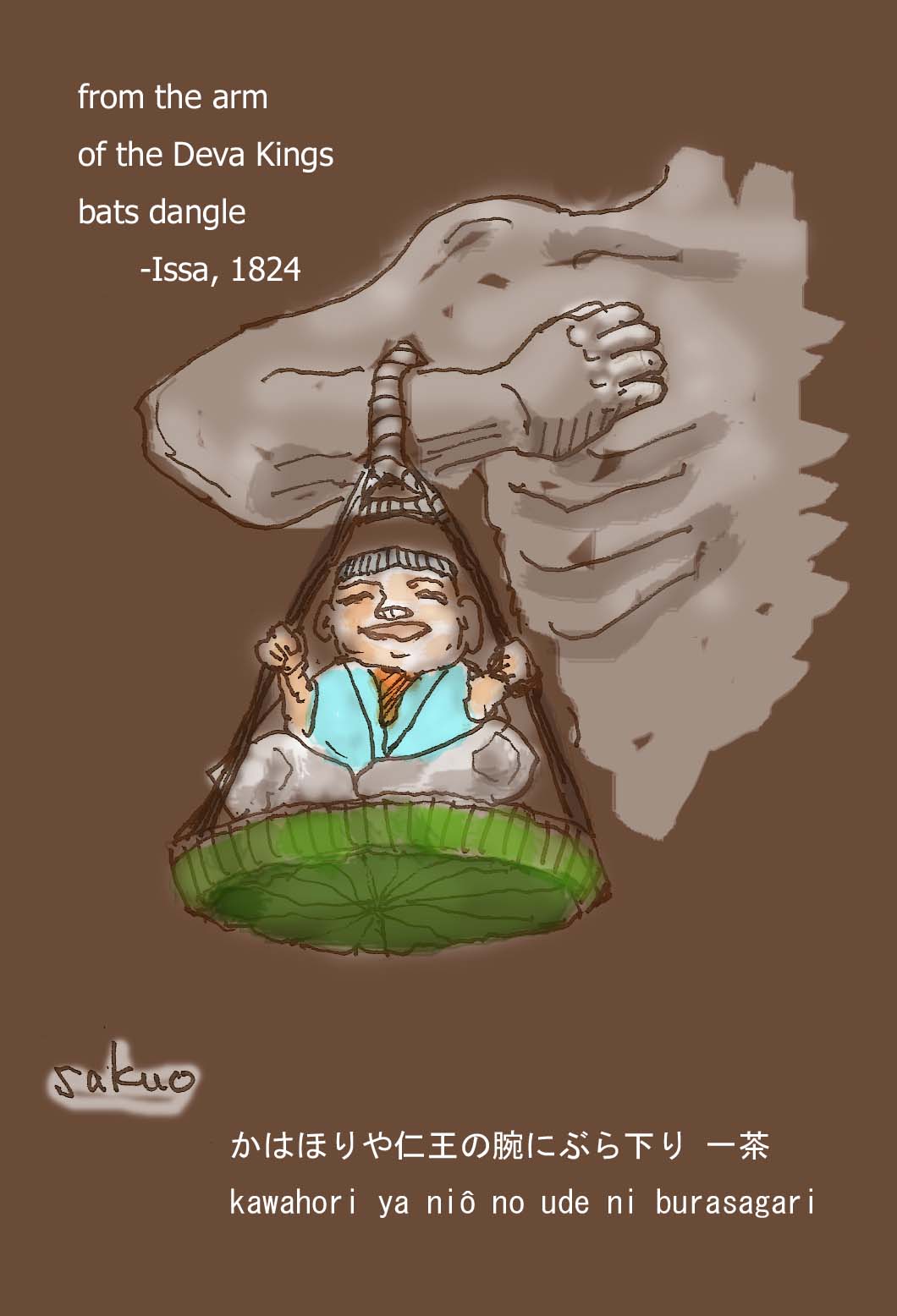
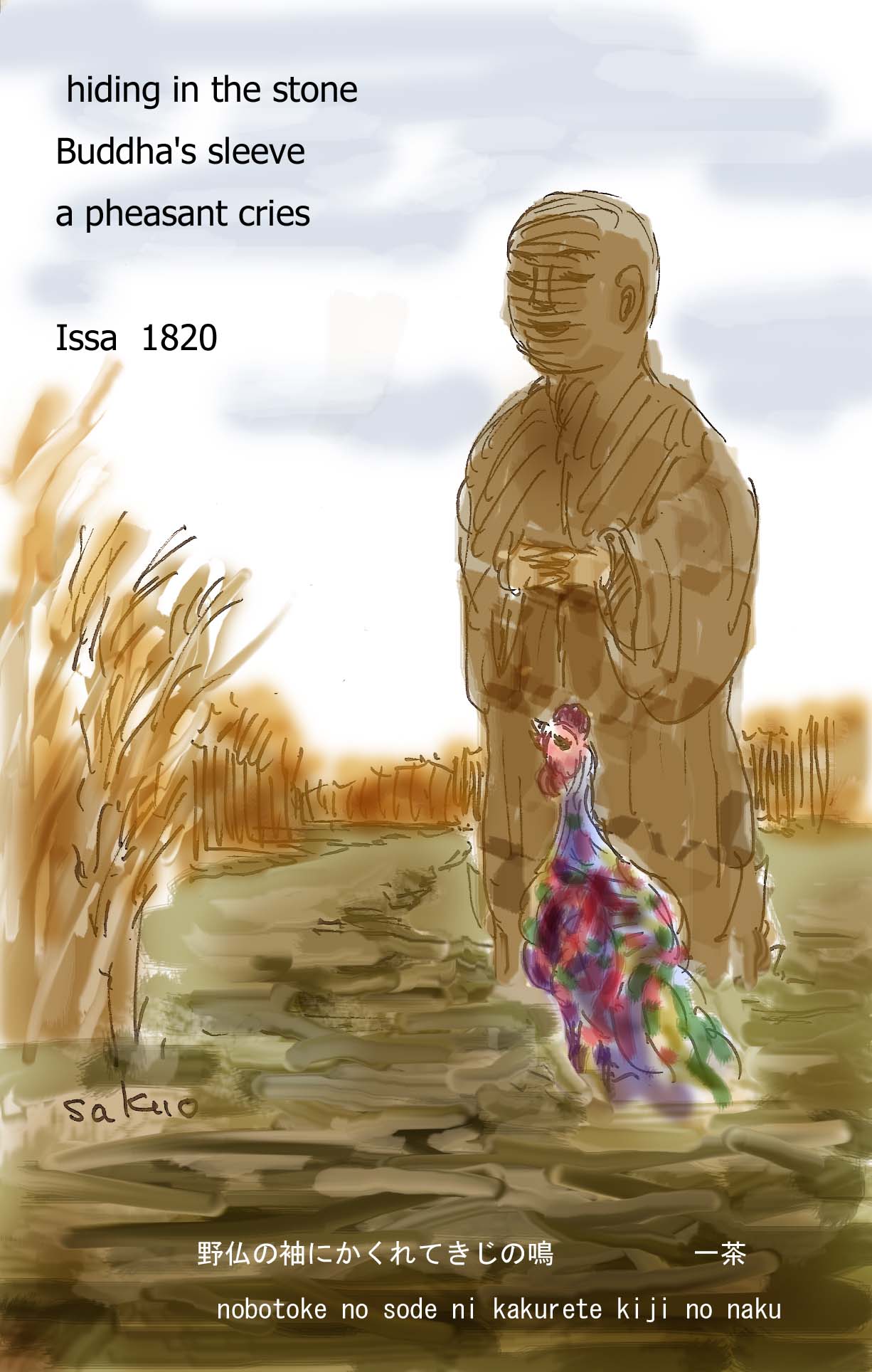
.. .. .. Issa writes about this subject of taking refuge in the Buddha too.


baby sparrow
safe in Saint Jizo's
sleeve


I wrote an explanation about the sheltering sleeve of Jizoo Bosatsu .


..........................................

kawahori ya Nioo no ude ni burasagari


from the arm
of the Deva King
bats dangle


.........................................


no-botoke no sode ni kakurete kiji no naku


hiding in the stone
Buddha's sleeve
a pheasant cries


Haiga by Sakuo Nakamura

Translations by David Lanoue

:::::::::::::::::::::::::::::::::::::::::::::::::::::::::::::::::::::::::::::::::::::::::::::::::::::


The picture of the dove is from our own haiku pilgrimage to
Shikoku Summer 2005 .

My Stone Buddhas and Haiku

.......................................................

Read about the Buddhas mentioned, by Mark Schuhmacher:

Jizo Bosatsu

Nio Protectors

Stone Lanterns

::::::::::::::::::::::::::::::::::::::::::::::::::::::::::::::::::::::::::::::::::::::::::::::::::::: 

[ . BACK to DARUMA MUSEUM TOP . ]
[ . BACK to WORLDKIGO . TOP . ]

:::::::::::::::::::::::::::::::::::::::::::::::::::::::::::::::::::::::::::::::::::::::::::::::::::::

6/10/2005

KOAN and Haiku (02)

[ . BACK to WORLDKIGO  TOP . ]
::::::::::::::::::::::::::::::::::::::::::::::::::::::::::::::::::::::::::::::::::::::::::::::::::::: 

Koan and Haiku (02) - 公案と俳句 - DREAMS


one single rose
between my weeds -
dream of enlightenment


In Buddhism the greatest dream of all is the dream of attaining enlightenment.

.. .. .. Dogen Zenji:

In spite of this knowledge of nonduality,
flowers fall always amid our grudging,
and weeds flourish in our chagrin.


Read this wonderful essay about Dreams in Buddhism.
Dreams within Dreams / Mark T. Unno


Myoe Shonin (1173-1232)
was a high-ranking monk of the Kegon Sect of Buddhism and was active in the beginning of the Kamakura period.
He recorded his dreams for forty years from the age of nineteen through fifty-eight (1191-1230), because he believed that dreaming is a type of learning. The record that he made is
Yume no ki 夢記 (Records of Dreams).


. Myoe Shonin 明恵上人 (1173-1232) .


::::::::::::::::::::::::::::::::::::::::::::::::::::::::::::::::::::::::::::::::::::::::::::::::::::: 


A Taoist Meditation
.. .. .. .. ablution

Washing at dawn
Rinse away dreams.
Protect the gods within,
And clarify the inner spirit.

Rinsing away dreams is a way of saying that we must not only dispel the illusions and anxieties of our sleeping moments but those of our waking ones as well. All life is a dream, not because it isn’t there, but because we all project different meanings upon it. We must cleanse away this habit.

http://www.duckdaotsu.org/1/ablution.html

Tilling Land (Painting)
Kim Hong-do (1745 - 1806?) Choson Dynasty, 1796
http://www.duckdaotsu.org/ablution1.html
050610


::::::::::::::::::::::::::::::::::::::::::::::::::::::::::::::::::::::::::::::::::::::::::::::::::::: 


merging
......................... into HERE and NOW
the river and I


Gabi in Guilin China
Autumn Memories


:::::::::::::::::::::::::::::::::::::::::::::::::::::::::::::::::::::::::::::::::::::::::::::::::::::


A finger pointing to the moon


The laughing Hotei,
a monk in the Later Liang Dynasty (907 - 23 AD)


The nun Wu Jincang asked the Sixth Patriach Huineng,
“I have studied the Mahaparinirvana sutra for many years, yet there are many areas i do not quite understand. Please enlighten me.”

The patriach responded, “I am illiterate. Please read out the characters to me and perhaps i will be able to explain the meaning.”
Said the nun, “You cannot even recognize the characters. How are you able then to understand the meaning?”

“Truth has nothing to do with words.
Truth can be likened to the bright moon in the sky.
Words, in this case, can be likened to a finger.
The finger can point to the moon’s location.
However, the finger is not the moon.
To look at the moon, it is necessary to gaze beyond the finger, right?”

source : Referecne


Matsuo Basho said, we should see the moon,
not the bejeweled finger pointing at the moon.

(at least his Western interpreters say so).

“A haiku is like a finger pointing to the moon.
If the finger is bejeweled, we no longer see the moon.”


"the jewelled finger pointing to the moon"
"like jewels on a finger pointing at the moon"

松尾芭蕉


指が月をさすとき、愚者は指を見る
(the finger points to the moon, the fool sees only the finger)

月をさす指 (finger pointing to the moon)

I am still looking for a Japanese quote of Basho with the "bejeweled" and wonder which words he might have used.

Thinking of a samurai or monk/priest of the Edo period with a "bejeweled finger" seems quite difficult . . .


::::::::::::::::::::::::::::::::::::::::::::::::::::::::::::::::::::::::::::::::::::::::::::::::::::: 


READ MORE

KOAN and Haiku (Part 01) .. 公案と俳句


:::::::::::::::::::::::::::::::::::::::::::::::::::::::::::::::::::::::::::::::::::::::::::::::::::::

Rainy Season Tsuyu

nnnnnnnnnnnnn TOP nnnnnnnnnnnnn

The Rainy Season 2005


manpuku no
neko no kao ya
tsuyu sanaka


the face of my
well-fed cat -
rainy season all over us


満福の猫の顔や梅雨さなか


:::::::::::::::::::::::::::::::::::::::::::::::::::::::::::::::::::::::::::::::::::::::::::::::::::::


WHC World Kigo Database: Rain in various kigo


************************
Please send your contributions to Gabi Greve
http://groups.yahoo.com/group/happyhaiku/


To the Daruma Museum Index
http://www.geocities.com/gabigreve2000/index.html


To the WHC Worldkigo Database
http://worldkigodatabase.blogspot.com/

6/07/2005

Amida Buddha

. Amida Nyorai Legends 阿弥陀如来と伝説 .


Amida Buddha -
you smile at life
you smile at death


Amida Buddha -
you smile at a friend
who took her own life

(at age 20)


Amida Buddha -
you smile at a mother
who left too early

(at age 53, cancer)


Amida Buddha -
you smile at me
I smile at you


Amida Buddha comes down
from the Paradise in the West
to welcome the souls of the dead and
take them back to his heaven.


Read Mark Schumacher with the details of
Amida Nyorai 阿弥陀如来

. Introducing Japanese Buddha Statues .

:::::::::::::::::::::::::::::::::::::::::::::::::::::::::::::::::::::::::::::::::::::::::::::::::::::

kigo for mid-spring

CLICK for more photos

roku Amida moode 六阿弥陀詣 (ろくあみだもうで)
visiting six temples with Amida statues

..... roku Amida mairi 六阿弥陀参(ろくあみだまいり) Rokuamida
..... roku Amida 六阿弥陀(ろくあみだ)
It was popular in Edo, Kyoto and other cities. Often on January 15

In Kyoto, these temples are included:
Shinnyo-do Temple (Jodoji Shinnyo-cho Sakyo-ku)
Eikan-do Temple (Eikando-cho Sakyo-ku)
Amida-do Hall in Kiyomizu-dera Temple (Kiyomizu Higashiyama-ku)
Ansho-in Temple (Higashiyama Gojo Higashiyama-ku)
Anyo-ji Temple (Shinkyogoku Takoyakushi Nakagyo-ku)
Seigan-ji Temple (Shinkyogoku Sanjo Nakagyo-ku)


Roku Amida Pilgrims

- quote -
Rokuamida Meguri 六阿弥陀廻
Rokuamida Meguri was the name of an excursion for the people of Edo period in which one could pray to enter to Pure Land of Amida by visiting six temples which enshrine six statues of Amida made of sacred trees that drifted from Kumano during the weeks of the equinox in spring and autumn.
Enmei-in Temple in Kohoku of Adachi Ward was the second among the six 六阿弥陀札所 Amida Fudasho (temples where amulets may be obtained).
It is called "Ichijun Roku-ri 一巡六里 (one pilgrimage, six ri)" (one "ri" is approximately four kilometers).
- source : Tokyo Metropolitan Museum -

:::::::::::::::::::::::::::::::::::::::::::::::::::::::::::::::::::::::::::::::::::::::::::::::::::::

Namu Amida Butsu 南無阿弥陀仏
WKD : The Amida Prayer and Haiku 


haikai kuhonbutsu 俳諧九品仏
The nine Buddha stages of haiku poets
. Takahama Kyoshi and Amida

:::::::::::::::::::::::::::::::::::::::::::::::::::::::::::::::::::::::::::::::::::::::::::::::::::::

My Amida at the First Sunrise 2005


The above statue is from the Stone Gallery, Sekiraku.
ストーンギャラリー  石楽

Here is my Stone Jizo haiku from the same Gallery.
http://happyhaiku.blogspot.com/2004/12/jizoo.html

:::::::::::::::::::::::::::::::::::::::::::::::::::::::::::::::::::::::::::::::::::::::::::::::::::::

My entries about Amida

Stone Buddhas .. 石仏
... Amida Buddha  南無阿弥陀   
... Arhats in Stone 五百羅漢
... Buddha's Footprints (Bussokuseki) 仏足石     
... Buddha's Voice (Shakyamuni)
... Azalea and Shaka (Shakyamuni)
... Mikaeri Amida 見返り阿弥陀 Amida looking Back
... Snow Night Meditation (Shakyamuni)
... Walking with the Gods 神様の散歩道

Prayer of the Rain September 2006

. asekaki Amida 汗かき阿弥陀 sweating Amida .

:::::::::::::::::::::::::::::::::::::::::::::::::::::::::::::::::::::::::::::::::::::::::::::::::::::


「阿弥陀鉤召図」, 12th cent. Heian 平安 period.
Amitabha Buddha is pulling in a reluctant monk to the Pure Land.

http://bunka.nii.ac.jp/heritages/detail/149464
- shared on facebook -

::::::::::::::::::::::::::::::::::::::::::::::::::::::::::::::::::::::::::::::::::::::::::::::::::::: 

柴の戸の月やそのまま阿弥陀坊 
shiba no to no tsuki ya sono mama Amida boo

this brushwood hut's
moon; just as it was
for Amidabō

Tr. Barnhill


- - - - - Discussion of this poem by
. Matsuo Basho 松尾芭蕉 - Archives of the WKD .

::::::::::::::::::::::::::::::::::::::::::::::::::::::::::::::::::::::::::::::::::::::::::::::::::::: 

58 golden amida detail


57 golden Amida Buddha

Amida at Temple Tanjo-Ji, Okayama

. Temple Tanjo-Ji and Honen Shonin 法然上人 誕生寺

:::::::::::::::::::::::::::::::::::::::::::::::::::::::::::::::::::::::::::::::::::::::::::::::::::::

. Tannishoo, Tannishō 歎異抄 Tannisho .
and the concept of jiriki and tariki 自力 / 他力 -
Help and Salvation through the vow of Amida

. Saint Shinran 親鸞 (1173 - 1263).

.......................................................................

. 紅頗梨色阿弥陀如来 Gubari Amida Nyorai in red cloth .

:::::::::::::::::::::::::::::::::::::::::::::::::::::::::::::::::::::::::::::::::::::::::::::::::::::
:::::::::::::::::::::::::::::::::::::::::::::::::::::::::::::::::::::::::::::::::::::::::::::::::::::

Buddhastatuen ... Who is Who

Amida Nyorai (Amitaabha)
Der Buddha des Unendlichen Lichts (Muryoo Koobutsu; ami~aaba) und des Unendlichen Lebens (Muryoo Juubutsu; amita~ayus). Das Sanskrit-Wort AMI bedeutet "unendlich, nicht meßbar, grenzenlos".
Wichtigste Kultfigur der Joodo-Sekte des Reinen Landes, besonders seit der Fujiwara-Zeit. Seine Strahlen erreichen ohne Hindernis die ganze Welt. Lebt im Reinen Land, dem Paradies des Westens (gokuraku joodo), wo er unermüdlich mit der Auslegung der Lehre beschäftigt ist. Dieses Paradies wird in zahlreichen Mandala-Gemälden (Joodo Mandara) dargestellt, z.B. im Taima Mandala. (Siehe 25 Bosatsu).

Amida war ursprünglich ein indischer Prinz, der seine Heimat verließ und sich unter dem Namen Mönch Hoozoo (Hoozoo Biku; Dharmakara Bhiksu) einer besonders langen und schwierigen Askese unterzog. Er legte 48 Gelübde (shijuuhachi gan) ab, und wurde schließlich zum Bosatsu und dann zum Amida Nyorai. Das 18. Gelübde besagt, daß er alle Wesen rettet und in sein Paradies bringt, wenn sie ihn erfürchtig anrufen (Namu Amida Butsu). Siehe Amida aus dem Paradies kommend.

Die Gesamtstruktur der frühen Tempel der Joodo-Sekte drückt die 16 Kontemplationen des Paradieses des Westes (jurokkan) aus, z.B. Byoodooin in Uji oder Tempel Jooruriji.

Dabei gibt es meist eine eigene, quadratische Amida-Halle (Amida-Doo), in der die Statue mit dem Rücken nach Westen steht, so daß sie im Abendlicht besonders eindrucksvoll wirkt.

Amida ist die wichtigste Verkörperung eines Gewährungs-Körpers des Buddha (hoojin). Die Kraft des Weltalls ist unmeßbar und unendlich, sie gewährt alle Dinge. Sie ist "muryoojuu nyorai, amida nyorai". Um sich dieser Kraft zu versichern, ruft der Gläubige den heiligen Namen des Amida an (Namu Amida Butsu).

Im esoterischen Shingon-Buddhismus als Muryoo Juubutsu in der Mutterschoßwelt und als Amida in der Diamantwelt. In der Joodo-Sekte häufig Statuen der Amida-Dreiergruppe, während sich in der neuen Joodo Shinshuu Sekte nur Statuen eines stehenden Amida finden. Diese Statuen haben immer einen runden Nimbus um den Kopf mit 48 Strahlen entsprechend den 48 Gelübden.

Ikonografie:
Alle Merkmale einer Nyorai-Statue.
Vor der Heian-Zeit häufig die Geste Fürchtet Euch nicht! und Wunschgewährung oder Haltung des Drehens des Rades der Lehre, da er im Paradies des Westens die Lehre auslegt.
In der mittleren Heian-Zeit häufig in Meditationshaltung oder Erlösungshaltung. Seit der Fujiwara-Zeit besonders die neun Hand~haltungen des Amida.
Fast alle Figuren haben einen Strahlen-Nimbus, der meist 48 Strahlen entsprechend der 48 Gelübde hat.
Bei Figuren seit dem 12. Jhd. sind die Augen manchmal aus Bergkristall gefertigt, die Pupille aus schwarzer Seide, um einen möglichst lebensnahen Ausdruck zu schaffen.
Im Unterschied zu anderen Nyorai-Figuren berühren sich bei einem Amida immer der Daumen und ein weiterer Finger einer Hand.


Besondere Statuen:

Amida aus dem Paradies kommend (Raigoo Amida)
Amida über die Berge kommend (Yamagoe Amida)

Häufig auf Abbildungen, seltener als Statuen.
Amida kommt dem Sterbenden aus dem Paradies entgegen, um dessen Seele nach dem Tod zum Paradies des Westens zu geleiten. Häufige Form von Statuen und Bildern der Fujiwara-Zeit.
Sutra: Muryoojukyoo und Kanmuryoojuukyoo.

Abbildung des Oberkörpers von Amida, hinter Bergen aufragend. Damit wird ausgedrückt, daß Amida schon ganz nahe gekommen ist. Seit der Kamakura-Zeit auch mit fliegenden Wolken dargestellt, um die Geschwindigkeit der Errettung zu zeigen (haya raigoo).

Bei manchen Statuen und besonders Bildrollen dieser Art gingen von den Daumen fünffarbige Schnüre aus, die der Sterbende in die Hand nahm, damit seine Seele auch nicht vom richtigen Weg abkommt und er getrost sterben konnte.

Neben dem Amida steht rechts eine Kannon Bosatsu mit einem Lotusgefäß (rendai), in dem die Seele des Toten aufgefangen wird. Seishi Bosatsu links hat die Hände gefaltet und gibt damit der Freude ausdruck, daß wieder eine neue Seele ins Paradies kommt. Die Begleitfiguren haben oft leicht gebeugte Knie, wie auf Wolken stehend, da sie ebenfalls gerade aus dem Paradies kommen.

In Abbildungen auch oft mit einem großen Gefolge von Bosatsu, alle auf fliegenden Wolken (Amida Shooju Raigoozu).
Eine besondere Form ist der "zurückblickede Amida" (Mikaeri Amida). Der Körper wird frontal, aber der Kopf nach links gewendet dargestellt. Amida blickt zurück zu Kannon Bosatsu, der die Seelen ins Paradies geleiten soll.
. . . . . Mikaeri Amida

Die Statue des Tempels Zenrinji in Kyoto entstand nach einer Vision des Priesters Eikan, dem die Gottheit nach langer Meditation und Anrufung des Amida auf diese Weise erschien.


source : Gankoji - facebook

Amida-Dreiergruppe (Amida sanzon)
Eine andere Version des Amida aus dem Paradies kommend.
Mit Kannon rechts mit kleiner Verkörperung in der Hohen Krone und Seishi Bosatsu links mit Wassergefäß in der Hohen Krone. Meist ein großer gemeinsamer schiffsförmiger Nimbus, aber ein eigener Lotussockel für jede Figur.
Die Begleitfiguren halten jede ein kleines Juwel oder eine Lotusblüte in den vor der Brust gefalteten Händen.
Häufig in Tempeln der Joodo- und der Zenkooji-Sekte.

Selten mit Jizoo Bosatsu an Stelle des Seishi Bosatsu.
Manchmal von weiteren 25 Bosatsu-Statuen (nijuugo Bosatsu) umgeben, die aus dem Paradies kommen, um eine neue Seele willkommen zu heißen.

Neun Amida-Statuen (Kutai Amidazoo, Kuhonbutsu)
Jede lebende Seele gehört zu einer der neun Kategorien geistigen Strebens und Wirkens, den sogenannten neun Klassen des Nirvaana. Diese Kategorien bestimmen den Weg, auf dem eine Seele ins Paradies des Westens eingeht. Daher gibt es auch entsprechend neun Amida-Manifestationen, die durch ihre Handhaltung diese neun Kategorien ausdrücken. Vergleiche die "Neun Handhaltungen" des Amida.

Neun einzelne, meist vergoldete Statuen mit den neun verschiedenen Handhaltungen des Amida. Es gibt auch spezielle Pilgerfahrten zu neun Tempeln mit jeweils einer Statue. Manchmal auch drei Tempel mit jeweils drei Statuen. Besonders beliebt während der Fujiwara-Zeit.
Einfache Überlegung: Viele Statuen können viele Menschen retten. (z.B. Tempel Jooruriji in Kyoto.)

Amida wie im Tempel Zenkooji (Zenkoojishiki Amida)
In der Provinz Nagano befindet sich im Tempel Zenkooji eine Amida-Dreiergruppe, die als Geheim-Buddha bisher nicht zu sehen war. Diese Figur soll dem chinesischen Stil der Zeit der Drei Reiche (220 - 265) entsprechen.
In ähnlichem Stil gibt es aber in ganz Japan, hauptsächlich in Nordjapan, über 200 Statuen aus Bronze. Bei vielen Statuen findet sich eine gegossene Stifterinschrift (meibun).
Amida steht mit zwei Bosatsu als Begleitfiguren vor einem gemeinsamen großen Nimbus. Amida mit der Geste Fürchtet Euch nicht! und die Linke ebenfalls zur Brust erhoben oder nach unten, Handfläche nach vorne, der kleinen und den Ringfinger eingebogen, die anderen Finger in einer Sonderform der Geste der Wunschgewährung ausgestreckt.
Die Begleitfiguren haben Hohe Kronen, keinen Schmuck und die Hände vor der Brust übereinandergelegt.

Lange meditierender Amida (Gokoo Shiyui Amida)
Im esoterischen Buddhismus gibt es eine Amida-Version, die zum Ausdruck bringt, daß der Mönch Hoozoo "unendlich lange" (gokoo) in nachdenklicher Haltung (shiyui) verbringt und dabei seine Haare lang gewachsen sind, bevor er zum Amida wurde. Dabei ist das Kopfhaar in Form von Wirbeln besonders groß und auffällig gestaltet. Hände entweder vor der Brust gefaltet oder in Meditationshaltung.

Nackter Amida (Ragyoo Amida)
Stehende Statue mit nacktem Oberkörper. Wird mit den echten Gewändern eines Priesters bekleidet. Manche Figuren sind auch vollkommen nackt. Derartige nackte Figuren wurden besonders in der Kamakura-Zeit mit ihrem realistischen Ansatz für Statuen hergestellt. Andere Beispiele sind der Nackte Jizoo oder die Nackte Benten.

Roter Amida (Gubarishiki Amida)
In einer Geheimzeremonie der Shingon-Sekte wird eine besondere Staute des Amida verehrt. Er trägt eine Hohe Krone als Ausdruck der höchsten Weisheit, immer in Meditationshaltung auf einem roten Lotussockel sitzend, mit einem Nimbus aus zwei Kreisen um Kopf und Körper. Auf Abbildungen ist der Körper meist rot, während Statuen im allgemeinen vergoldet sind.

Amida der konstanten Anbetung (Joogyoo Amida)
Gegenstand der Geheimzeremonie der konstanten Anbetung (joogyoo zanmai) des esoterischen Buddhismus der Tendai-Sekte. Die Statuen befinden sich in der Mitte von viereckigen Hallen und der Gläubige muß 90 Tage darumherumlaufen, die Anbetung des Amida aussprechen und sich den Amida in seinem Herzen vorstellen.
Statuen mit Hoher Krone und einem Gewand, das die Brust ganz bedeckt. Oft auch mit einer Schmuckkette vor der Brust.


Buddhastatuen ... Who is Who, Publizierte Artikel
Buddhistische Kultgegenstände Japans

:::::::::::::::::::::::::::::::::::::::::::::::::::::::::::::::::::::::::::::::::::::::::::::::::::::

. Legends about Amida Nyorai 阿弥陀如来と伝説 .
[ . BACK to WORLDKIGO  TOP . ]
[ . BACK to DARUMA MUSEUM TOP . ]
- #amida #amidanyorai #gubariamida -
:::::::::::::::::::::::::::::::::::::::::::::::::::::::::::::::::::::::::::::::::::::::::::::::::::::

6/03/2005

WKD - kakitsubata Summer Iris

[ . BACK to WORLDKIGO . TOP . ]
::::::::::::::::::::::::::::::::::::::::::::::::::::::::::::::::::::::::::::::::::::::::::::::::::::: 

summer again -
friends of two colors
side by side


:::::::::::::::::::::::::::::::::::::::::::::::::::::::::::::::::::::::::::::::::::::::::::::::::::::

kigo for mid-summer


"kakitsubata" 杜若 (かきつばた)
Iris laevigata. 燕子花
The literal meaning of the Chinese characters 燕子花 is
"Child of the Swallow", because the form of the flower looks like a baby swallow starting its first flight.


shiro kakitsubata 白かきつばた(しろかきつばた)
white kakitsubata iris


::::::::::::::::::::::::::::::::::::::::::::::::::::::::::::::::::::::::::::::::::::::::::::::::::::: 


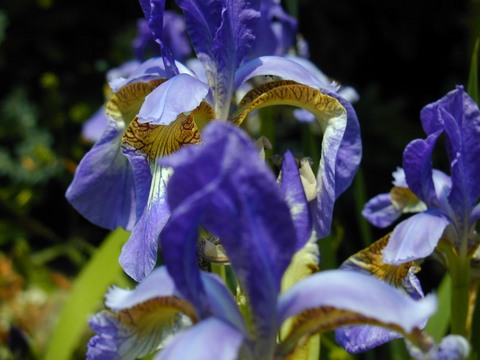
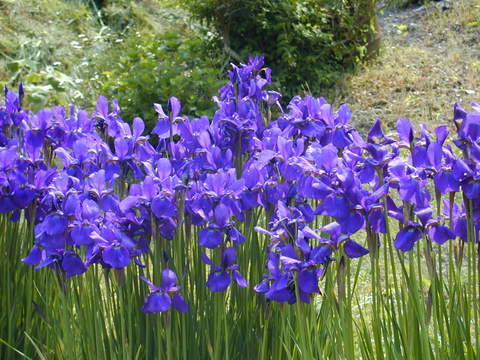
Here are more iris on our roadside:


Some Iris parks feature special bridges. See below for more.
Yatsuhashi means "eight bridges." 八橋
It is named for a location on the Azuma River renowned in Japanese literature, where the water branched into eight channels, each with its own bridge. It is also thought that on crooked bridges one can avoid evil spirits that flow in straight lines.
Look at them here:
http://www.outside-in.com/seiwa-en/structures/zig/zig.html


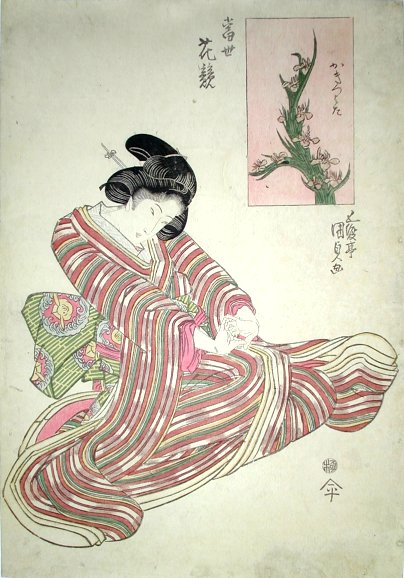
Kakitsubata on a woodblock print from Kunisada, with a fair lady.


http://homepage2.nifty.com/ICHIYUSAI/kisetsu/kakitsubata.htm


.......................................... Yatsuhashi

Iris and the Yatsuhashi bridge are the subject of many folding screens and other works of art.
Here is one from Oogata Koorin (Ogata Korin)
The subject of this work is drawn from the Eight Plank Bridge scene or Yatsuhashi of the Tale of Ise, and yet here both figures and the famous bridge have been eliminated, leaving only a symbolic representation of the theme in the form of a simple stand of iris. This effective handling of the classic theme reveals the painter's uniquw stance as both a decorative painter,and also an artist completely familiar with the essence of Chinese style painting.
Photo see below.


The name yatsuhashi comes from an incident in the 10th c.
Ise monogatari 伊勢物語
(Tales of Ise, trans. H. McCullough)
in which the story's protagonist and his companions stop to rest at a famous iris marsh traversed by an eight-planked bridge. In Edo period gardens, especially those built by daimyo (大名庭園 ), yatsuhashi were often built over iris marshes in an obvious reference to Ise monogatari.
A good example is found at Koishikawa Kourakuen 小石川後楽園, Tokyo.
http://www.aisf.or.jp/~jaanus/deta/y/yatsuhashi1.htm

................. Yatsuhashi as a kimono pattern


Why does Yatsuhashi have such a particular meaning?
A Japanese classical masterpiece, "The tales of Ise" tells us why.
A disappointed nobleman was relegated to a country in the east. On the way to his distant journey, he composed a tanka poem in which he expressed his deep sorrow of being apart far from his beautiful wife back in Kyoto with the motif of Kakitsubata and Yatsuhashi.
He must have longingly recalled her when he saw beautiful flowers of Kakitsubata walking along on Yatsuhashi.
This sad story was much more popular than other stories in "Tales of Ise" and became the base of a Japanese Noh play entitled "Kakitsubata".
One summer night, an ascetic monk, on the way to his journey to the east, met a beautiful Kakitsubata flower fairy. The fairy performed dances for the monk all the night through. The dance was so beautiful and fantastic that he could endure his loneliness.
No matter what is your nationality or how old you are, missing home or people whom you love in a distant land is an universal sentiment, isn't it?
This is a great link about stories behind the patterns of Japanese kimono.
http://www.yamatoku.jp/classic/topic.asp


.......................................................


source : Tokyo National Museum

Yatsuhashi makie raden suzuribako 八橋蒔絵螺鈿硯箱
box for writing utensils with yatsuhashi motive in laquer

.......................................................

Some family crests designs of this flower as base.
http://www.e-sozai.com/mon/shokubutsu/222.html

:::::::::::::::::::::::::::::::::::::::::::::::::::::::::::::::::::::::::::::::::::::::::::::::::::::


Iris (ayame) is a kigo in our database.

:::::::::::::::::::::::::::::::::::::::::::::::::::::::::::::::::::::::::::::::::::::::::::::::::::::

Here is a little something special.
A card game with flowers for each month
.
The Iris and the Yatsuhashi bridge are also featured.
The cards are divided into the twelve months of the year, incorporating the kachoo fuugetsu (four beauties of nature: flowers, birds, wind, and moon).

Genjuro's Hanafuda
http://www.geocities.com/TimesSquare/Arena/9305/hanafuda.html
http://www.cs.wisc.edu/~johnbent/hanahuda/
http://homepage.mac.com/silentdibs/hanafuda/cards.html


:::::::::::::::::::::::::::::::::::::::::::::::::::::::::::::::::::::::::::::::::::::::::::::::::::::


 Matsuo Basho and the Kakitsubata 

Written at the home of Chisoku in Narumi 鳴海の知足亭
貞亨2年4月4日, 1685, fourth day, fourh lunar month
(now in May)

Three more haikai friends were invited apart from Basho.
歌仙興行(知足・桐葉・叩端の4人)
A yatsuhashi bridge had been in the park and memories of the
Ise Monogatari 伊勢物語 are all around.


source : Milano-Cat


杜若われに発句のおもひあり 
杜若われに発句の思ひあり
かきつはた我に発句のおもひあり
かきつばた 我に発句の おもいあり
kakitsubata
ware ni hokku no omoi ari (omohi ari)

blue flag iris (-)
thoughts of a hokku
in my mind 


Basho:
知足亭の庭にはカキツバタが満開だ。
さて、私はこれを題材に一句吟ずるとしよう。
あの『伊勢物語』にもあやかって。自信をうかがわせる勢いのある句。

(Well, the kakitsubata are now in full bloom!
Anyway, I will take them and write a great hokku about it.
And also allude to the Ise Monogatari.
Yea, I will write a hokku to be proud of!)

source : itoyo/basho
source : www.hamajima.co.jp

In the poem of the Ise Monogatari (see below) the poet has
"thoughts of his wife" in his mind.
(Verb-forms of omou are used in both poems.)
So I choose to translate iris in singular.
The Japanese has a cut after line one.
Line 2 in Japanese does not work as a pivot line
(as the translation from Barnhill might suggest), since lines 2 and 3 belong together.


(BTW, an American friend later confirmed this:
"Your translation is accurate for American English too. 'Iris' is most often expressed in the singular unless the context is, for instance, iris species or stalks of irises. As an iris judge, this is the general parlance."
Thanks, Elaine.)


尾形光琳の「八橋図屏風」
Ogata Korin - Yatsuhashi


The poem from Ise Monogatari

唐衣着つつなれにしつましあれば
はるばる来ぬる旅をしぞおもふ

karakoromo kitsutsu narenishi tsuma shi areba
harubaru kinuru tabi o shi zo omou

Traveling
in faraway places,
I recall the old days
wearing my Chinese-style garments
and being with my beloved wife... 


Ariwara no Narihira, Ise monogatari 9.
source : www.classical-japanese.net


source : www.ikkojin.net

. . . . .


blue flag irises
stirring in my mind
a hokku

Tr. Barnhill


.............................................................................


. kakitsubata kataru mo tabi no hitotsu kana .
(summer) Iris laevigata. to talk about. Travelling


杜若似たりや似たり水の影
kakitsubata / nitari ya nitari / mizu no kage

有難き姿拝まんかきつばた
arigataki / sugata ogaman / kakitsubata


. Matsuo Basho 松尾芭蕉 - Archives of the WKD .

:::::::::::::::::::::::::::::::::::::::::::::::::::::::::::::::::::::::::::::::::::::::::::::::::::::


stamp from 1955 for 500 Yen

::::::::::::::::::::::::::::::::::::::::::::::::::::::::::::::::::::::::::::::::::::::::::::::::::::: 

[ . BACK to DARUMA MUSEUM TOP . ]
[ . BACK to WORLDKIGO . TOP . ]

::::::::::::::::::::::::::::::::::::::::::::::::::::::::::::::::::::::::::::::::::::::::::::::::::::: 

Black Sheep


summer lake -
a black swan
watches a black sheep


Sommerteich -
ein schwarzer Schwan
sieht ein schwarzes Schaf


Shikoku Summer 2005 Our Haiku Pilgrimage


:::::::::::::::::::::::::::::::::::::::::::::::::::::::::::::::::::::::::::::::::::::::::::::::::::::


bright autumn sky
the eagle soars high above
the doves


In another verbalisation of maybe the same backgroud I wrote this for a friend a while ago:

.. .. ninehundred-ninetynine times tock
.. .. one time tack -
.. .. centipede with a wooden leg


::::::::::::::::::::::::::::::::::::::::::::::::::::::::::::::::::::::::::::::::::::::::::::::::::::: 


Swan (hakuchoo) Japan. Black swan (kurochoo)

[ . BACK to WORLDKIGO  TOP . ]
 

[ . BACK to DARUMA MUSEUM TOP . ]

:::::::::::::::::::::::::::::::::::::::::::::::::::::::::::::::::::::::::::::::::::::::::::::::::::::