8/02/2004

Haiku with Hundred

nnnnnnnnnnnnn TOP nnnnnnnnnnnnn

Haiku with 100 Years 百年の俳句
Haiku mit Hundert


Dear Haiku Friends,

In the January Edition 2004 of the Asahi Haiku Magazine, there was a special about Haiku from persons older than 90, collecting 612 from all over Japan! This was the second time the magazine had called on the elderly to submit their haiku. The oldest person to submit his haiku was Mr. Nakamura, age 106!
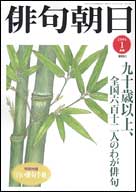


I have randomly selected 20 of the poems and translated them rather literally into English and German. Members of WHCgerman then helped with the improvement of the translations, which will be introduced below.
I thank all the members of WHCgerman who helped with the translation.

The haiku are all very impressive and inspiring, introduced with a motto of the person who wrote it. Most are long-term haijin with a group or magazine of their own, some have started at old age in an old-peoples home or group for the elderly, coming to great perfection in a short period of time. All seem to enjoy the small things in life filtered through haiku shared with people of the same interest.

If a haiku a day keeps us healthy until 90 and well over, then we are all sharing a very good hobby, I think. I hope to be back here in 50 years!

Enjoy some impressions of our SENSEI (the ones born before we were) from Japan.

The oldest person to submit his haiku was Mr. Nakamura, age 106! His slogan in life is threefold: to love, to start something new, to endure.

waga iki no
kagayaki noboru
shabondama

my breath
shimmering, ascending -
soap bubbles

mein Atem
schimmernd, aufschwebend -
Seifenblasen

*
Zawai san is 97 years old. His motto is still: To meet my real self! But in the following haiku another motto seems to show too:


http://happyhaiku.blogspot.com/2005/04/anemones.htm


tsuyu no tama
korogaru toki wa
tamerawazu

a drop of dew -
when it rolls around
it does not hesitate

ein Tautropfen -
wenn er so rollt
zoegert er nicht

tsuyu no tama : could be singular or plural, but I felt it is Zawai san himself, rolling in the ups and downs of fate, never hesitating, accepting where it rolls.

*

The next one shows an old lady, Isoki san, copying sutras, one of the pastimes to prepare for the next life. She is 93 years and her motto is still: Optimism in all things.

shakyo no te
yasumete kikinu
semi no koe

resting the hand
from copying sutras -
cicada’s song

Die Hand haelt inne
beim Sutrenkopieren –
Zikadenzirpen

*

Nagatomo san writes about his haiku life together with his wife. Now he is 91 years old and all alone, but he still remembers his wife fondly. His motto is: To be grateful, to be kind and gentle.

futari shite
ayumishi michi
kiri no hana

the two of us
walked this road –
blue paulownia


Wir beide
gingen diesen Weg –
blaue Paulownia
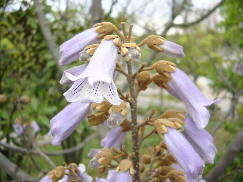


http://www.hana300.com/kiri00.html

*
Kondo san is 92 and a mother of many children. Her best times are spent with all of them together.

haha no hi ya
kuukobin nite
ran no hana

Mothers day -
arriving with airmail
the orchids

Muttertag -
mit Luftpost kommen
die Orchideen

*

Sugiura san is 97, but his heart is always that of a youngster, even if the ears will not hear well, the eyes will not see well any more and the skin is full of wrinkles. The haiku of his wife is introduced next.

ikaserete
kyuujuunana sai
aki higan

given to life
for 97 years -
autumn equinox


durchs Leben gefuehrt
seit 97 Jahren -
Herbstsonnwende

ikasarete could be translated as „living in Gods hands“, it evokes a strong feeling of being at the mercy of higher powers, but in a positive, grateful sense. Issa in his haiku often uses the phrase “anata-makase”.

Autumn Equinox

*

Sugiura Natsu, wife of the above poet, is 94, and her motto is “Caring for others”, like a gentle mother.

kuruma-isu
osu ase otto ni
misemajiku

pushing the wheelchair
but never dare to show my sweat
to my husband


den Rollstuhl schieben
traue mich nicht, den Schweiss
meinem Mann zu zeigen

*

Asano san is 90 years and likes to live a normal, undisturbed life. His hobby is fishing, as you can see.

fune ukabe
himemasu tsuri ya
fuji biyori

floating in a boat
fishing for trout -
Mount Fuji in sunshine


im Boot schaukeln
nach Forellen fischen -
der Fuji im Sonnenschein

himemasu is a sort of salmon-trout, the direct rendering would be : princess trout, which evokes nice memories in Japanese. Mount Fuji is sourrounded by five big lakes, where you can rent a boat and spend a sunny afternoon just watching this splendid mountain while catching a morsel for dinner.

*

Watanabe san is a healthy 97 and sings his haiku in a traditional style. He likes to visit temples and spend a quiet time there.

zoo-in ni
koohaku no bara
kiyoi saku

at the monastery
white and red roses
blooming in competition


im Kloster
weisse und rote Rosen
bluehen um die Wette

*

Murai san is 94 and lives in Kyoto, where he enjoys the delicacy and refinement of the old town life.

choochin ni
ayu no hitomoji
kyoo no yoi

on the lantern
the character “sweetfish” -
evening in Kyoto


auf der Laterne
das Schriftzeichen “Bachforelle“ -
Abend in Kyoto

Here is a paper lantern with a dragon.
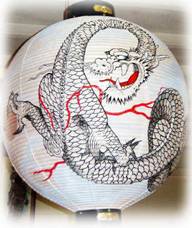


http://www.netwave.or.jp/~cyouchin/image91.jpg

*

Ono san is 91 and takes life easy and happy. And he still has a sweet tooth.

uraraka ya
ningyoo-yaki o
kau retsu ni

fine spring day -
standing in line to buy
sweet delicacies


strahlender Fruehlingstag -
Anstehen in der Schlange
fuer Suessigkeiten

ningyoo-yaki is a sort of buns in the form of human figures or animals, filled with sweet been paste and a favorite with children. When fried at a stall during a festival, all are waiting in line in the sweet smell until a fresh bunch is ready.
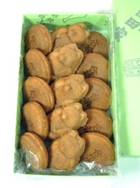


http://rnet-jp.com/shopping/goods_img/1100_ph.jpg

AME, DAGASHI Sweets

*

Fukoku san is 90 and likes to live in peace with her big family. She also still counts her beads of the abacus.

itsutsu-tama
no soroban futoshi
shin-cha susuru

five beads
of the abacus so big -
slurping new tea


fuenf Kugeln
des Abakus so gross -
neuen Tee schluerfen

shin-cha is the first tea of a new harvest in spring and quite a delicacy, to be slurped in peace and appreciation.

Soroban, Abacus

*

Yoshida san is 90 and likes to meet people, taking each meeting as a special, unique event to cherish (ichi-go, ichi-e: one encounter, one chance).

sangurasu
kakete kishi ko o
michigaeri

wearing sunglasses
the child is coming -
I can not recognize who

mit Sonnenbrille
kommt das Kind herbei -
nicht zu erkennen

mi-chigaeru can also mean to mistake someone for someone else. So Grandmother is probably mistaking one of her grandchildren.

*

Ueda san is 99 and still makes efforts and exerts herself. Then at night it is time for a relaxing bath.

tsutsuganaku
yuzu-yu ni tsukaru
hyakuju ware

in good health
lying in the hot citron bath
me one hundred years


in guter Gesundheit
im heissen Zitronenbad
mit meinen Hundert

Yuzu yu is a bathtub filled with a special Japanese yellow citron fruit (yuzu) with a strong, envigorating smell to help ward off cold in winter. The dried peel of yuzu is also used as a food addition to enhance the taste of soup and other dishes. (It is one of my favorite Japanese flavors.)

*

Suzuki san is 91 and likes a serious, straighforward mind not to be disturbed by the vicissitudes of life. At his age, he has learned to enjoy the small things, one at a time.

posuto made
arukete ureshii
kiku biyori

to the mailbox
I could walk, I am so happy -
sunshine on the chrysanthemums


bis zum Briefkasten
konnte ich laufen, ich bin so froh -
Sonnenschein auf den Chrysanthemen


http://www.hana300.com/kiku00.html

Chrysanthemum


Published in the WHR Winter 2004 Edition
http://www.worldhaikureview.org/4-1/whcgerman-p2.htm

************************
Please send your contributions to Gabi Greve
Happy Haiku Discussion Group


To the Daruma Museum Index
http://darumasan.blogspot.com/


To the Worldkigo Database
http://worldkigodatabase.blogspot.com/

8/01/2004

Yamaguchi Seishi

[ . BACK to WORLDKIGO  TOP . ]
::::::::::::::::::::::::::::::::::::::::::::::::::::::::::::::::::::::::::::::::::::::::::::::::::::: 

Yamaguchi Seishi
山口誓子, やまぐち せいし

(1901.11.03 - 1994.03.26)

CLICK for more photos


Studend of Takahama Kyoshi. Member of Hototogisu.


Reference


①二物衝撃の方法(「物」と「物」を詠み込んで、読者に喜怒哀楽を感じさせる)
nibutsu shoogeki
②モンタージュの技法(動きのある様子を詠む)
(Montage - writing about things that are moving (in action)
③連続飛躍法(「物」から関連するものを連想させる)を掲げている
renzoku hiyaku hoo : continue - jump - method

© More in the WIKIPEDIA !

:::::::::::::::::::::::::::::::::::::::::::::::::::::::::::::::::::::::::::::::::::::::::::::::::::::


下駄の痕残る渚や誓子の忌
geta no ato nokoru nagisa ya Seishi no ki

the imprints of geta
are still visible on the beach -
memorial day of Seishi


Kobayashi Seiha 小林青波

Geta, wooden sandals, clogs


:::::::::::::::::::::::::::::::::::::::::::::::::::::::::::::::::::::::::::::::::::::::::::::::::::::


雪敷きて 海に近寄る こともなし
yuki shikite umi ni chikayoru koto mo nashi

a carpet of snow
keeping me from going close
to the ocean's edge

Composed 1941

:::::::::::::::::::::::::::::::::::::::::::::::::::::::::::::::::::::::::::::::::::::::::::::::::::::


葉月潮 伊雑の宮を さしてゆく
hazukijio Izoo no Miya o sashite yuku

The tides of August
coming on a pilgrimage
to the Izoo Shrine.


. Ise, Izo no Miya and Kigo .


::::::::::::::::::::::::::::::::::::::::::::::::::::::::::::::::::::::::::::::::::::::::::::::::::::: 


Kangetsu Sanbutsu-E 観月讃仏会
. Moon Viewing at temple Toshodai-Ji 唐招提寺 .


::::::::::::::::::::::::::::::::::::::::::::::::::::::::::::::::::::::::::::::::::::::::::::::::::::: 


The heron is a stately bird. In 1947 Seishi Yamaguchi composed a haiku about one speedily lifting off into a winter sky. In the spring of 1967 he wrote a noteworthy poem about two early rising mothers in Ise: one a shopkeeper and the other a swallow.
 
Three hundred poems by the late master poet were translated in 5-7-5 syllable form by Takashi Kodaira and Alfred Marks in The Essence of Modern Haiku published in 1993 by Mangajin.

sagi tonde sugu setsurei no ue ni izu

heron taking off
in a moment hovering
over snowy peak


sutsubame mo same-ite yoji ni kama o taku

kindling a fire
at 4 a.m. when only
mother swallow stirs

David McMurray, Asahi Shinbun Company
http://www.asahi.com/english/haiku/050221.html

:::::::::::::::::::::::::::::::::::::::::::::::::::::::::::::::::::::::::::::::::::::::::::::::::::::

Quote from the World Haiku Review
Susumu Takiguchi


umi ni dete kogarashi kaeru tokoro nashi

blowing itself over the sea,
there's no place for winter wind
to go back


* This haiku was written in October 1944 and the Kamikaze pilots were flying to the sea then.


:::::::::::::::::::::::::::::::::::::::::::::::::::::::::::::::::::::::::::::::::::::::::::::::::::::


tookoo ya kyuu-Ro no machi wa ari to nomi

A frozen harbor —
what was once a Russian town
there and nothing more.


The harbour is the old town of Oodomari in 1926.
Read a discussion of this haiku by
Vaughn Seward, Translating Haiku Forum


樺太の天ぞ垂れたり鰊群来
Karafuto no ame zo taretari nishin kuki

the sky
over Sakhalin hangs low!
herring arrive for spawning


Karafuto is the Japanese name for the island.
When a large school of pregnant herring arrive, the sea is sparkling white like the sky.


Sakhalin was claimed by both Russia and Japan in the course of the 19th and 20th centuries, which led to bitter disputes between the two countries over control of the island.
© More in the WIKIPEDIA !


:::::::::::::::::::::::::::::::::::::::::::::::::::::::::::::::::::::::::::::::::::::::::::::::::::::


釘うてる天主の手足露の花園
kugi uteru tenshu (deusu デウス ) no teashi tsuyu no kaho

The Lord's hands and feet,
with the nails hammered through them---
dewdrops on blossoms.

Tr. Kodaira and Marks


Christian Haiku
. Seishi in Nagasaki 1927 .


::::::::::::::::::::::::::::::::::::::::::::::::::::::::::::::::::::::::::::::::::::::::::::::::::::: 


わが息のかすかに白く生きるはよし
waga iki no kasuka ni shiroku ikiru wa yoshi

my own breath
is slightly white -
good to be alive


. ikiru wa yoshi .


::::::::::::::::::::::::::::::::::::::::::::::::::::::::::::::::::::::::::::::::::::::::::::::::::::: 


sukeeto no magao nashitsutsu tanoshikere

sukeeto no himo musubu ma mo hayari-tsutsu

. Haiku about ice skating .


natsukusa ni kikansha no sharin kite tomaru

kikansha no kanbo moe tsutsu umi wataru

. Haiku about Trains .


:::::::::::::::::::::::::::::::::::::::::::::::::::::::::::::::::::::::::::::::::::::::::::::::::::::

俳人。京都生。東大法学部卒。名は新比古。高浜虚子・水原秋桜子に師事する。
『馬酔木』『ホトトギス』同人となり秋桜子・阿波野青畝・高野素十らと昭和初期『ホトトギス』の黄金時代を築く。芸術院賞受賞。
文化功労者。平成6年(1994)歿、92才。

山口誓子

:::::::::::::::::::::::::::::::::::::::::::::::::::::::::::::::::::::::::::::::::::::::::::::::::::::

Yamaguchi Seishi (Jamagutschi Seischi)
jap. 山口 誓子 in Kyōto; * 3. November 1901; † 26. März 1994), eigentlich Yamaguchi Chikahiko (山口 新比古), war ein japanischer Haiku-Dichter der Taishō- und Shōwa-Zeit.

Yamaguchi Seishi wurde als ältester Sohn von Yamaguchi Shinsuke (山口 新助) und dessen Frau Mineko (岑子) geboren. Seit seiner frühen Kindheit jedoch wurde er von seinem Großvater mütterlicherseits, Wakita Kaichi (脇田 嘉一), großgezogen und lebte abwechselnd in Kyōto, Tōkyō, auf Sachalin, damals Teil des japanischen Verwaltungsgebietes, und wieder in Kyōto.

Nachdem er die Erste Mittelschule in Kyōto besucht hatte, wurde er in die Dritte Oberschule eingeschult. Durch der Teilnahme an der dortigen Haiku-Gemeinschaft begann er, ernsthafte Haiku zu schreiben.

1922 schrieb er sich für ein Studium an der juristischen Fakultät der Kaiserlichen Universität Tōkyō ein. Auch dort nahm er an der Haiku-Gemeinschaft teil und wurde von Takahama Kyoshi persönlich unterwiesen.

1926 beendete er das Studium und arbeitete für die Sumitomo KG in Ōsaka. Zwei Jahre darauf, 1928, heiratete er Asai Umeko (浅井 梅子), besser bekannt unter dem Pseudonym Yamaguchi Hatsujo.

Bei der Sumitomo KG oblagen Seishi hauptsächlich Aufgaben im Personalbereich, doch wegen eines Lungenleidens, das ihn bereits seit der Studienzeit plagte, wurde er 1940 beurlaubt und gab die Arbeit 1942 schließlich ganz auf, als auch ein Kuraufenthalt seinen Zustand nicht verbesserte. Er widmete sich daraufhin der Literatur.

Bereits zu Beginn der Shōwa-Zeit war er bei der von Takahama Kyoshi, seinem Lehrer, herausgegebenen Haiku-Zeitschrift Hototogisu aktiv geworden und wurde zusammen mit Awano Seiho, Mizuhara Shūōshi und Takano Sujū zu den „vier S“ gezählt worden.

Er verwendete oft moderne Themen und befürwortete, wie auch Kyoshi, die objektive (Natur-)Skizze als Darstellungsmittel. In der sogenannten Shinkō-Haiku-Bewegung spielte er eine der leitenden Rollen, jedoch grenzte er sich stets scharf von Haiku ohne Jahreszeitenwörter ab. 1935 beteiligte er sich als Mitherausgeber an der Haiku-Zeitschrift Ashibi und vertrat, gemeinsam mit Mizuhara Shūōshi und einigen anderen, eine feste Form des Haiku mit Jahreszeitenwörtern.

1948 gründet er die Zeitschrift Tenrō (天狼, dt. „Sirius“, wörtl. „Himmelswolf“), die er selbst leitete, und versammelte zahlreiche befreundete Haikuisten und Schüler um sich, womit er einen bedeutenden Beitrag zur Wiederblüte des Haiku nach dem Kriege leistete.

1976 erhielt er den Orden des Heiligen Schatzes dritter Klasse, 1987 den Preis der Kunstakademie und ein Jahr später den Asahi-Preis. 1992 wurde er öffentlich wegen großer kultureller Verdienste gewürdigt.

Als Haikuist schrieb Seishi zahlreiche bedeutende Werke. Seine ungefähr 20.000 Bände umfassende Bibliothek stiftete er dem Seminar für Japanologie der Universität Kōbe, wofür er am 16. Juni 1988 als erster mit der Ehrendoktorwürde der Universität ausgezeichnet wurde.
© More in the DE.WIKIPEDIA !

:::::::::::::::::::::::::::::::::::::::::::::::::::::::::::::::::::::::::::::::::::::::::::::::::::::

BACK TO
POETS, Introducing Japanese Haiku Poets 


To the Daruma Museum Index
To the Worldkigo Database
:::::::::::::::::::::::::::::::::::::::::::::::::::::::::::::::::::::::::::::::::::::::::::::::::::::

7/30/2004

Mountain Gods

[ . BACK to DARUMA MUSEUM TOP . ]
:::::::::::::::::::::::::::::::::::::::::::::::::::::::::::::::::::::::::::::::::::::::::::::::::::::::::::::::::::::::::::


初詣 山の神には誰もこん

hatsu-moode yama no kami ni wa dare mo kon

First Shrine visit -
to our Mountain God
nobody comes


Gabi Greve 2004


On my daily walk -
There was a stone with the inscription 山の神, surrounded by four lage cypresse trees and in the beginning (about 10 years ago) farmers would bring a new shimenawa rope and some offerings on the second day of the New Year.
Eventually nobody came with offerings any more.
And later, when the small road was to be widened, they even cut the front two trees to get more space.
Now (in 2017) it is just an overgrown boulder with weeds, weeds and more weeds around.

dare mo kon . . . . . dare mo konai . . .


:::::::::::::::::::::::::::::::::::::::::::::::::::::::::::::::::::::::::::::::::::::::::::::::::::::

The benevolent Uncle Yama

By AMY CHAVEZ

© Japan Times, July 30, 2005
http://www.japantimes.co.jp/cgi-bin/getarticle.pl5?fl20050730cz.htm

Monday morning I awoke at 7 a.m. to chanting flowing through the window from the mountain in the back of my house. But something was strange -- the voice was not quite right. It wasn't the familiar deep voice of the priest, nor the younger voice of the priest's son. It was scratchy. Perhaps the locusts were practicing a new tune, I thought as I rolled over to go back to sleep.


Then I remembered. My neighbor Kazuko had told me that Monday was the ceremony for the mountain god. As the scratchy voice was joined with a chorus of more familiar neighborly voices, I jumped out of bed and ran to the ceremony. Still fighting off sleep, I was welcomed with a small bowl of sake. That's one hell of a way to wake up in the morning -- an alcoholic alarm clock. It worked, anyway.

Although I had missed the ceremony, I still went up and said a prayer to the mountain god at his designated shrine in the side of the mountain and left a 1,000 yen note between the dead fish and the "kagami mochi" laid out in front. As it would be bad form to leave exposed money as an offering, I put my bill into one of those fancy envelopes like the Japanese do, which is nice because it makes it look like there must be much more than just 1,000 yen inside. I've always thought this was a strange tradition, though. After all, what is the mountain god going to do with the money?

Then I came down from the shrine and joined my neighbors eating fried shrimp, dried fish and dried squid. Then I drank a beer and another beer, all before 9 a.m. This is not the breakfast of champions, I'll admit, but it is breakfast with the gods -- the Shinto version of having breakfast with Santa Claus.

Shinto is a religion that combines alcohol and a life-long series of ceremonies to thank gods for taking care of us. Japanese sake is a sacred offering to the gods. Each of the eight neighborhoods on our island has one special Shinto god they take care of. Ours is the mountain god, and this ceremony is put on by our neighborhood twice a year. I've become fond of the mountain god over the years and refer to him as Uncle Yama, always looking over me and protecting me. And he seems to be doing a good job. Last year, my house and Kazuko's were the only houses on the port that didn't get damaged by typhoons.

Some Westerners suggest that all these Shinto ceremonies are just another excuse for a party. I disagree. It's more basic than that. And it's not merely to sit around eating fried shrimp and spending time with the neighbors and Uncle Yama either. Shinto ceremonies help keep everyone in business. You see, once all the envelopes were collected and the money counted, no one gave it to Uncle Yama. Instead, a neighbor left on a bicycle with the money in his pocket. He was going around to pay all the businesses: the liquor store for the two bottles of sake we drank, the fishermen's co-op where we bought the fish for the ceremony and the ice to keep the beer cold, and the supermarket -- which got my 1,000 yen bill -- where we bought the fried shrimp and dried fish and squid. Everything for the ceremony was bought from different stores on the island, and not one business was left out.

The Japanese were doing what they do best -- continuing a long tradition of self-sufficiency while also helping out their neighbors. And Uncle Yama's role was to bring us together as a community.

Usually, we would pay a priest too, for coming to lead the ceremony. But this year, due to the declining population of our neighborhood, we didn't have enough people to contribute to a priest.

"So, who was that with the scratchy voice chanting the sutras this morning?" I asked my neighbors. "Oh, that was a recording," they said.

Amy Chavez

:::::::::::::::::::::::::::::::::::::::::::::::::::::::::::::::::::::::::::::::::::::::::::::::::::::

. Yama no Kami 山の神 God of the Mountain .
- Introduction -

:::::::::::::::::::::::::::::::::::::::::::::::::


. Join the Updates of Facebook ! .

::::::::::::::::::::::::::::::::::::::::::::::::::::::::::::::::::::::::::::::::::::::::::::::::::::: 

[ . BACK to DARUMA MUSEUM TOP . ]
[ . BACK to WORLDKIGO . TOP . ]

:::::::::::::::::::::::::::::::::::::::::::::::::::::::::::::::::::::::::::::::::::::::::::::::::::::

6/14/2004

WKD - Karma

[ . BACK to WORLDKIGO  TOP . ]
::::::::::::::::::::::::::::::::::::::::::::::::::::::::::::::::::::::::::::::::::::::::::::::::::::: 


it all started from here:

grasshopper
your fool !
the tea is still hot


Of course we enjoy the tea outside, with a few tiny frogs and other friends along on the table. This one was just too nosy. Ouch!

This ku was first called “happy teabreak”
BUT
apart from a lighter touch, it made me think about KARMA,
the inevitable link between all events.

If I had been born Chinese, my teacup would have a lid and poor grasshopper would not have boiled his feet.

If a butterfly flaps its wings in the Amazon jungle,
we might end up with a taifun over here in Japan.


If the grasshopper was ment to hop in my teacup to meet his end there, well, what can I do about it but accept it with a haiku?

Has anyone ever explored the connection between haiku and karma?
I wonder?


The net of Indra comes to mind again, we were talking about it at WHCWorkshop a while ago.
Here is a great holographic version of Indra’s net :


http://www.angelfire.com/realm/bodhisattva/indras-net.html


And a great Tibetan Mandala version of Indras Net:


http://www.bremen.de/info/nepal/Gallery-3/Cosmos/9-1/Kosmos0.htm


Googeling around about the NET of Indra on the interNET of the human mind, I found a lot more, but just some LINKS, but check them only if you have a lot of time.
http://www.heartspace.org/misc/IndraNet.html


This is a little too much on the weird side but who knows.
http://www.sacredscience.com/store/commerce.cgi


Skydancer has a lot of interesting photos and text about many places in Japan too.
http://www.skydancers.com/main/sitemap.html


Indra’s NET or the interNET,

you can get lost googeling at it, in it ...
So for now, it is time to get out of the net and to the reality of making lunch.

Today is fish, caught in a hemp NET!


:::::::::::::::::::::::::::::::::::::::::::::::::::::::::::::::::::::::::::::::::::::::::::::::::::::


The Buddha refused to deal with those things that don't lead to the extinction of dukkha (suffering). He didn't discuss them.

Take the question of whether or not there is rebirth after death.
What is reborn?
How is it reborn?
What is its “karmic inheritance”?

These questions don't aim at the extinction of dukkha. That being so, they are not the Buddha's teaching nor are they connected with it. They don't lie within the range of Buddhism. Also, the one who asks about such matters has no choice but to believe indiscriminately any answer that's given, because the one who answers won't be able to produce any proofs and will just be speaking according to his own memory and feeling.

The listener can't see for himself and consequently must blindly believe the other's words. Little by little the subject strays from dharma until it becomes something else altogether, unconnected with the extinction of dukkha.

source : - Buddhadasa Bhikkhu from "A Single Handful,"
Tricycle Winter 1996


:::::::::::::::::::::::::::::::::::::::::::::::::::::::::::::::::::::::::::::::::::::::::::::::::::::::


tashoo no en 他生の縁 karma relations
close relationships in a previous life


source : www.nittaiji.com/sermon

sode fure-au mo tashoo no en 袖触れ合うも他生の縁
When our sleeves touch,
it feels like we met in a past life.


- - - - - Kobayashi Issa - - - - -

A girl named Butterfly was guiding me along a mountain path when rain suddenly began falling and continued steadily for some time.

木の陰やてふと宿るも他生の縁
ki no kage ya choo to yadoru mo tashoo no en

sheltering under a tree
with Butterfly -- we've met
in other lives

Tr. Chris Drake

This hokku is from a posthumous collection edited by Issa's followers. It seems to be a slight revision of an earlier hokku:

A young girl was guiding me along a mountain path when a rainstorm suddenly overtook us, and it rained hard for a while.

ki no kage ya chou to yasumu mo tashou no en

stopping under a tree
with Butterfly -- we've met
in other lives


This earlier hokku is from the 2nd month (March) of 1825, less than two years after the death of Issa's wife and his last surviving child and six months after he was divorced by his second wife after a very short marriage and temporarily lost the power of speech. A still earlier version of the hokku, written in the 10th month (November) of 1824 while Issa was unable to speak, has no headnote and has a different first line: yabu-kage ya, "beneath the leaves of a grove/thicket...."

The name Chou (Butterfly) was a common female name, and Issa didn't bother to give the information that the Sino-Japanese character for 'butterfly' was a name in his 1825 headnote, perhaps feeling it was too obvious, but in the posthumous version Issa gives the information that the word for 'butterfly' in the hokku refers to a girl named Butterfly. In this posthumous version he also uses Japanese phonetic syllabary symbols to write Chou (てふ) instead of the Sino-Japanese character for 'butterfly.' A girl's name would normally be written phonetically.

It's impossible to know what went through Issa's mind when he wrote these versions of the hokku, but in late 1824 and in 1825 he was clearly traumatized by his married and family experiences, so I wonder if Issa wasn't seeing a beautiful counter-vision of his life so far in his chance meeting with Butterfly. Could he have wondered whether in one life or another -- "other lives" can refer to the future as well as the past -- Butterfly was his daughter? Or his mother? Issa seems to think this meeting and their other unknown relationships elsewhere must be important, and the fact that she is his guide might have spiritual implications for him.

Chris Drake

. Kobayashi Issa 小林一茶 in Edo .


. WKD : choochoo 蝶々 butterfly .


:::::::::::::::::::::::::::::::::::::::::::::::::::::::::::::::::::::::::::::::::::::::::::::::::::::::


KARMA ...
I don't know wheather
I know


KARMA ...
the name of my cat is
HAIKU


:::::::::::::::::::::::::::::::::::::::::::::::::::::::::::::::::::::::::::::::::::::::::::::::::::::


the last step
blending truth and falsehood
karma blooming


- Shared by Zaya Nergui, Mongolia -
Joys of Japan, 2012


. WKD : MONGOLIA SAIJIKI .


:::::::::::::::::::::::::::::::::::::::::::::::::::::::::::::::::::::::::::::::::::::::::::::::::::::::

[ . BACK to DARUMA MUSEUM TOP . ]
:::::::::::::::::::::::::::::::::::::::::::::::::::::::::::::::::::::::::::::::::::::::::::::::::::::::

[ . BACK to WORLDKIGO . TOP . ]
:::::::::::::::::::::::::::::::::::::::::::::::::::::::::::::::::::::::::::::::::::::::::::::::::::::::

5/15/2004

Spagetti with Chopsticks

[ . BACK to WORLDKIGO . TOP . ]
::::::::::::::::::::::::::::::::::::::::::::::::::::::::::::::::::::::::::::::::::::::::::::::::::::: 


Eating Spagetti with Chopsticks

Cross-Cultural Flip-Flops


eating spagetti
with my old chopsticks -
am I Japanese ????


Here you find the answer:

Spaghetti with chopsticks makes a mess of Mishima image


By ROGER PULVERS
Special to The Japan Times May 15, 2005


ooo ooo ooo ooo ooo ooo ooo ooo ooo


disposable chopsticks -
save the forest or save
water for washing ?


Disposable Chopsticks, by Junko Edahiro
December 2006


. My Crosscultural Musings  


::::::::::::::::::::::::::::::::::::::::::::::::::::::::::::::::::::::::::::::::::::::::::::::::::::: 

4/10/2004

World Haiku Festival 004

:::::::::::::::::::::::::::::::::::::::::::::::::::::::::::::::::::::::::::::::::::::::::::::::::::::

World Haiku Festival in Chugoku, Japan:
Saturday 10 April 2004


The World Haiku Club is pleased to announce World Haiku Festival in Chugoku which will be held in Okayama, Chugoku, Japan at GokuRakuAn from 14:00 pm to 17:00 pm on Saturday 10 April 2004. This is part of the series of regional meetings which WHC has been promoting since its successful start at World Haiku Festival in Holland which took place in Leeuwarden, the Netherlands last September.

The regional meeting's organiser is Gabi Greve, WHC's Director of Japan, who is also making her own house, GokuRakuAn (or paradise hermit), available as the venue. As the name of the house indicates, it is a farmhouse situated in the middle of nowhere, reminiscent of the abode of Buson or Issa, and its main inhabitants are animals, birds and flowers with neighbours and visitors that include a bamboo forest, bees and the moon.

Because of this isolation, the number of participants will be very much limited and early application would be recommended. However, those who are lucky enough to be included are sure to have an experience the like of which they have never experienced before. After the allocated number of participants is reached, some more people may be admitted provided they will come by car or rent-a-car since the limitation is imposed mainly because of the lack of transportation.

I look forward, with Gabi, to welcoming you to this paradise on earth!

Kengin,

Susumu

The World Haiku Club


* * * * * *


and much LATER


WORLD HAIKU FESTIVAL 2010 IN NAGASAKI
Friday 09, Saturday 10 & Sunday 11 April 2010 plus 3-day Haiku Journey

At Arkas SASEBO, 2-3 Miura-cho, Sasebo-shi, Nagasaki-ken, 857-0863, Japan

Activities
Various haiku events such as haiku-walk, workshops, papers, public lectures, haiku-reading, and other events including koto and shakuhachi music (Japanese harp and flute), tea ceremony, Japanese dance plus tours around Nagasaki Prefecture (hot springs, Hirado, ceramic centres, Nagasaki, Shimabara, Unzen and Omura)

THE WORLD HAIKU CLUB HQ:
Leys Farm, Rousham, Bicester, Oxfordshire,
OX25 4RA ENGLAND

The World Haiku Club


:::::::::::::::::::::::::::::::::::::::::::::::::::::::::::::::::::::::::::::::::::::::::::::::::::::

The highlight of this festival was the birth of my cat, Haiku kun!

Click for Enlargement !


Gabi herself has given a newly-born kitten a glorious name: HAIKU.
If she calls a cat HAIKU, does it become haiku?
NO, IT DOES NOT!
So I thought.
Wait, ... wait a moment. I saw this lovely kitten myself soon after it was born and the sight was haiku!
His mother, barely one year old, was haiku, too.

Susumu


Haiku and his mother, growing fast ...


:::::::::::::::::::::::::::::::::::::::::::::::::::::::::::::::::::::::::::::::::::::::::::::::::::::

1/18/2004

FRIENDS : Geert Verbeke

nnnnnnnnnnnnnnnn TOP nnnnnnnnnnnnnnnnnn

.. .. .. .. .. Geert Verbeke

My haiku books - Haiku boeken - Livres de haïku:
http://users.skynet.be/geert.verbeke.bowls/haikuboeken.html


Website: http://users.skynet.be/geert.verbeke.bowls
In Japan: http://home.alc.co.jp/db/owa/ph_diary

'The haiku below are copyrighted.' Geert Verbeke


Photo by Jenny Ovaere, Paris 2004.


The following is a collection of Geert's contributions
to the World Kigo Database.
http://worldkigodatabase.blogspot.com/

xxxxxxxxxxxxxxxxxxxxxxxxxxxxxxxxxxxxxxxx

Firework Display (hanabi, Japan)

sky and water
in fireworks’ viewing
united

xxxxxxxxxxxxxxxxxxxxxxxxxxxxxxxxxxxxxxxx

Daphne (Jinchooge, Japan)

fragrant
tubular-shaped flowers
Daphne in my mind


xxxxxxxxxxxxxxxxxxxxxxxxxxxxxxxxxxxxxxxx

Peony (botan, Japan

crackleware vase
with pink peony petals
his soup bowl

peonies
in the lattice window
a blaze of colours


March 2005
xxxxxxxxxxxxxxxxxxxxxxxxxxxxxxxxxxxxxxxx

. Skunk Cabbage .

Aronskelk', used for funeral wreaths...
aronskelk de (m.) : arum gevlekte aronskelk: wake-robin, friar's-cowl, lords-and-ladies witte aronskelk: arum lily, calla lily.

on her coffin
a few arum lilies
and his kisses


xxxxxxxxxxxxxxxxxxxxxxxxxxxxxxxxxxxxxxxx

February 2005

Snow melting (yukidoke, Japan)

cheerfully tinkling
of snowmelt droplets
on a temple gong

a splash
of snowmelt water
the dog whines


Young leaves (wakaba, Japan)

the scarecrow
on his straw hat
young leaves

spring squall
young leaves drive
in the rain barrel


Mosquitoes (ka, Japan)

mosquitoes
on a buddha head
zen-garden

the buzz
of mosquitoes
and your snoring


.......................................................................

My Arrow Flies... Gabi Greve
. QUOTES . to enjoy haiku even more


his arrow flies
in the empty sky
my bated breath

archery
behind the orchard
profound silence


xxxxxxxxxxxxxxxxxxxxxxxxxxxxxxxxxxxxxxxx

.................. Crows, Raven and the like
Crow, Raven karasu (Japan)

the croaking
of crows and ravens
killing fields

the crows
fight against ravens
a crushed rabbit

midnight
the shriek of a crow
on the graveyard

xxxxxxxxxxxxxxxxxxxxxxxxxxxxxxxxxxxxxxxx

.. .. .. .. .. .. .. Holocaust Day
Holocaust Day
Yom haShoah (Day of Desolation)

candlelight
on the railroad tie
Holocaust Day

a Buddha
under your framed photo
both smiling

broken chords
six million Jews
who perished

on television
the liberation of Auschwitz
quavering voices

flowers fenced
with barbed wire
Yom HaShoah

synagogue
on Desolation Day
he clears snow

xxxxxxxxxxxxxxxxxxxxxxxxxxxxxxxxxxxx

Mango and Monsoon

the monk bows
for the mango tree
leaves in flushes


eating a mango
in the meditation room
a fruity day

the playgirl
fresh mango juice
on her tits

a fond embrace
the taste of mango
on her lips

the smell of mango
on my peeling knife
I love my kitchen

fruit shop
she cubes a mango
handle with care

on the tatami
her sweet-smelling mango
a sultry night


after the monsoon
their nest on the cobbles
the death birdies

walloped
by the monsoon
her umbrella

Mango (Kenya)

xxxxxxxxxxxxxxxxxxxxxxxxxxxxxxxxxxxxxxxx

Ryokan-ki ... Ryokan Memorial Day。。。 良寛忌
Ryokan Day .. Ryokan-ki, Ryokan Memorial Day (Japan)

the wise fool
living as a hermit
dreaming of toys

master Ryokan
begging for his food
with a playful mind

Ryokan the monk
spent his life in the snow
teaching children

playing with children
during his begging rounds
laughing to himself

in his hermitage
drinking wine with friends
after a walk

Ryokan ceremony
in the Entsuu-Ji temple
the scent of tea

Ryokan seems foolish
but the road is very wide
I take a plane

on his first draft
a Ryokan Daruma doll
and a walking stick

the monk-poet
walks the roads of the poor
as a wise fool

hide and seek
playing with children
hidden for days

Soto Zen teachings
in the snow country
writing poetry

in the forest
just four walls and a roof
pretty icecold

Ryokan
exchanging love poems
Teishin blushes

he is dying
our dear master Ryokan
Teishin holds him

a loft of pigeons
above the statue of Ryokan
plop! plop!


an American-
talking Buddha
about Jezus

joy of life
moment after moment
holding your hand

xxxxxxxxxxxxxxxxxxxxxxxxxxxxxxxxxxxxxxxx

.. .. .. First Dream (hatsu yume, Japan) 2005

his first dream
of the new year
a labyrint

dreaming of her -
Playboy magazine
under his pillow

his first dream
memory serves him well
the Mount Fuji

naked
in his first dream
Emperor Suinin

no eggplants
in his first dream
to much saké


xxxxxxxxxxxxxxxxxxxxxxxxxxxxxxxxxxxxxxxx

.. .. .. FROST
Frost (shimo, Japan)

in the dunes
frosted bunches of berries
a blackbird peers

windless garden
a thin coating of frost
on the sprouts

xxxxxxxxxxxxxxxxxxxxxxxxxxxxxxxxxxxxxxxx

SNOWMAN
Snowman (yuki Daruma)


the snowman
on his wrinkled hat
a bread crumb

a torned hat
in the meltwater
bye snowman

in the snow
a carrot and a besom
exit snowman

xxxxxxxxxxxxxxxxxxxxxxxxxxxxxxxxxxxxxxxx

Winter solstice
. Winter Solstice (tooji, Japan)

winter solstice
the sun is coming back
daylight saving

Tamarack
Tamarack, Larch (karamatsu)

the mutt
tamarack needles
on his tail


STRAWBERRIES
Strawberries Cranberries

buxom lady
the scent of strawberries
on your hot lips

xxxxxxxxxxxxxxxxxxxxxxxxxxxxxxxxxxxxxxxx

FAN
Fan (oogi, uchiwa, Japan)

painted on
a Japanese folding fan
an other fan

her fan
is made of sandalwood
unique fragrance

dark gray with a
black-colored framework
her mourning fan

in the crib
her fishnet stocking
and a twirling fan

on trial
behind her hand fan
a jeering laugh

the mother
sings a cradlesong
fanning her baby

not cooling me
the breeze of her fan
inviting eyes

xxxxxxxxxxxxxxxxxxxxxxxxxxxxxxxxxxxxxxxx
.. .. .. SWING

In Flanders:
schommel, ren, rènne, rènder, juttekoko, rudekakkokke, balansiere, bijlutse, ritse, touter, bieze baise, rush

an empty swing
in rocking motion
that gusty wind

rocking swing
the wind is changing
spring day

on the swing
mother and daughter
in colorful robes

after midnight
the crunching of chaines
a cat on the swing

romping
on the swings
the storm

sitting on a swing
after a drinking spree
splitting headache

swinging
the world spins around
don't get up

don't press me
sitting on a swing
with a hangover

041222
xxxxxxxxxxxxxxxxxxxxxxxxxxxxxxxxxxxxxxxx
.. .. .. RAIN

two monks
no other master
than the rain

beggarly pilgrims
walking in the rain
fragrant grasses

.. .. .. ..

he sings upstream
with a very wet voice
the summer rain

he saw her dancing
near the railroad station
drunk in the cold rain

the toddler
sings a lullaby
for the rain

her rain song
masked by the thunder
lightning strikes

in the pouring rain
soaking wet in her clogs
the clumsy woman

shivering with cold
in her blue raincoat
a farmer's wife

outside
the persistent rain
I take to my bed

xxxxxxxxxxxxxxxxxxxxxxxxxxxxxxxxxxxxxxxx

041218

7 ' BALVENIE' haiku (senryu)

nosing and tasting
he smells honeyed sweetness
on the malting floor

the casks
are hand-bottled
with a chaser

nutty dryness
his smooth single malt
after the burial

oak casks
from various parts of the world
see you in my dreams

underpinned
by a honeyed character
her single malt

oaky notes
the taste of her kisses
flavour of whisky

the perfume
of fruity and ripe raisin
kiss me again

xxxxxxxxxxxxxxxxxxxxxxxxx

Hot Whiskey
Hot Whiskey (Toddy, Irish Coffee)

he shovels snow
in his tappit-hen
a hot whisky

warm-blooded
by her pretty legs
and a hot whisky

a shot of whisky
in a cup of hot cocoa
and your memories

xxxxxxxxxxxxxxxxxxxxxxxxxx

Rumpot
Rumpot (Rumtopf) Germany

perfume of rum
after to much punch
no more punch

a broken rumpot
after the wild party
with a hung


Hot Drinks

Hot Drinks, a List

hot milk
for my bad fit of coughing
mum adds a whisky

a hot toddy
with a big cognac
his poor head

drink a hot toddy
and then take to your bed
does your head spin

xxxxxxxxxxxxxxxxxxxxxxxxxx

Some Haiku in German

Tierenteyn
echter Senf aus Gent
kühl aufbewaren

Wasser und Berge
Nebel streicht über die Steppe
Gebetsfahne

Farben der Steppe
in der unendlichen Weite
galoppieren

Steppenlandschaft
Pferde galoppieren
wie der Wind

Kinder Weinen
kein Windhauch
Sturm kommt auf

Gartenbücher
farbenreich und verträumt
Tee trinken

In deinem Garten
die quarkenden Frösche
und Meditation

Shakuhachi
im Garten deiner Träume
der Geist der Stille

Erinnerungen
zusammen schlafen
Steingartenstille

Der helle Klang
das Reiben eines Weinglases
Tagträumer

Eine Totenstille
die Instrumente pausieren
Blockflöten flüstern

Die Amsel pfeifen
am frühen Morgen
blöder Hund

Am Horizont
trunken von Weite
die Amazone

Regenschauer
durch die Pfützen spritzen
heimlich

xxxxxxxxxxxxxxxxxxxxxxxxx

Shakuhachi

feathery
the early-morning fog
and the shakuhachi

a shakuhachi
ripplings in the pond
by a koi

Shakuhachi
im Garten deiner Träume
der Geist der Stille


http://www-b.indchem.metro-u.ac.jp/shakuhachi.html


************************
Please send your contributions to Gabi Greve
http://groups.yahoo.com/group/happyhaiku/

To the WHC Worldkigo Database
http://worldkigodatabase.blogspot.com/

7/22/2003

Mimasaka Haiku

[ . BACK to WORLDKIGO . TOP . ]
::::::::::::::::::::::::::::::::::::::::::::::::::::::::::::::::::::::::::::::::::::::::::::::::::::: 

.. .. .. .. .. Mimasaka Haiku

From present Okayama Prefecture, where I live now since 1995.

Mimasaka province (美作国 Mimasaka no kuni)
is an old province in the area that is today Okayama prefecture, Japan.
Mimasaka bordered on Bitchu, Bizen, Harima, Hoki, and Inaba provinces.
Mimasaka was landlocked.

Map of Old Mimasaka


http://tinyurl.com/aldoo
jpimg.digital.archives.go.jp

.. .. .. .. .. .. .. .. .. .. .. .. .. .. .. .. .. .. .. .. .. .. .. .. ..


立葵ゆらぎ峠をはしる水     水原秋桜子

rose mallow
sways at the pass where
water flows down


Shuuooshi Mizuhara

.. .. ..

ふるさとの美作の梅熟れにけむ   西東三鬼

ripe apricots
in my native county
Mimasaka


Sanki Saitoo

(There are many apricot plantations at Mimasaka.)

.. .. ..

美作は盆の夜を寝て灯消す     森 澄雄

Home in Mimasaka -
sleeping at the Bon Night
the lanterns turned off


花木槿美作に来て汗白し        同

Marshmallow blossoms.
My sweat turns white
at Mimasaka.


Sumio Mori

I checked about the white sweat, and here are the results:
http://www.onmarkproductions.com/html/jizo-asekaki.html

.. .. ..

美作は雨となりたる桃の花    寺田絵津子

at Mimasaka
the rain is falling -
peach blossoms


Etsuko Terada

(Mimasaka is famous for its peach plantations.)

.. .. ..

めいめいの身裡にたまる冬霞    宗田安正

each of us
gathers winter fog
on our clothes


Yasutada Murota


秋燕や吉備のまろ山墳を抱く     貝原清子 Kaibara Kiyoko
shuuen ya kibi no maruyama tsuka o daku

autumn swallows -
circling around the kofun
at Maruyama in Kibi


...


葦牙に風わたりくる吉備の国    藤田ひろむ Fujita Hiromu

ashikabi ni kaze watarikuru kibi no kuni

the wind passes
over the reed shoots -
Province of Kibi

...

吉備の野をここに絞りて山仕事    富安風生 Tomiyasu Fuusei

kibi no no o koko ni shiborite yama shigoto

the plains of Kibi -
it seems a good place for
work in the mountain forests


...

どの畦も曼珠沙華咲く吉備路かな  長谷川明子 Hasegawa Tomoko

dono aze mo manjushage saku kibiji kana

between all the rice paddies
the spider lilies are flowering -
roads of Kibi province


aze are the small paths between the rice paddies, and shakunage is a kigo
http://worldkigodatabase.blogspot.com/2006/07/spider-lilies-higanbana.html

...

猪穴にどんぐり芽吹く吉備路かな   佐藤静香 Satoo Seikoo

shishi ana ni donguri mebuku kibiji kana

from the digs of wild boars
chestnuts are sprouting -
roads of Kibi province

:::::::::::::::::::::::::::::::::::::::::::::::::::::::::::::::::::::::::::::::::::::::::::::::::::::

My Thanks go to Kato Tatsushiro Sensei for sending me the Japanese haiku.
加藤達四郎 先生、ありがとう!!!

http://www.geocities.jp/neusitoratatu/index.htm
http://www.geocities.jp/neusitoratatu/meigen.htm


Some haiku have already been presented here:
http://www.geocities.jp/neusitoratatu/mimasaka.htm


::::::::::::::::::::::::::::::::::::::::::::::::::::::::::::::::::::::::::::::::::::::::::::::::::::: 

[ . BACK to WORLDKIGO  TOP . ]
[ . BACK to DARUMA MUSEUM TOP . ]

::::::::::::::::::::::::::::::::::::::::::::::::::::::::::::::::::::::::::::::::::::::::::::::::::::: 

10/16/2002

New Sun <> Pottery and Poetry

xxxxxxxxxxxxxxxxxxxxxxxxxxxxxxxxxxxxxxxxxxx

Pottery and Poetry


bizenplate

new sun
in the old valley
autumn mist


:::::::::::::::::::::::::::::::::::::::::::::::::::::::::::::::::::::::::::::::::::::::::::::::::::::


For more of these wonderful pieces of Bizen pottery, check here:
http://www.trocadero.com/japanesepottery/


Photo is Curtesy of Robert Yellin. Thank you!
http://www.japanesepottery.com/

This is a birthday present for Origa.


[ . BACK to WORLDKIGO . TOP . ]
::::::::::::::::::::::::::::::::::::::::::::::::::::::::::::::::::::::::::::::::::::::::::::::::::::: 

2/02/2002

Issa and the Seasons

[ . BACK to WORLDKIGO  TOP . ]
:::::::::::::::::::::::::::::::::::::::::::::::::::::::::::::::::::::::::::::::::::::::::::::::::::::


Issa and the Seasons

Safekeep Copy of David Lanoue

Issa: A Seasonal Anthology


sorry, the hyperlinks are not active any more (as of 2012)


Also introducing the Issa Haiga Pages of Sakuo Nakamura.


...............................................................................................

New Year
Apprentices' Holiday Dancing Monkey First Calligraphy First Drawing of Water First Dream First Sky Kites New Year's Day New Year's Greeting New Year's Pilgrimage New Year's Pine and Bamboo Decoration New Year's Present Picking Young Greens Spiced Sake


Sakuo Nakamura paints a haiga for the haiku of Issa and discusses the translations of David here:

Bilingual, mostly Japanese
http://blog.livedoor.jp/sakuo3903/

English Only
http://sakuo3903.blogspot.com/


Now back to David Lanoue and the Anthology
Spring
Baby Sparrow Bee Blossom Bracken Buddha's Death-Day Burning Field Burning Mountain Butterfly Cherry Blossom Departing Geese Departing Spring Doll Festival Frog Grafting Branches Heat Shimmers Horsefly Kitten Lark Long Day Lover Cat Low Tide Melting Snow Nightingale Pheasant Picking Tea Plowing Fields Plum Blossom Rape Flower Rice Seedlings Servants Leave for New Jobs Silkworm Spring Breeze Spring Haze Spring Mist Spring Mountain Spring Peace Spring Rain Spring Snow Swallow Violet Willow Yellow Rose Young Grass


Summer
Bamboo Shoots Bat Buddha's Birthday Cicada Cloudburst Clouds Cold Jelly Cooling Oneself Coolness Cormorant Cuckoo Deutzia Duckweed Fan Fawn Fifth Month Rain Firefly Flea Fly Green Rice Field Heat Irises Lotus Moonflower Mosquito Mosquito Larvae Mosquito Net Mosquito Smudge Pot Moss Blossom Mountain Cuckoo Parasol Peony Pink Pure Water Purification Ritual Rice Dumpling Rice Planting Short Night Siesta Snail Summer Grove Summer Room Toad Young Leaves


http://sakuo3903.blogspot.com/2005/03/toward-autumn-wind-cock-crows.html


Autumn
Autumn Departs Autumn Dusk Autumn Rain Autumn Wind Bird Clapper Bon Festival Dance Bon Lantern Bush Clover Chestnut Chrysanthemum Cold Morning Cold Night Cricket Deer Dew Dragonfly Earthworms Sing Eclipse Fireworks Fulling-block Geese of Autumn Harvest Moon Insect Katydid Lightning Locust Long Night Maiden Flower Milky Way Mist of Autumn Moon Morning-glory Mushroom Pampas Grass Paulownia Leaf Red Leaves Rice Scarecrow Snake Enters Its Hole Sumo Wrestling Tanabata Festival Wildflower Woodpecker

Winter
Basho's Death Day Blizzard Brazier Cold Fallen Leaves Forgetting the Year Frost Gods Depart Hail Hunting Ice Icicle Plover Quilt Radish Sled Snow Snow Buddha Snow Pile Snowball Soot Sweeping Ten Nights Twelfth Month Singers Winter Moon Winter Rain Winter Seclusion Winter Wind Withered Field Wood Fire Year's End

Original is here:
http://cat.xula.edu/issa/anthologies.php


http://sakuo3903.blogspot.com/2005/02/keenly-cold-sickle-moon.html

************************Please send your contributions to Gabi Grevehttp://groups.yahoo.com/group/happyhaiku/


To the Daruma Museum Indexhttp://www.geocities.com/gabigreve2000/index.html


To the WHC Worldkigo Databasehttp://worldkigodatabase.blogspot.com/